As an Amazon Associate, we earn from qualifying purchases. Some links on this site are affiliate links at no extra cost to you. Our recommendations are based on thorough research and editorial judgment.


How To Transport Cut Roses Without Damage?

To transport cut roses without damage, we should start with immediate cooling! Keep them at a chilly 0.5°C to 3°C to maintain freshness. When preparing stems, cut them underwater at a 45-degree angle and hydrate them with nutrient solutions! Use breathable, cushioned packaging for air circulation. Monitor ethylene levels, and make sure other fruits aren’t nearby. With these care tips, our beautiful blooms will thrive! Stick around to learn more about keeping those roses stunning!
Key Takeaways
- Quickly cool roses to 1-3°C immediately after harvest to slow respiration and maintain freshness.
- Cut stems underwater at a 45-degree angle and trim ends to enhance water uptake.
- Use breathable packaging materials to allow for air circulation and prevent bruising during transit.
- Maintain ideal temperatures (0.5°C to 3°C) and monitor humidity levels throughout the transport process.
- Avoid ethylene exposure by monitoring levels and keeping roses away from ethylene-emitting fruits.
Importance of Immediate Cooling After Harvest
You may be interested



When it comes to transporting cut roses, we can’t overstate the importance of immediate cooling after harvest! Rapid cooling is essential; it greatly slows respiration and keeps those blooms fresh longer. By reducing metabolic heat, we delay aging and prevent wilting—trust us, no one wants droopy roses at the end of the trip! Aim for a chilly storage temperature between 1-3°C (33-37°F) to maintain both beauty and structure. For those tropical varieties, a bit warmer at over 10°C (50°F) is key to avoiding damage. Let’s not forget hydration: pre-cooling before packaging is important. Remember, cool flowers thrive longer—keeping that floral charm alive all the way to our loved ones! 🌹 Additionally, consider employing proper ergonomic tools to minimize strain during the harvesting process, ensuring that your roses are picked with care and efficiency.
Techniques for Effective Hydration and Stem Preparation
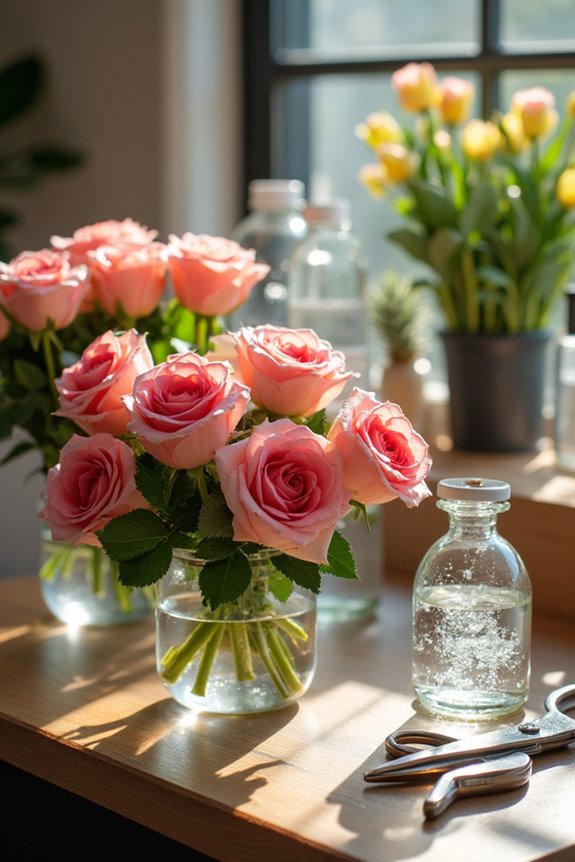
After ensuring that our freshly harvested roses are cool and ready for transport, let’s turn our attention to techniques that guarantee they stay hydrated and vibrant throughout their journey! First, we should cut stems at a sharp 45-degree angle underwater to prevent air embolisms—this is vital for effective hydration! Remember to trim about 2-3 cm from the base to enhance water uptake. Using clean, sharp pruners is key!
Next, let’s immerse the stems in a nutrient-infused solution, ideally one with glucose and Vitamin C, to promote longevity. We can also keep our flower heads misted to minimize transpiration. Additionally, incorporating a balanced NPK ratio can further enhance the water uptake and overall health of the roses during transport. Finally, maintaining stable, cool temperatures during transport makes all the difference—a happy rose is a hydrated rose! Let’s keep our blooms thriving!
Recommended Products

FIRMING DAY CREAM - Make your skincare routine a moment of pure bliss. This nourishing moisturizer features a Rosa damascena fragrance that promotes neuroscience-supported feelings of relaxation and self-confidence.

4-in-1 Red Light Therapy Wand for Glowing Skin: Combines Red Light Therapy to smooth fine lines, Galvanic Current for deeper skincare absorption, Therapeutic Warmth to soothe under-eyes, and Facial Massage to reduce puffiness, all in one sleek skincare device.

FARM-FRESH HYDRANGEA BOUQUET: Experience the grace of fresh cut flowers grown with care; each hydrangea steam is hand-picked and brought straight from our farms to your home; please note: a signature will be required upon delivery to ensure your flowers arrive safely
Optimal Packaging Methods for Roses
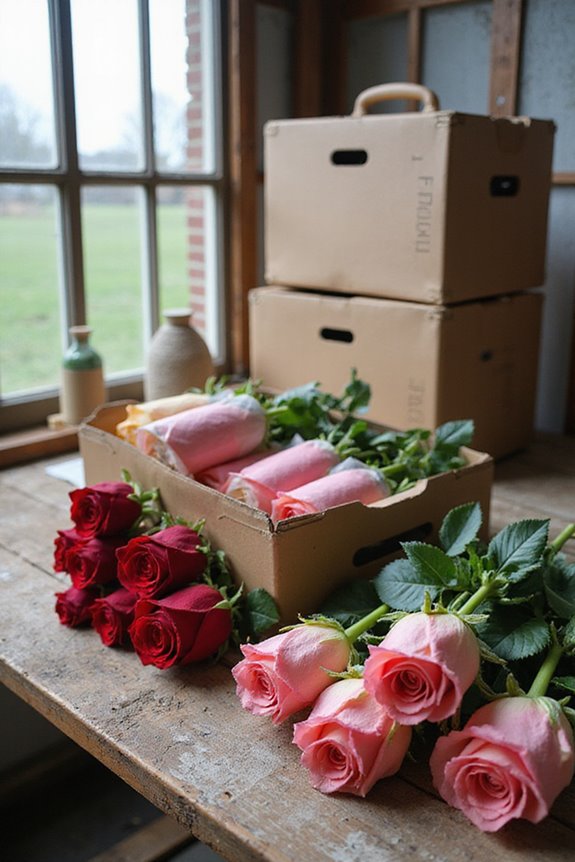
To guarantee our cut roses arrive at their destination in splendid condition, we’d want to explore the exciting world of ideal packaging methods! We can choose between dry packaging, which tightly packs roses in boxes without water to reduce leaf damage, and water-based methods that keep stems hydrated in small containers. Water-based is fantastic for longer journeys, while dry packaging minimizes spillage and potential fungal growth.
Let’s also consider box design: we need good ventilation and avoid overpacking to prevent bruising. Using breathable materials enhances air circulation, and cushioned wraps keep blooms safe and sound! Additionally, selecting durable hand cultivators for your gardening tasks ensures thorough soil aeration and helps maintain the health of your roses. Remember, choosing sustainable, recyclable packaging materials supports our beautiful planet while ensuring our roses stay fresh and fabulous! Happy gardening!
Recommended Products

COMFY PILLOW TOP & HYBRID SUPPORT – Combines individually wrapped coils with multi-layer memory foam for a plush yet supportive feel. Helps relieve pressure while maintaining proper spinal alignment for all sleep positions

67 Layer Damascus Steel: Made of high quality 67 Layer Damascus Steel with a 10Cr15MoV steel core, vacuum deep frozen and heat treated to a hardness of 62HRC, which is stronger than ordinary stainless steel knives. The blade is corrosion and rust resistant and has excellent toughness.

【Responsive Support & Pressure Relief】This twin mattress 10 inch combines high-density support foam with gel-infused memory foam to deliver stable, responsive support. The memory foam twin mattress gently contours to your body while quickly bouncing back, helping maintain proper alignment and reduce pressure without sinking. Designed to provide a balanced feel that supports the waist and back throughout the night.
Temperature and Environmental Control During Transport

Packaging roses is just the beginning of ensuring their journey is a success! Keeping roses in an ideal temperature range of 0.5°C to 3°C is essential. This helps lengthen their vase life and maintain stunning quality. We should utilize refrigerated containers and vacuum cooling technologies to combat those pesky temperature fluctuations that threaten our blooms. Remember, air shipments work well at 2°C to 3°C, but for longer trips, aim closer to 0.5°C for maximum freshness! Don’t forget that humidity control is equally important—sensors can help monitor and maintain perfect conditions. By giving our roses this care during transport, we’re setting them up for an amazing blooming experience once they reach their destination! Let’s keep those petals beautiful and vibrant! Additionally, proper care like moisture retention during transport can significantly enhance the roses’ freshness upon arrival.
Recommended Products

Warranty and Approval &Versatile Uses-We get ETL Approval and we provide 3 years compressor warranty, 2 years full part warranty.You can use this display refrigerator to store yourfresh flowers in flowers store and freshly made foods in a restaurant, cafe, bar, grocery store, or even your garage. Note: Refrigerator working ambient: below 70°F and 55% humidity and No Humidity Control.

BEAUTIFUL DISPLAY FOR FLOWERS - With 12.7 cu. ft. of space, this floral cooler has a glass door and white LED lighting to beautifully showcase bouquets and arrangements. The 4 adjustable shelves allow for flexible configurations to accommodate any product needs, while the illuminated Fresh Flowers lens attracts customer attention and encourages sales. This flower fridge measures 23" W × 24" D × 78" H.

🌡️ Adjustable Thermostat & Temp Display - The electric insulin case allows you to manually adjust the inner temperature (from 35.6-68°F , accuracy ±1.8°F) , and maintains constant temp without time limits. It has real-time temperature display to monitor the inner temp and support °C/°F toggle.
Handling and Transport Considerations

While we’re all excited to see our stunning cut roses make their way to new homes, handling and transport considerations are just as essential to their journey! First, let’s embrace proper cutting techniques: trim those stems at a 2-3 cm diagonal angle to boost water absorption! Once cut, we should place our roses in clean water immediately to maintain hydration—no wilting on our watch!
When packing, we can opt for dry or water packing, depending on our journey’s length. Don’t forget to use protective sleeves to maintain humidity and prevent bruising. Securing stems upright in containers keeps them safe from bending. And remember, a little gentle handling goes a long way—let’s treat these beauties with the utmost care! Additionally, proper stem cutting capacity ensures that we are making effective cuts that will support hydration during the transportation process.
Minimizing Mechanical Damage to Roses
When it comes to safeguarding our precious cut roses during transport, we’ve got to roll up our sleeves and get creative with our methods! To minimize mechanical damage, we should use corrugated cardboard sleeves around each stem. This helps cushion our lovely blooms, protecting against bruising and crushing. Let’s choose rigid, well-ventilated containers that reduce stem movement while allowing airflow—freshness is key! For added protection, incorporating foam or soft fillers can absorb shock, combating those pesky vibration effects. Remember, secure flowers firmly to limit movement during transit. By avoiding tight packing, we prevent stem bruising, keeping our roses looking vibrant and healthy! Let’s put these tips into action and guarantee our beautiful blooms arrive in pristine condition!
Recommended Products

Open Bottom- 100% Biodegradable

Super Value Set: 20 pcs of exquisite truffle boxes with clear window. The packaging includes the paperboard sleeves and base with a PET tray

Super Value Set: 20 pcs of exquisite truffle boxes with clear window. The packaging includes the paperboard sleeves and base with a PET tray
Utilizing Plant Hormones for Preservation
Did you know that using plant hormones can dramatically extend the life of cut roses during transport? By harnessing cytokinins benefits and gibberellins effects, we can keep our blooms vibrant and fresh! Spraying or dipping flowers in a solution of 0.5 to 5 ppm shortly after harvesting is key. These hormones work wonders by slowing down petal aging, maintaining firmness, and preventing wilting even without water. Imagine sending your gorgeous roses across the country and having them arrive looking as fabulous as when they left! Hormonal treatments not only enhance flower quality but also reduce shipping complexities. So, let’s embrace these natural enhancers and guarantee our cut roses stay beautiful during their journey! What a game changer!
Managing Ethylene Exposure During Transit
Maintaining the vibrant beauty of cut roses during transport goes hand in hand with managing ethylene exposure! Ethylene gas from sources like truck exhaust and ripening fruit can wreak havoc on our precious blooms. We must focus on ethylene monitoring; using specialized sensors guarantees we catch any problematic concentrations before they damage our flowers. Employing ethylene inhibitors, like 1-methylcyclopropene, can notably delay wilting and keep flowers fresh for longer. Let’s not forget to avoid co-transporting ethylene-emitting fruits with our roses. Simple strategies, such as thoughtful packaging and using proper ventilation, are key as well. By staying vigilant and proactive, we can guarantee our cut roses arrive looking stunning and full of life!
Best Practices for Postharvest Treatment and Quality Maintenance
To keep our cut roses looking their absolute best, we need to embrace some essential postharvest practices! First, using sugar solutions provides crucial nutrients to encourage flower development while promoting vibrant colors. We must also incorporate antimicrobial agents in our treatments to fight off pesky microbes that can block water uptake. Next, let’s include hydrating agents and acidifiers to boost the effectiveness of our solutions. For an extra freshness kick, applying plant growth hormones can slow down senescence—keeping our blooms brighter longer. Finally, we should cool our roses right after harvest to reduce field heat. By being proactive with these best practices, we can enjoy our stunning roses for days on end—truly a gardener’s joy!
Frequently Asked Questions
What Are the Signs of Damaged Roses During Transport?
Transporting roses can feel like a fragile ballet; we notice signs of damage like petal bruises, wilting, and discoloration. Recognizing these indicators helps us prevent further transport stress and guarantee vibrant blooms arrive safely.
How Long Can Cut Roses Survive Without Water?
Cut roses typically have a rose stamina of 4 to 6 hours for temporary survival without water. We should aim to minimize that time to keep them fresh and vibrant during transport and display.
What Should I Do if Roses Arrive Wilted?
If roses arrive wilted, we should implement hydration techniques immediately. Submerging stems in clean water and recutting them will enhance recovery. Place them in a cool, shaded area to support their revitalization.
Can I Use Regular Boxes for Rose Transport?
We wouldn’t recommend using regular boxes for rose transport. Instead, we should opt for specialized packing materials and box reinforcements to guarantee our flowers remain fresh and undamaged during their journey.
What Is the Ideal Humidity Level for Transporting Roses?
Transporting roses is like nurturing a delicate dance; we need to maintain humidity control between 80-90% to guarantee ideal transport conditions. This balance keeps our blooms fresh and minimizes the risk of wilting or disease.