As an Amazon Associate, we earn from qualifying purchases. Some links on this site are affiliate links at no extra cost to you. Our recommendations are based on thorough research and editorial judgment.

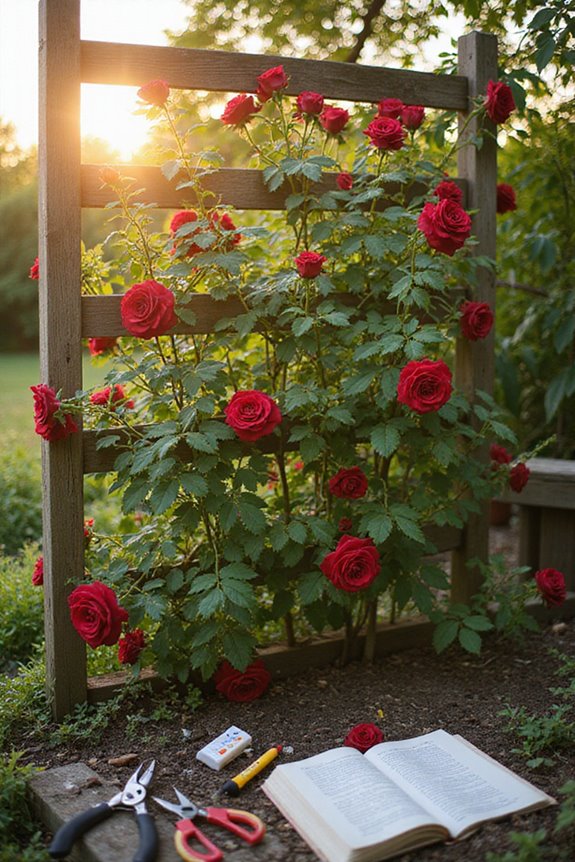
Are There Training Techniques For More Lateral Blooms On Climbers?

Absolutely, we can achieve beautiful lateral blooms on climbers! By using horizontal training of main canes, we can reduce apical dominance and encourage those gorgeous side shoots. Pruning is key too—let’s carefully cut back to two or three buds to boost branching! Don’t forget pegging; it promotes blooms along the entire length of the stems. With proper support systems and attentive care, we’ll create a vibrant display that’ll delight us all. There’s so much more to explore!
Key Takeaways
- Horizontal training of main canes reduces apical dominance, promoting healthy lateral shoot growth and increased blooms.
- Pruning back to two or three buds encourages branching, leading to more abundant blooms in climbing plants.
- Pegging canes downwards disperses blooms along their length, yielding two to three times more flowers compared to vertical training.
- Support systems like trellises and wire enhance lateral growth, while soft ties allow flexibility and encourage blooming.
- Regular monitoring and adjustments during training ensure thriving health and abundant flower displays.
Horizontal Training of Main Canes

You may be interested

When we talk about horizontal training of main canes, it’s like giving our climbing plants a robust framework to flourish! By employing effective cane positioning techniques, we maximize horizontal growth benefits. Training canes horizontally reduces apical dominance, allowing those beautiful lateral shoots to thrive. We can position our canes at angles between horizontal and 45 degrees for stunning results! Techniques like pegging or espaliering will help us create ample surface area for blooms. It’s crucial to secure canes loosely using soft ties to promote healthy growth—no girdling here! Plus, regular adjustments keep the growth on track. This method promises a delightful, evenly distributed display of flowers, making our gardens burst with color and charm! Additionally, using a nutrient-rich soil mix can further enhance the blooming potential of your climbing plants. Let’s get growing!
Pruning for Lateral Bloom Promotion

After setting up our climbing plants for success through horizontal training of main canes, it’s time to focus on how pruning can elevate our lateral blooms! To promote luscious lateral growth, we should prune in late winter for repeat-flowering climbers or right after blooming for once-flowering varieties. Aim to cut back to two or three buds; this encourages branching, which can double our blooms! Remember, it’s all about balance—too harsh a prune risks bloom density. We’ll want to selectively remove weak or crossing laterals to boost plant health, while also keeping our structure tidy and light-exposed. Let’s embrace consistent pruning to guarantee a delightful display of blooms from top to bottom. Happy pruning, fellow gardeners!
Recommended Products

SMOOTH, SWIFT CUTS with non-stick coated blades

7 ft. Pruner with a 3/4" cutting capacity

2-in-1 Pole Design with 4.9-9 ft Reach: Switch between handheld pruning and high reach trimming with the telescopic pole. The 180° rotating head helps position the blade for vertical, angled and side branches, making this pole pruner useful for fruit trees, shrubs and overhead branches
Pegging and Training Stems Downward

While many of us delight in the sight of our climbing roses reaching for the sky, there’s a rewarding alternative worth exploring—pegging! This technique involves bending and anchoring our rose canes low to the ground, promoting stunning bloom distribution along the entire length of each stem. Unlike vertical training, which often concentrates flowers at the tips, pegging can yield two to three times more blooms! We can start during the dormant season, using soft ties and stakes to secure pliable canes in graceful arches. This encourages buds to flourish across the cane, creating a spectacular floral display. Regularly checking for signs of distress can further enhance the success of this method by ensuring the plants remain healthy throughout the blooming period. Let’s embrace pegging this season, and watch our garden transform into a breathtaking cascade of color! Happy gardening!
Support and Structural Training Techniques
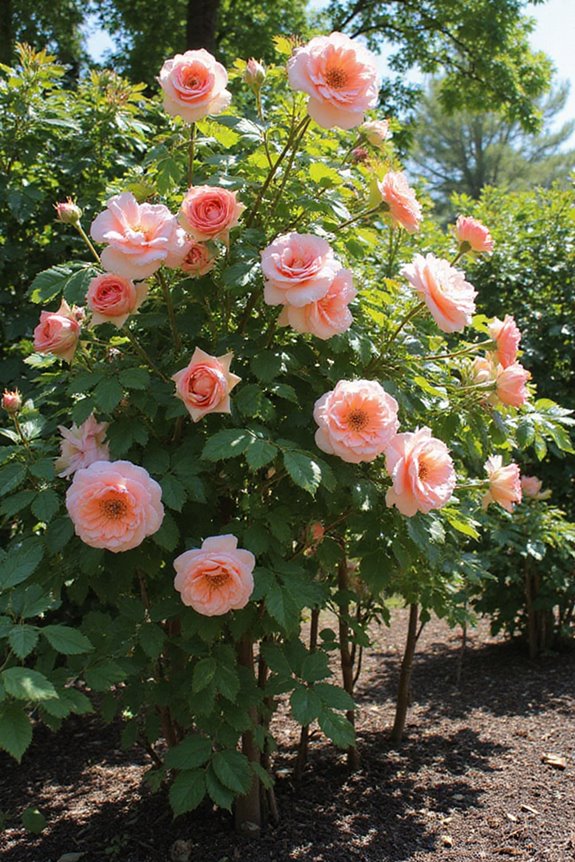
As we commence the journey of supporting our climbing plants, let’s immerse ourselves in the essential techniques that will elevate our gardens to new heights—literally! For vibrant lateral blooms, starting with strong support systems is vital. Flat trellises, wire systems, or netted matrices provide excellent spaces for our climbing friends like clematis and wisteria to flourish. When we train these plants, remember to secure stems gently using soft ties, guiding their growth while allowing flexibility. The Lasso Technique works wonders, too—encourage those stems to spread horizontally and bloom abundantly! By positioning our supports in sunny spots, we invite the best growth. Additionally, essential tools for plant care can greatly enhance your training efforts, as having the right equipment makes the process smoother. With these training techniques, we’re on our way to a flourishing garden full of life and color!
Recommended Products

Material: Crafted from durable BPA/phthalate-free vinyl

[Practical Pergola] Perfect for hosting outdoor parties, barbecues, or celebrations, this spacious pergola accommodates family and friends, allowing you to enjoy summer gatherings and create lasting memories.

Material: Crafted from durable BPA/phthalate-free vinyl
Timing and Yearly Training Regimen
To truly maximize the beauty of our climbing plants, we need to embrace the importance of timing and a thoughtful yearly training regimen! It all starts in Year 1, focusing on establishing strong canes. In Year 2, we’ll introduce ideal training techniques, like training main canes horizontally to encourage side shoots. Seasonal adjustments are key; early spring is perfect for thinning overcrowded areas, ensuring light and air reach those blossoming limbs. Prune lateral shoots just above the second bud eye to stimulate branching—think bloom explosion! Remember, pegging those arching canes helps generate gorgeous flower clusters along their lengths. Using the right pruning shears is essential for achieving clean cuts, which promotes overall plant health. With consistent care and timely interventions, we’re bound to create a cascade of vibrant flowers! Let’s get growing!
Cane Selection and Maintenance for Bloom Density
When it comes to blooming success, selecting sturdy canes can truly make all the difference! We should look for canes that are thick and robust, as they store nutrients efficiently, guaranteeing vibrant blooms. Mature canes, showing plumpness without new leaves at the tips, signal readiness for flowering. Regularly monitor cane health—removing diseased segments can promote vigorous growth and boost bloom density. Don’t forget nutrient management! A balanced fertilizer, administered during watering, encourages strong leaf development. Plus, make sure we provide adequate light exposure and airflow to maintain cane robustness. By pruning spent flower spikes, we redirect energy to new lateral blooms. With these practices, our climbers will reward us with a spectacular floral display! Additionally, regular testing for soil pH levels can ensure that the nutrient balance remains optimal for vibrant roses.
Recommended Products

BLOOMS AFTER FIRST APPLICATION: This fertilizer booster flows to the root zone of rose bushes, hydrangeas, citrus trees, and garden plants to activate garden soil nutrients and unlock the full potential of existing fertilizers. Customers report rose bushes that had not bloomed in years producing big, beautiful flowers within weeks of application.

ROSE FERTILIZER FEEDS UP TO 3 MONTHS: Miracle-Gro Shake 'n Feed Rose & Bloom nourishes your plants above and below the soil for up to 3 months, providing nutrients for more blooms and spectacular color (vs. unfed)

LOW MAINTENANCE: Our vine fertilizer is perfect for all homeowners! This slow release fertilizer only requires feeding every 14 days till blooming begins. Once blooming begins, you only need to feed your plants once a month.
Encouraging Lateral Growth Through Light Ties
There’s something magical about watching our climbing plants flourish laterally! To encourage this delightful growth, we should choose the right tie materials. Flexible options like plant tape, jute twine, or rubber ties allow for gentle securing without harming our plants. Let’s tie our stems every few inches, using lightweight ties that create loose loops, ensuring they can thrive without constriction. Regularly adjusting these ties is essential for accommodating growth; it helps develop side branches as we guide our climbers horizontally. Don’t forget to use structures like moss poles or bamboo grids! They provide the perfect backdrop for our vines, promoting natural attachment and stunning blooms. Together, we can turn our vertical gardens into gorgeous cascades of green!
Maximizing Bloom Production Over Seasons
Watching our climbing plants thrive is a rewarding experience, and to keep that momentum going, we need to focus on maximizing bloom production over the seasons! By training our main canes horizontally, we encourage lateral growth, making each bloom count. This method reduces apical dominance, allowing lateral buds to flourish and produce flowers. Using soft ties helps us avoid damage and maintain healthy stems.
Don’t forget to prune wisely—removing weak shoots directs energy to stronger ones for a cascading effect of blooms! We can also employ techniques like pegging and espalier to create beautiful, dense flower displays. With careful cultural care and consistent watering, we’ll enjoy sustained bloom optimization and marvel at our stunning climbers all season long!
Recommended Products

【Rope net material】- The Climbing Safety Net is made of high-quality jute rope by hand. It has bright color, 10mm(0.4in) diameter, 10cm(3.94in) mesh,uniform stress,strengthened and is not easy to fall off. The net surface has strong impact resistance. It is multi strand woven, the pulling force is strong,weather resistant and wear-resistant, making the rope net more durable.

The wild beauty of blooming Asian garden, brings fresh natural style to the bed. It’s the perfect look for our soft cotton.

100% Natural & Eco-Friendly Jute Fiber - Made from premium natural jute fibers, completely biodegradable and free from synthetic chemicals or formaldehyde—safe for crafts, pets, and home decor projects
Frequently Asked Questions
How Do I Choose the Right Climbing Plant for My Garden?
To choose the right climbing plant for our garden, we should consider climbing plant types that enhance our garden aesthetics, ensuring they match light conditions, space, and growth habits for a vibrant, thriving landscape.
What Common Pests Should I Watch for on Climbing Plants?
We’ve got to be vigilant—pests can invade our precious climbing plants like a swarm of locusts! For effective pest identification, we should embrace organic solutions, ensuring our garden thrives without harmful chemicals.
How Do Weather Conditions Affect Blooming on Climbers?
Weather conditions notably affect climbers’ blooms; higher temperatures can trigger earlier flowering, while humidity effects often influence bloom duration. We should pay attention to these changes to guarantee our climbing plants thrive throughout shifting climates.
Can I Use Chemical Fertilizers for Better Blooms?
While experimenting with different fertilizer types, we found that moderation matters. Chemical nutrients can enhance blooms, but overdoing it stunted our plants—like feeding a puppy too many treats, it just won’t grow right!
What Signs Indicate My Climber Needs More Sunlight?
We’ll notice leaf yellowing and stem elongation in our climbers when they’re not getting enough sunlight. If growth seems stunted and new shoots are smaller, it’s time to move them to a sunnier spot.