As an Amazon Associate, we earn from qualifying purchases. Some links on this site are affiliate links at no extra cost to you. Our recommendations are based on thorough research and editorial judgment.

What Are Best Practices For Planting Rose Hedges?

When it comes to planting beautiful rose hedges, let’s start by choosing a sunny spot with good air circulation. We should prepare the soil by amending it with compost for nutrients and ensuring proper drainage. Dig holes twice the root ball’s diameter and space shrub roses about 2 to 5 feet apart for lush growth. Don’t forget to water regularly and use mulch to conserve moisture! Ready to learn about pruning and ongoing care? Let’s keep those blooms thriving!
Key Takeaways
- Select a sunny location with 6 to 8 hours of sunlight, ensuring good air circulation and avoiding frost-prone areas.
- Test and amend soil to achieve a pH of 6.0 to 7.0, incorporating organic matter and ensuring proper drainage.
- Choose disease-resistant rose varieties suitable for your climate, considering their growth habits and blooming times for effective hedging.
- Space roses according to their type: Hybrid Tea roses 2-3 feet apart, Shrub roses 2-5 feet, and hedge roses 24 inches apart for density.
- Establish a consistent watering routine, mulch for moisture retention, and conduct annual pruning and fertilizing for healthy growth and blooms.
Choosing the Right Location
You may be interested



When we think about planting rose hedges, choosing the right location is absolutely essential! We need to make sure our roses get 6 to 8 hours of full sunlight daily for ideal growth and brilliant blooms. Keep them away from any strong winds to protect them from desiccation and damage. It’s important to plant roses far from trees, as their roots will compete for precious water and nutrients. Plus, we want to avoid potential shade, which can hinder growth and air circulation! Don’t forget about drainage needs—roses love well-drained soil, so if there’s any risk of waterlogging, it’s best to raise those beds! With nutrient-rich soils that promote healthy growth, these thoughtful considerations will help us create a vibrant rose haven in our gardens!
Preparing the Soil

Before we plunge into the joy of planting our rose hedges, let’s talk about how to prepare the soil properly! First, we should dig deep—18 to 24 inches—to encourage healthy root penetration. Let’s loosen the soil thoroughly, breaking up compacted layers for fantastic aeration. Mixing in well-rotted organic matter, like compost, not only enhances soil texture but also boosts nutrients. Remember to incorporate a small amount of blood and bone fertilizer to give our roses a good start. Testing the soil pH is essential, aiming for that sweet 6.0 to 7.0 range to make nutrients available. Additionally, incorporating moisture retention amendments like peat moss can help balance drainage while ensuring that our roses have adequate hydration. Finally, we’ll want to give our soil a few weeks to settle before planting—letting those wonderful amendments work their magic! Let’s get digging!
Proper Planting Techniques
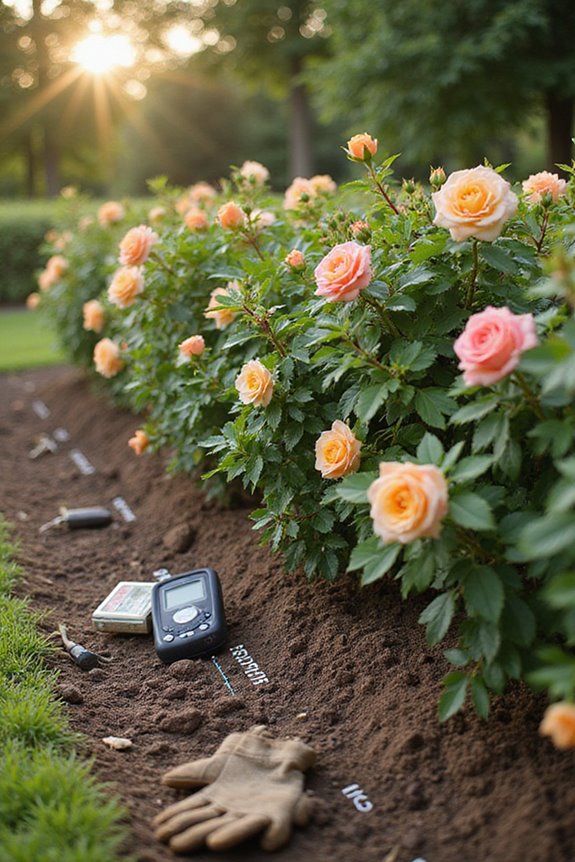
Proper planting techniques can make all the difference in establishing a stunning rose hedge that flourishes year after year! First, let’s dig holes twice the diameter and just as deep as the root ball, guaranteeing we accommodate those precious roots. We should keep the root crown slightly above soil level for ideal root protection. When placing our roses in the hole, let’s set them snugly before firmly tamping the soil to remove air pockets. Water them thoroughly right after planting—this isn’t just hydration, it’s a welcome hug for our new plants! Finally, remember to monitor moisture, avoiding both drought and waterlogging. Additionally, using a soil mix that promotes moisture retention can further enhance the health of your new rose hedge. With these steps, we can guarantee our rose hedge grows healthy and vibrant for seasons to come!
Recommended Products

FEEDS UP TO 6 MONTHS: Miracle-Gro Potting Mix is a gardening soil for outdoor containers that feeds all types of potted plants, including flowers, vegetables, shrubs, annuals, and perennials for up to 6 months
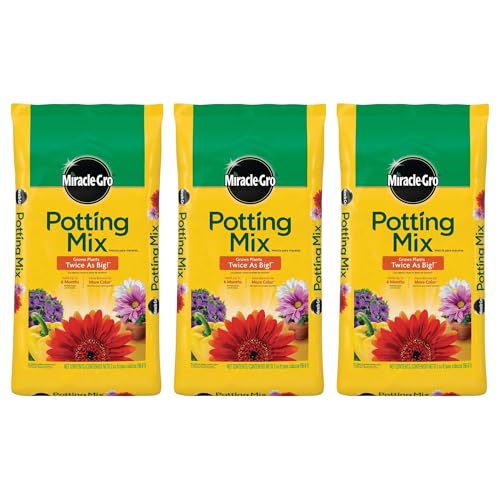
BIGGER PLANTS: Watch your container plants flourish with this potting soil that feed for up to 6 months to grow plants twice as big versus unfed plants

PREMIUM INGREDIENTS: This specifically crafted organic compost blend is the ideal planting mix to improve and revitalize the plant soil for rose varieties, flowers, and perennials.
Spacing and Layout Considerations
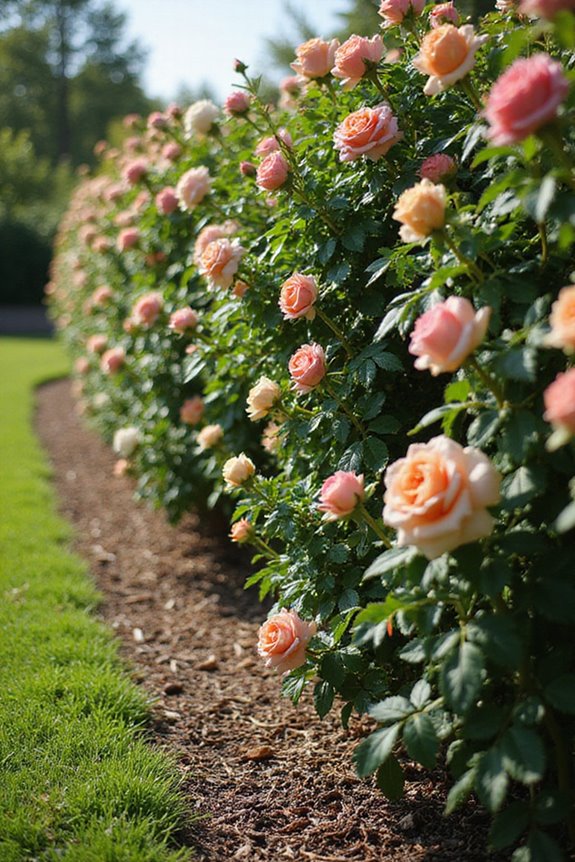
Having established a solid foundation with proper planting techniques, we now get to the heart of crafting that gorgeous rose hedge: spacing and layout considerations! Our spacing strategies make all the difference—Hybrid Tea roses thrive with about 2 to 3 feet between each plant, while Shrub roses can stretch from 2 to 5 feet apart. For a magical dense effect, hedge roses should be nestled just 24 inches apart! Let’s aim for at least 5 to 10 roses in one row, using layout techniques that overlap mature widths by 50%. Remember to allow for proper air circulation to keep diseases at bay! With thoughtful planning, our rose hedge will flourish beautifully—let’s create that stunning garden together! Additionally, using precision pruning shears can enhance the maintenance and health of your rose hedge as it matures.
Effective Watering Practices

As we immerse ourselves in the essential world of effective watering practices, let’s make sure our precious rose hedges are thirst-quenching champions! First, mastering water timing is key. Early morning is best—this allows our roses’ foliage to dry, reducing the risk of pesky fungal diseases. Newly planted roses thrive with watering every 3-4 days, while established beauties need a good soak once a week. Let’s be attentive during dry spells! We should deliver water slowly at the base to optimize moisture retention, avoiding runoff. A light spray for established roses might suffice, but let’s aim for about 1.5 to 2.5 gallons per session! Remember, happy roses bloom best when quenched thoughtfully and thoroughly! Additionally, utilizing a drip irrigation system can further enhance moisture efficiency and ensure steady hydration. Let’s get watering, friends!
Mulching Strategies
Mulch is like a cozy blanket for our rose hedges, offering them protection and nourishment they absolutely adore! When we apply mulch, we’re not just fabulously enhancing soil nutrition; we’re also harnessing impressive organic benefits like moisture retention. Let’s prepare by clearing away old leaves and weeds, ensuring our roses are ready for their nutrient feast. Timing matters—let’s mulch from late winter to early spring, adding a lighter layer in autumn as needed. We recommend organic options like well-rotted manure, high-quality compost, or shredded leaves. Remember, maintaining a small mulch-free circle around stems is essential to prevent rot! So, let’s spread that beautiful mulch evenly, about 1–2 inches deep, and watch our roses thrive!
Fertilization Guidelines
When we’re ready to set our rose hedges up for success, understanding fertilization guidelines is key to ensuring robust growth and stunning blooms. First, let’s choose the right fertilizer types—a balanced option like 15-10-10 works wonders! For the first year, liquid fertilizers should be applied every 4-6 weeks to prevent root burn. We can also sprinkle slow-release granules for lasting nutrients with less hassle! Remember to start fertilizing when new growth reaches 4-6 inches and adjust based on our roses’ responses. Use gloves while applying! Techniques matter too; water right after spreading granules and opt for morning foliar sprays. With these strategies, our rose hedges will thrive, blooming beautifully all season long! Let’s get growing!
Pruning for Health and Aesthetics
Pruning our rose hedges isn’t just about getting the job done; it’s an essential process that invigorates our plants and elevates their beauty! Utilizing effective pruning techniques, like making 45-degree cuts above outward-facing buds, directs growth and improves airflow. We should aim for that lovely vase-like shape, removing weak or crossing canes to reduce disease risk while promoting a stunning display. Remember, a little tough love goes a long way—hard pruning encourages robust blooms! As we snip away, we’ll initially see bare canes, but fear not; this will pave the way for lush growth come spring! With thoughtful aesthetic considerations, we can create both a healthier hedge and a breathtaking focal point in our gardens!
Ongoing Maintenance and Care
To keep our rose hedges thriving and blooming beautifully throughout the growing season, ongoing maintenance and care are essential! We should create watering basins to catch moisture and maintain evenly moist soil—about an inch weekly. Let’s use mulch to conserve moisture and suppress weeds, but keep it a few inches away from stems to prevent collar rot. Regular disease management is vital; we can remove wilted leaves and use fungicides like Neem Oil to prevent issues. Don’t forget about pest control! Regularly check for pests and act quickly with insect control products. With a little dedication, our roses will flourish, providing vibrant blooms and delightful fragrance all season long! Now, let’s explore and nurture our beautiful rose hedges!
Frequently Asked Questions
Can Roses Survive in Shaded Areas or Partial Sunlight?
Yes, roses can survive in shaded areas or partial sunlight, but they need careful selection for shade tolerance. When we plant them, we’re mindful of their sunlight requirements to guarantee healthier growth and blooming.
What Types of Roses Are Best for Hedging Purposes?
When we consider hedging, David Austin English Roses and Rugosa varieties enchant with their lush blooms and durability. Their alluring colors enhance landscape aesthetics, while their resilience creates a stunning visual barrier—imagine the possibilities!
How Can I Tell if My Soil Is Too Acidic or Alkaline?
To check if our soil’s too acidic or alkaline, we should consider soil testing. By measuring the pH scale, we can spot issues like yellowing leaves, indicating the need for adjustments to optimize plant health.
When Is the Best Time to Plant Rose Hedges?
We believe spring planting is ideal for rose hedges, as warmer soil encourages growth. Fall planting’s also a great option, but timing is essential to avoid frost. Let’s plan carefully for vibrant blooms ahead!
How Long Does It Take for Rose Hedges to Mature?
Like a growing tapestry, our rose hedge takes about three to four years to mature fully. As the growth rate accelerates, we nurture its lifespan, fostering strength and beauty that’ll enrich our garden for years.