As an Amazon Associate, we earn from qualifying purchases. Some links on this site are affiliate links at no extra cost to you. Our recommendations are based on thorough research and editorial judgment.


How To Propagate Roses From Cuttings?

To propagate roses from cuttings, we start by selecting healthy stems just after blooming. We cut 6 to 8 inches of softwood or semi-hardwood, removing blooms and retaining just a couple of leaves. For rooting, a blend of 50% potting soil and 50% perlite works wonders! We keep the cuttings humid, in bright, indirect light. Monitoring their progress is key, so let’s enthusiastically watch for new growth to thrive! There’s so much more exciting detail to explore!
Key Takeaways
- Select healthy softwood or semi-hardwood cuttings, ideally 6 to 8 inches long, with 3 to 4 nodes, from just-bloomed stems.
- Prepare cuttings by removing flowers, wounding the base lightly, and dipping in rooting hormone for effective growth stimulation.
- Use a sterile rooting medium of 50% potting soil and 50% perlite, pre-moistened for optimal moisture retention and drainage.
- Cover cuttings with clear coverings to maintain humidity and place them in bright, indirect light for at least six hours daily.
- Monitor progress for root development after 3 to 5 weeks, and transplant into a nutrient-rich potting mix once strong roots form.
Selecting the Right Cuttings
You may be interested



When it comes to propagating roses, selecting the right cuttings is absolutely essential for our success as home gardeners! We should aim for stems that have just finished blooming. Late spring to early summer is perfect for softwood cuttings, thanks to those flexible, pencil-thick stems brimming with rooting hormones. For semi-hardwood cuttings, late summer to early fall works well, often featuring rosehips—what a delightful sign of maturity! We must remember, 6 to 8 inches is ideal, with 3 to 4 nodes included. Cutting at a 45-degree angle helps with moisture uptake! Also, choose cuttings from healthy, established plants, steering clear of old, woody stems. With the right stem selection, our propagation journey will flourish beautifully! To enhance the chances of successful rooting, consider using compost options like high-quality nutrient blend that support robust plant development.
Preparation of Rose Cuttings

As we plunge into the preparation of rose cuttings, let’s embrace the art of nurturing future blooms! For successful propagation, we should start by cutting stems about 4 to 6 inches long, just below a leaf node. This boosts our chances of rooting success! Removing flowers and buds helps channel energy into roots, while keeping only the top two sets of leaves reduces moisture loss. Let’s also wound the bottom of the stem lightly; this encourages rooting. Once cut, we can dip the bottom half-inch into rooting hormone, like Hormex #8, to stimulate growth. Finally, let’s keep our cuttings in water before planting, ensuring they stay hydrated and ready for their new journey! Additionally, ensuring that the cuttings are planted in well-drained, loamy soil will promote their health and rooting success.
Choosing the Best Rooting Medium
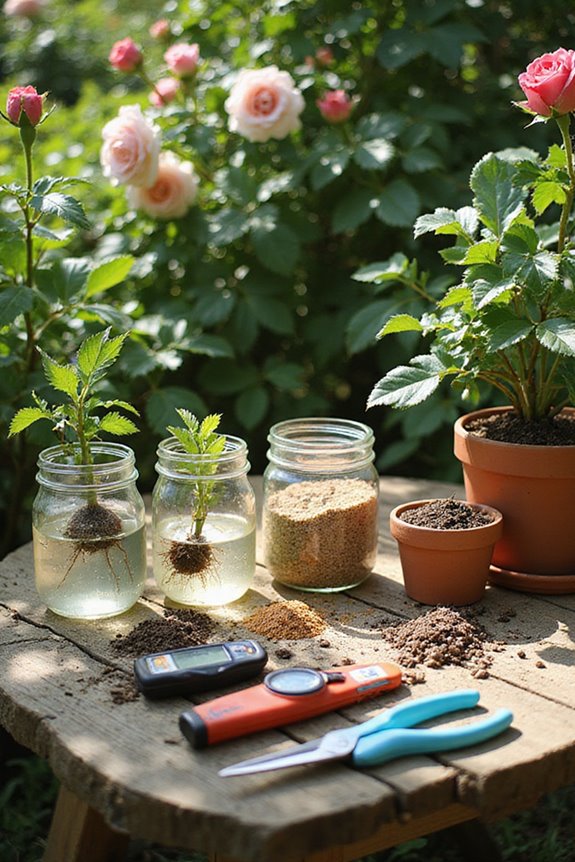
Choosing the right rooting medium is vital for our rose cuttings’ success, so let’s explore the delightful world of growing! We have several medium types to evaluate, including potting soil, perlite, and sand. A stellar blend we often recommend is 50% potting soil and 50% perlite, as it strikes the perfect balance between moisture retention and excellent drainage. It’s important to use sterilized materials, preventing pesky fungal infections! Remember, pre-moistening your medium guarantees just the right dampness—not soggy. Let’s also keep an eye on moisture levels, as excess water can lead to stem rot! With the right medium, we can optimize the rooting process and watch our beautiful rose cuttings thrive together! Happy gardening! Additionally, consider incorporating organic fertilizers to nurture beneficial microbial activity in the soil for stronger growth.
Recommended Products

Bulk perlite for professional use: Each bag is 120 quarts or 4 cubic foot weighing 20 pounds.

Bulk perlite for professional use: Each bag is 120 quarts or 4 cubic foot weighing 20 pounds.

Perlite Soil Amendment for Plants - Granular perlite is a volcanic glass material that’s naturally sterile with a neutral pH level. When used as an organic soil amendment for plants, Perlite Bliss provides excellent soil aeration, drainage, and water retention, greatly improving nutrient absorption in indoor plants and outdoor plants.
Creating the Ideal Environment for Rooting

To watch our rose cuttings flourish, creating the ideal environment for rooting is just as important as selecting the right rooting medium! First, let’s think about humidity levels—they’re essential for reducing water loss. Using clear coverings like bell jars or even cut plastic bottles helps retain moisture. We can mist our cuttings regularly to keep that humidity just right without risking overwatering. Next, we’ll want the perfect light exposure; bright, indirect light works wonders! A northern or eastern window provides gentle warmth without the harshness of afternoon sun. With at least six hours of soft light daily, our cuttings will thrive, encouraging healthy leaf growth and signaling successful rooting. Adding organic materials to the rooting medium can significantly enhance root development by improving soil fertility and moisture retention. Let’s get growing and witness the beauty unfold!
Utilizing Rooting Hormones

When we plunge into the world of propagating roses, utilizing rooting hormones can transform our cuttings from mere stems into thriving plants with robust root systems! These magical powders or gels, containing auxins like indole-3-butyric acid (IBA), encourage root primordia formation. By choosing the right hormone concentrations and applying effective rooting techniques, we can enhance our success rates dramatically.
Dip the bottom half of a moistened cutting into the rooting hormone, ensuring an even coating. Let’s just tap off the excess to avoid any clumping! It’s essential to keep the hormone away from foliage to prevent damage. For difficult-to-root varieties, these hormones can make all the difference, turning our propagation dreams into reality! Regular fertilization every 2-3 months ensures that your newly rooted plants will thrive with consistent growth. Happy gardening!
Recommended Products

Brand name: Superthrive

Package Includes- 1 Gallon Clonex Rooting Gel, and 1x Trimming Scissors

ROOTING HORMONE FOR CUTTINGS – Hormex Rooting Powder accelerates root growth for plant cuttings using Indole-3-Butyric Acid (IBA) , a rooting hormone compound used to promote strong, healthy root systems for all plant varieties. Ideal for cloning Semi-Hardwood Houseplants, Medicinal, Tree Cuttings, and more. This product helps develop strong, healthy root systems.
Timing Your Cuttings for Success
Timing really makes a difference in the world of rose propagation! To set ourselves up for success, we need to choose the right season for our cuttings. Softwood cuttings in late spring to early summer are ideal because they’re flexible and root quickly. Remember, hydration is key! We should collect our cuttings early in the morning or late in the evening when plants are fully hydrated. Cooler temperatures help prevent dehydration and stress. Weather effects also play a significant role—mild and humid conditions favor rooting, so let’s take advantage of those days! Avoid extreme temperatures to guarantee our cuttings thrive. With the right timing, our rose propagation journey can blossom beautifully! Let’s get growing!
Techniques to Enhance Rooting
As we explore the wonderful world of enhancing rooting for our rose cuttings, we’ll discover a variety of techniques that can greatly boost our success rates! First, let’s talk about wounding techniques. By gently scraping or slicing the base of our cuttings, we expose the cambium layer, really encouraging root development. Next, dipping that wounded end in rooting hormone like Hormex #8 gives our cuttings a powerful boost. Remember to cover our cuttings with clear plastic to maintain humidity control—those high moisture levels are essential for thriving roots! We should keep the medium well-draining with a mix of potting soil and perlite, too. With these fantastic methods, we’re well on our way to producing beautiful new roses!
Recommended Products

REDUCE TRANSPLANT SHOCK: Reduce transplant shock, maintain your current cut flowers, and build your plants' vigor!

BOOSTS ROOT DEVELOPMENT – Growth Technology GT Rootzone supports strong root systems with plant-based extracts, acting as a liquid root stimulator for plants. Ideal for promoting root growth in seedlings, trees, or flowers, it helps improve nutrient uptake and encourages healthy propagation from cuttings.

PREVENTS TRANSPLANT SHOCK & ROOT STRESS – Shields plants from transplant shock, root damage, and environmental stress, ensuring stronger, more resilient growth. This root growth hormone helps cuttings and transplants establish faster while reducing nutrient-related stress.
Caring for Your Cuttings
Caring for our rose cuttings is like nurturing the delicate beginnings of a beautiful journey! We’ve got to focus on moisture management to give those roots a kickstart. Keep the soil consistently moist but not waterlogged—think damp, like a sponge! Regular misting helps us maintain humidity control, preventing our precious leaves from drying out.
Let’s cover our cuttings with something clear, like a plastic bag or mini greenhouse, but remember, it shouldn’t touch them to avoid any fungal issues. A warm spot with filtered sunlight works wonders, too! Don’t forget to check moisture daily—seeing those little guys thrive is what it’s all about! Happy gardening, everyone!
Recommended Products

Domed germination kit designed to improve seed starting and cloning inside a high-humidity space.

BLOOMS AFTER FIRST APPLICATION: This fertilizer booster flows to the root zone of rose bushes, hydrangeas, citrus trees, and garden plants to activate garden soil nutrients and unlock the full potential of existing fertilizers. Customers report rose bushes that had not bloomed in years producing big, beautiful flowers within weeks of application.

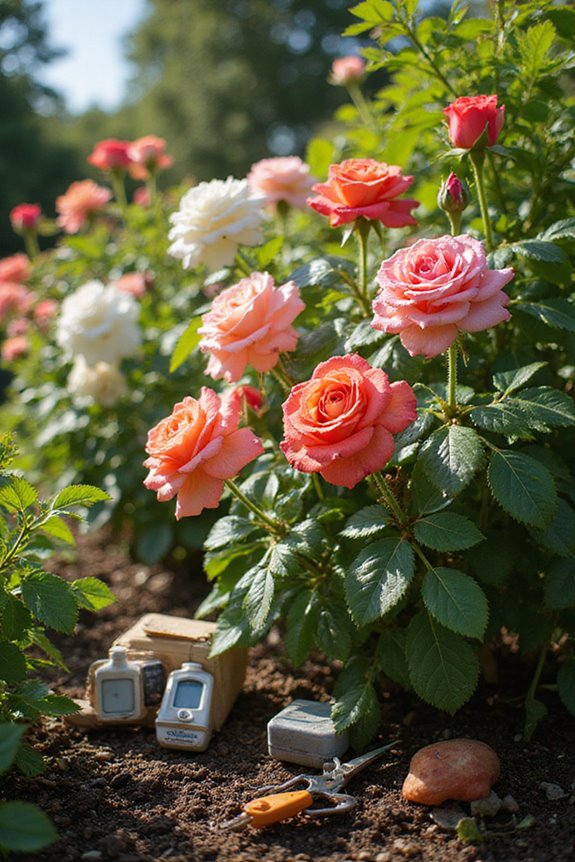
What you get: This set comprises 2 x 40-cell trays, 2 x base trays, 2 x humidity domes, 4 x LED light bars, 10 x garden labels, 2 x heat mat and 1 pairs of garden tool kits, 3-in-1 moisture meter. Additionally, the transparent dome can accommodate two embedded LED light bars.
Monitoring Rooting Progress
When it comes to monitoring rooting progress, we can’t help but feel a thrill of anticipation! We should start with gentle resistance testing; after 3 to 5 weeks, a little tug will reveal if those roots are forming. If we feel resistance, that’s a fantastic sign of life! Keeping an eye on new leaves sprouting can also indicate healthy root development. For deeper root inspection, we can cautiously tip the cutting out of its pot—just be gentle! We should look for visible roots or, if we spot any black or brown areas, that could signal trouble. Regular checks every week will keep us in the loop without disturbing our beloved cuttings! What an exciting journey this is!
Transplanting Your New Roses
Transplanting your new roses is an exhilarating step in our gardening journey! We should prepare a well-draining, nutrient-rich potting mix, around 4 to 6 inches deep, allowing our roses ample room for robust root development. Let’s use clean, sharp tools and handle our rooted cuttings gently to protect those delicate roots. When transplanting, spread the roots so they point down, planting at the same depth as before to avoid stem rot. After we’re done, let’s water immediately, giving our roses a cozy, invited welcome! Early on, we must keep them sheltered and maintain consistent moisture to stave off transplant shock. With careful attention, our new roses will bloom beautifully, rewarding our efforts with splendor!
Recommended Products

Ready-to-Use Potting Soil: No mixing required! Michigan Peat General All-Purpose Premium Potting Soil is ready to use straight from the bag, saving you time and effort

Organic Compost Blend: Enhance the nutrient content and soil quality of lawns and raised garden beds with this organic blend, promoting healthy plant growth and soil vitality

You will receive (10) 2-cubic foot bags of potting soil per purchase.
Frequently Asked Questions
Can I Propagate Roses Year-Round?
Yes, we can propagate roses year-round, but the best months are late spring and early fall for ideal conditions. The right climate guarantees better success rates, so we should always consider temperature and humidity.
How Long Does It Take for Cuttings to Root?
Cuttings typically root within 10 to 14 days under ideal conditions using effective rooting methods. However, some may take weeks or up to two months, depending on the type and environmental factors influencing growth.
What Tools Do I Need for Taking Cuttings?
We’ll need sharp pruners for precise cuts, rooting hormone for success, and well-prepared soil. Utilizing proper pruning techniques guarantees healthy cuttings, while adequate soil preparation fosters ideal conditions for growth and rooting. Let’s get started!
Can I Use Store-Bought Roses for Propagation?
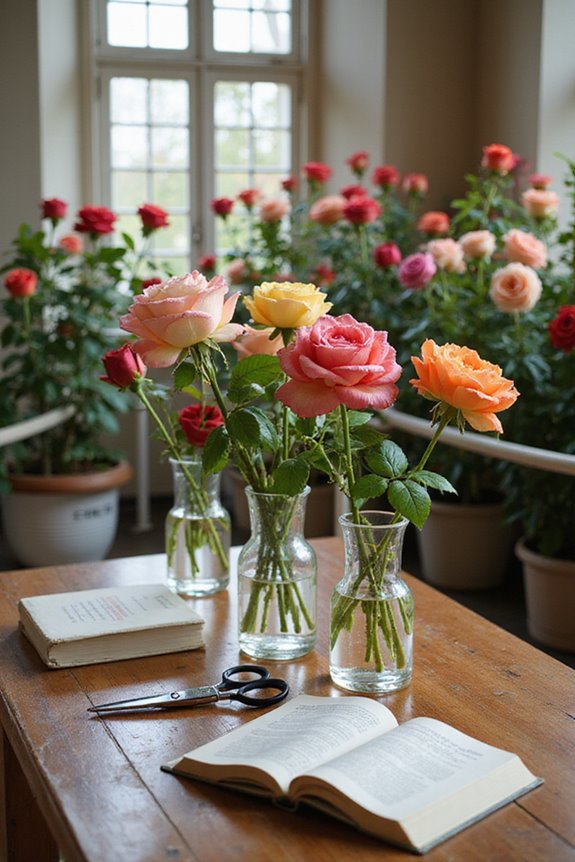
While we long for a vintage vase filled with resplendent roses, store-bought ones can be tricky for propagation. Choosing the right rose and using proper cutting techniques can improve our chances of success immensely.
What Common Pests Threaten Rose Cuttings?
Common pests that threaten rose cuttings include aphids and thrips. We should focus on effective aphid control and thrip management to protect our plants, ensuring they grow healthy and vigorous without unsightly damage.