As an Amazon Associate, we earn from qualifying purchases. Some links on this site are affiliate links at no extra cost to you. Our recommendations are based on thorough research and editorial judgment.


When Do Roses Break Dormancy Regionally?

Roses break dormancy at different times depending on our region’s climate! In colder areas, they may rest for several months, while in milder climates, dormancy can be shorter due to warmer temperatures. Watch for warming spring days and signs like bud swelling—time to prepare for vibrant blooms! We can guarantee flourishing roses through proper watering and pest management during dormancy. Let’s keep an eye on our gardens to catch the first signs of growth together!
Key Takeaways
- Roses typically break dormancy in spring as temperatures warm above 45°F and days lengthen due to photoperiod changes.
- Colder regions may see roses breaking dormancy in late March to April, while mild climates can see this happen as early as February.
- In hot climates, roses may not experience true dormancy, leading to stress-induced growth pauses that can vary throughout the year.
- Environmental cues, like rising temperatures and increased light, stimulate hormonal changes that promote bud outgrowth and growth resumption.
- Bud swelling, color changes, and leaf tip emergence are key indicators that roses are breaking dormancy and beginning their growth cycle.
Regional Triggers for Rose Dormancy Onset
You may be interested



As we explore the fascinating world of rose dormancy, it’s essential to recognize how regional triggers influence when our beloved blooms take their seasonal snooze. For our roses, chilling requirements play a significant role; these cold exposures spark physiological changes in the buds, initiating dormancy. But let’s not overlook photoperiod interaction! As daylight diminishes in autumn, our roses sense the change, signaling dormancy through specific genes. However, warm autumn-winter temperatures can play tricks, throwing off this delicate balance. So, as we garden, we want to monitor local climate closely. By understanding these triggers, we can support our roses’ natural rhythms, ensuring robust blooms when spring arrives. Additionally, incorporating techniques from year-round care can help prepare roses for optimal blooming when they emerge from dormancy. Let’s give our roses the cozy winter they deserve!
Duration of Dormancy Across Different Climates

Understanding how the duration of dormancy varies across different climates can truly enhance our gardening experience with roses! In colder regions, roses often endure longer dormancy periods, lasting several months due to those biting temperatures. But in mild temperate climates? We’ve got shorter dormancy variations, where warm spells can tempt roses into early growth. Now, let’s consider hot climates—dormancy here might be minimal, with stress-induced pauses rather than true dormancy! This fascinating mix of climate impacts shapes how we care for our plants. Whether it’s adding mulch in cold areas or ensuring proper irrigation in hot ones, we can extend our roses’ health and beauty. Additionally, investing in ergonomic and durable multi-purpose hand tools can further enhance our gardening efficiency and comfort. Let’s adapt our gardening strategies and watch our roses thrive beautifully!
Environmental Signals for Breaking Dormancy
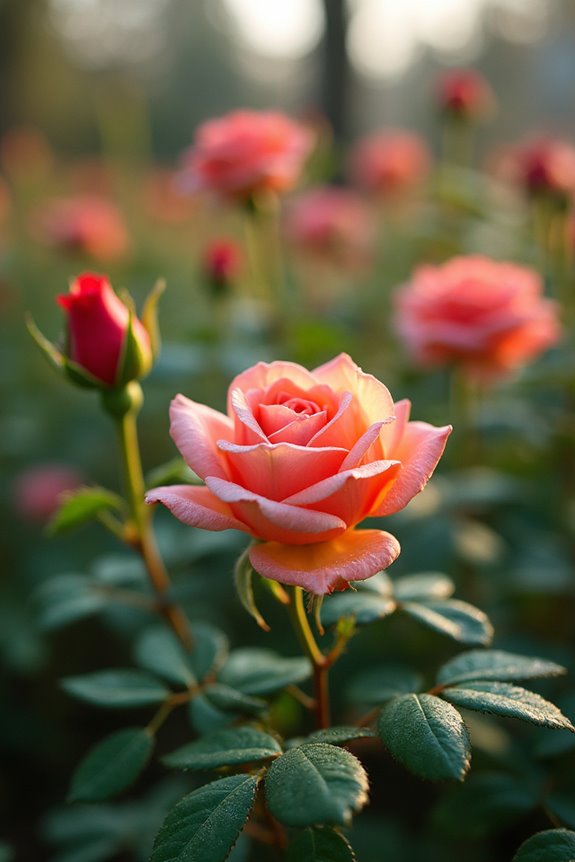
When the chill of winter starts to fade, we can almost feel the excitement building in our rose gardens! Temperature influences play a crucial role in breaking dormancy. As the days warm up, chilling temperatures have sent signals, preparing our buds for growth. Elevated reactive oxygen species (ROS) work wonders, signaling that it’s time to awaken!
Light and photoperiod also join the dance, with changes influencing hormonal interactions—cytokinins rise to promote bud outgrowth while abscisic acid recedes. We should soak in every moment, enjoying spring’s warm sunshine as it nudges our roses out of slumber! So, let’s keep an eye on the weather and prepare for the dazzling blooms ahead. Getting our gardens ready now guarantees a magnificent show! Consider using well-maintained tools like garden trowels to ensure effective planting.
Recommended Products

Brand name: Superthrive

J6-06 Planting Hoe with 2.5-Inch Stainless Steel Blade is ideal for digging holes, planting seeds, or clearing soil debris.
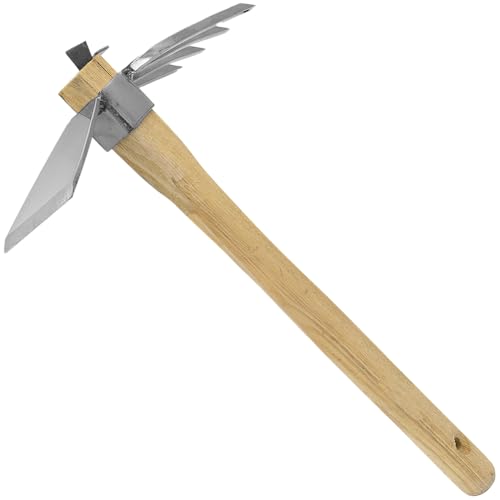
J6-08 Hoe and Fork Combo Set with stainless steel construction combines weeding and aerating capabilities in one tool.
Care Practices During Rose Dormancy

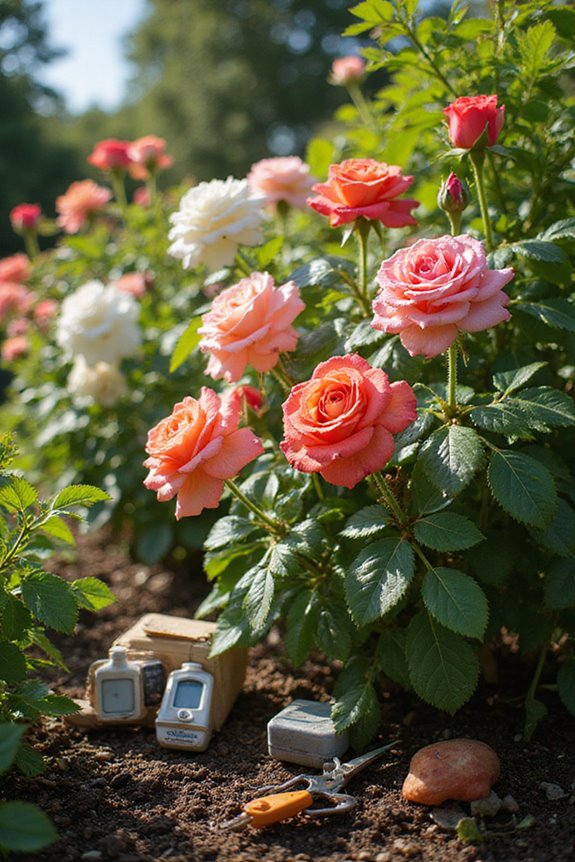
To keep our beloved roses thriving through dormancy, it’s essential we give them the care they deserve! During this period, our watering practices need to be just right—aim for deep watering about three to four times a week, ensuring the soil isn’t drying out. It’s vital to prevent drought stress, but we must also avoid overwatering to sidestep root rot. Effective pest management is equally important; let’s remove dead leaves and canes to limit overwintering pests. If we spot any early signs of trouble, using dormant sprays or horticultural oils can help. A little attention now keeps our roses happy and healthy, ready to burst into life when spring arrives! Utilizing a soil moisture meter can help ensure optimal watering practices. Let’s nurture them with love!
Physiological Variations in Rose Dormancy
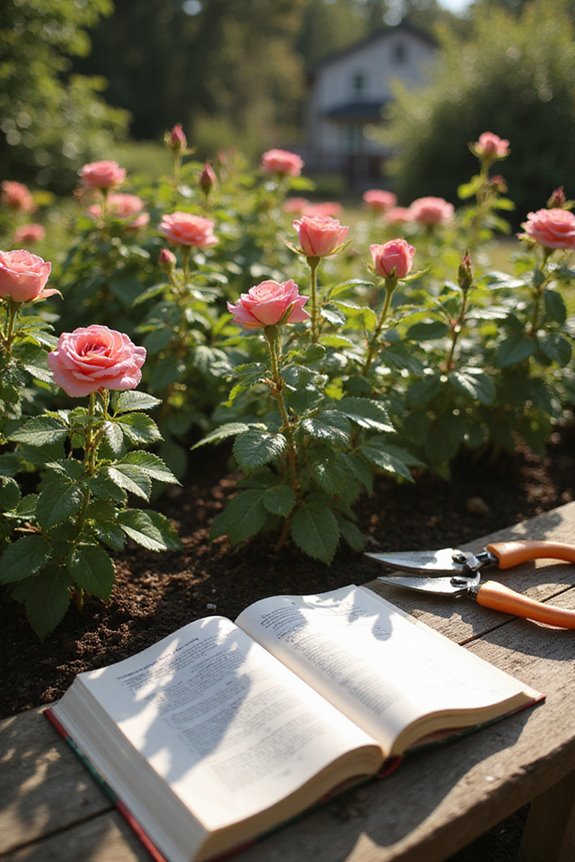
As we explore the fascinating world of rose dormancy, it’s exciting to realize how physiological variations play an integral role in this process! Understanding dormancy mechanisms helps us reveal the potential of our roses. For example, the balance of hormones like abscisic acid and gibberellic acid is vital. When IAA levels rise relative to ABA during stratification, it signals that dormancy is breaking. It’s like a little orchestra playing in our seeds!
Temperature fluctuations matter too; they dictate timing and influence hormonal interactions that prepare seeds for germination. With proper warm and cold stratification, we can wake those beauties up! Additionally, ensuring that thorn protection gloves are used during pruning can enhance the enjoyment of nurturing these plants. So, let’s embrace these physiological variations to guarantee our rose gardens vibrantly bloom!
Signs Indicating Dormancy Break in Roses
Excitement fills the air as we witness the signs indicating dormancy breaks in our beloved roses! The first signs we notice are the delightful bud swelling at branch tips. These buds, often shifting from brown to a cheerful green or reddish hue, signal that growth is imminent! We can perform a scratch test – gently scraping the bark to reveal vibrant green tissue beneath, confirming our roses are waking up. Remember to look for those little leaf tips pushing through; they’re the icing on the cake! With consistent soil temperatures above 45°F and adequate moisture, we’ll see those soft green shoots emerge, each a promise of beauty ahead. Let’s nurture these signs and get ready for a stunning growing season!
Frequently Asked Questions
How Do I Determine My Rose’s Dormancy Status?
Like a cozy hibernation story, we check for dormancy indicators by inspecting our rose’s stems and buds. With proper rose care, we can guarantee their health and readiness for vibrant growth in due time.
Can I Force My Roses to Break Dormancy Early?
Yes, we can force our roses to break dormancy early using various methods like warm water and pruning, but we must be cautious of dormancy triggers and potential frost damage to guarantee healthy growth.
What Specific Temperatures Indicate Dormancy for My Roses?
Like a sleeping beauty, our roses indicate dormancy when temperatures consistently drop below 50°F (10°C). These temperature thresholds serve as key dormancy indicators, signaling their natural response to survive colder months.
How Do Different Rose Varieties Vary in Dormancy Timing?
Different rose varieties indeed have varying dormancy timings. By carefully considering variety selection, we can anticipate seasonal differences, ensuring our roses thrive based on their unique growth patterns and regional climate adjustments.
What Impact Does Soil Type Have on Rose Dormancy?
Soil type markedly affects rose dormancy by influencing soil moisture and nutrient availability. Clay retains moisture longer, while sandy soils dry quickly, impacting how our roses shift into and out of dormancy.