As an Amazon Associate, we earn from qualifying purchases. Some links on this site are affiliate links at no extra cost to you. Our recommendations are based on thorough research and editorial judgment.

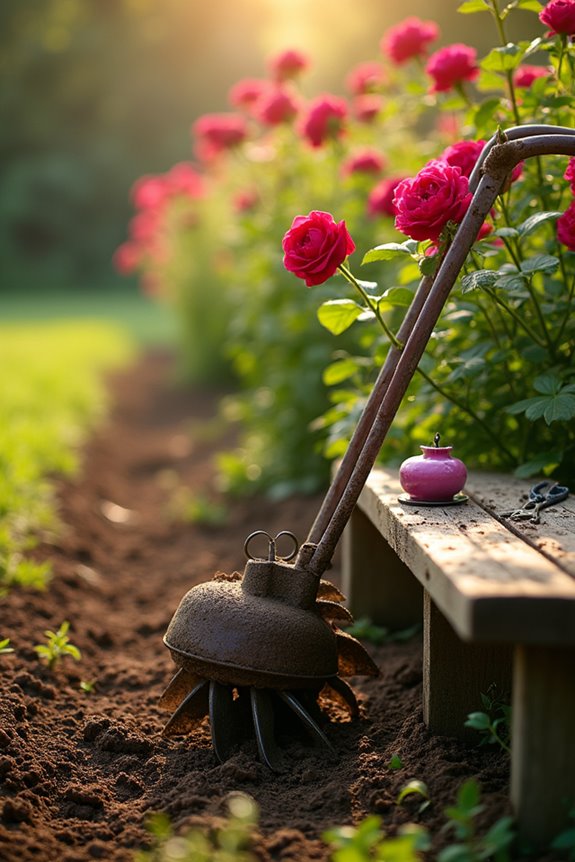
Do Hand Tillers Help With Rose Bed Prep?

Absolutely, hand tillers are fantastic for preparing rose beds! They improve soil aeration, ensuring our roses’ roots get the oxygen they crave. Plus, hand tillers help mix in compost for enriched fertility and weed control. By working close to delicate roots without the noise or emissions of mechanical tillers, we can nurture a thriving rose garden! Ready to transform your soil and boost those blooms? Join us, and let’s explore the best practices together!
Key Takeaways
- Hand tillers improve soil aeration, enhancing oxygen levels crucial for healthy rose root development.
- They promote beneficial microorganisms, boosting rose resilience against diseases and improving overall plant health.
- Hand tillers effectively control weeds by disrupting their growth, helping maintain a clean rose bed.
- These tools allow for tailored soil preparation, mixing organic amendments essential for roses’ nutrient needs.
- Their lightweight design and precision make it easier to till around delicate rose plants without damaging roots.
Benefits of Hand Tillers for Rose Beds
You may be interested



When we think about preparing our rose beds, hand tillers are often the unsung heroes of the garden! These trusty tools improve soil aeration, breaking up compacted soil to boost oxygen levels for our precious rose roots. Better aeration encourages beneficial microorganisms, enhancing plant health and reducing soil-borne diseases. Plus, by disrupting pesky weeds, hand tillers provide fantastic weed control, preventing those competition-hungry plants from taking over. Mixing in organic matter like compost during tilling enriches our soil, ensuring our roses thrive in a nutrient-rich environment. Moreover, using a hand tiller allows gardeners to tailor soil conditions specific to the needs of their roses. So, let’s grab our hand tillers and enjoy the satisfying experience of creating the perfect rose bed—our plants will thank us with breathtaking blooms! Happy gardening!
Ideal Soil Condition and Depth for Roses

To cultivate stunning roses, we need to pay close attention to their ideal soil conditions and planting depth! First, let’s verify our soil pH sits between 6.0 and 7.0, slightly acidic to neutral—this promotes nutrient availability for healthy growth. We can use soil testing kits to check pH levels and amend accordingly.
A nutrient-rich loam, with a nice balance of sand, silt, and clay, is fantastic for drainage and root expansion. When planting, we should dig deep holes—around 8-12 inches beyond the root ball—allowing roses to flourish in rich layers. By incorporating organic matter, we’ll boost soil fertility and moisture retention, paving the way for vibrant blooms! High phosphorus content supports vibrant and abundant blooms, making it a key consideration when selecting soil amendments. Happy gardening!
Effective Integration of Soil Amendments
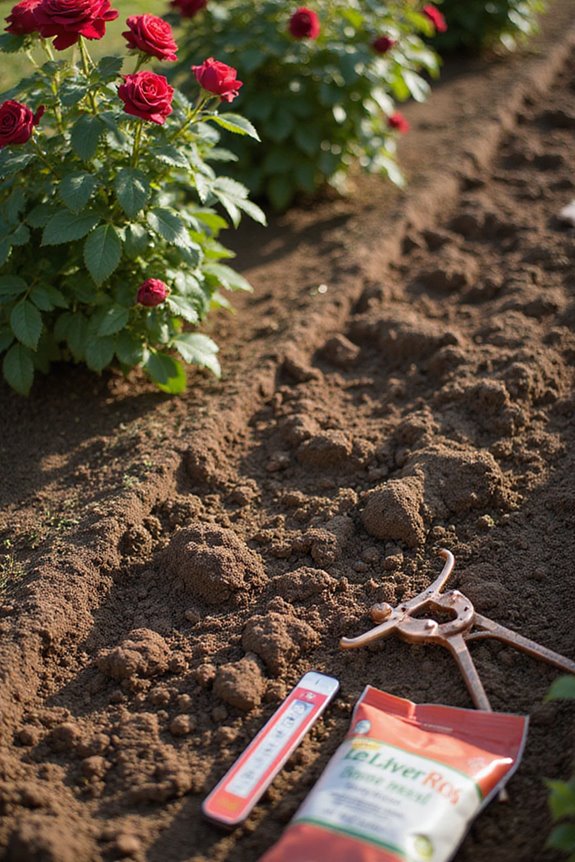
Integrating soil amendments effectively can turn your rose bed into a thriving garden paradise! Let’s explore essential soil amendment strategies that boost microbial health benefits. Start by mixing one part compost with two parts native soil, enhancing fertility effortlessly. Incorporate aged manure and alfalfa meal to give your roses a nutrient boost. Seaweed powders? They’ll stimulate beneficial microbial activity! We should apply these amendments evenly over the entire bed, ensuring they’re well-mixed to avoid hard layers. Gently integrate with a hand tiller, maintaining soil structure while inviting diverse microbes. Remember, adding amendments weeks before planting helps microorganisms work their magic! Additionally, using natural soil amendments can provide essential nutrients and improve soil structure for your roses. With these practices, we pave the way for a flourishing rose garden that’s vibrant and resilient!
Advantages of Hand Tillers Over Mechanical Tillers

Hand tillers truly shine as we explore the world of rose bed preparation, especially when we want a more hands-on approach! The hand tiller benefits us by being lightweight and portable, making it easy to maneuver in those tight spots around our beloved roses. With no fuel needed, we skip the hassle of maintenance and enjoy gardening efficiency that saves us time and money. Their precision allows us to carefully till around delicate roots, ensuring we protect our precious plants. Plus, the absence of emissions keeps our gardens eco-friendly! With tactile feedback as we work the soil, we can easily detect those hidden obstacles. It’s gardening joy at its finest—let’s dig in and embrace the art of hand tilling! Additionally, using a hand tiller helps achieve optimal soil aeration for our roses, which is crucial for their health and growth.
Best Practices for Hand Tilling

When we’re ready to plunge into hand tilling, it’s essential to contemplate a few best practices that set us up for success! First, make sure the soil’s moisture is just right—around 4 inches deep, ideally watered a day or two beforehand for easy tilling. We’ll apply smart tilling techniques, like using a spade fork or hand tiller, which are fantastic for loosening and aerating the soil without causing too much disruption. Remember, removing sticks and debris is key for effective mixing! Timing matters too; let’s till close to planting to keep moisture intact and reduce weed growth. And don’t forget, incorporating compost enriches our precious soil, ensuring vibrant, thriving rose beds! Additionally, using a cultivator with sharp, serrated tines can enhance soil penetration for optimal results! Happy tilling!
Limitations and Considerations of Hand Tilling
After mastering the best practices for hand tilling, it’s time to contemplate some limitations that can challenge our efforts in preparing rose beds! While hand tilling can be rewarding, it demands considerable manual labor and can lead to physical strain, especially for those without ample fitness levels. Turning compacted soil is a tough, back-breaking task. Plus, factors like soil moisture play a significant role; too dry or heavy clay can cause frustration and incomplete tilling. We may find ourselves exhausted, reducing our consistency. Also, hand tillers typically disturb only the top layers, limiting nutrient mixing and deeper root establishment required for our beautiful roses! Let’s embrace these challenges while carefully evaluating our needs and capabilities!
Maintaining Hand Tillers for Optimal Performance
Maintaining our hand tillers is essential for keeping them in tip-top shape and guaranteeing our rose beds thrive! Let’s start with some effective tiller cleaning; after each use, we should hose off our tillers, focusing on those tines and moving parts to eliminate stubborn soil and plant debris. Regular inspection is vital—check for cracks or bends and promptly replace any damaged tines. Now, onto lubrication tips! We should grease out-board hubs and gearbox gears every 25 hours or as specified. Remember to keep that throttle linkage lightly lubricated for smooth operation. To avoid rust, store our tillers in a dry area, using breathable covers. By caring for our tools, we guarantee our gardening adventures bloom beautifully!
Frequently Asked Questions
Can Hand Tillers Be Used for Other Garden Beds?
Hand tillers are like trusty compasses guiding us through various garden beds. Their versatility enhances garden bed efficiency, making them perfect for flower, vegetable, and herb gardens, ensuring our plants thrive in healthy soil.
What Types of Hand Tillers Are Best for Rose Bed Prep?
For rose gardening, we recommend manual tillers like twist tillers and hoe-cultivator combos. Their lightweight, ergonomic designs make them perfect for preparing soil while minimizing stress on delicate rose roots and foliage.
How Long Does Hand Tilling a Rose Bed Typically Take?
Hand tilling a rose bed could take an eternity, right? But generally, it’s more like 30 minutes to a couple of hours, depending on our tilling techniques and soil conditions; time estimation can vary widely!
Is It Necessary to Test Soil Ph Before Tilling?
Yes, it’s necessary to test soil pH before tilling. Knowing pH levels helps us understand soil nutrients, ensuring our roses thrive while avoiding costly mistakes in nutrient application and enhancing overall plant health.
Can Hand Tilling Harm Earthworms or Beneficial Soil Organisms?
Yes, hand tilling can harm earthworms and beneficial soil organisms due to soil disturbance. While it has its uses, we should weigh these negative effects against the earthworm benefits essential for healthy soil and plant growth.