As an Amazon Associate, we earn from qualifying purchases. Some links on this site are affiliate links at no extra cost to you. Our recommendations are based on thorough research and editorial judgment.

How To Improve Heavy Clay Soil For Roses?

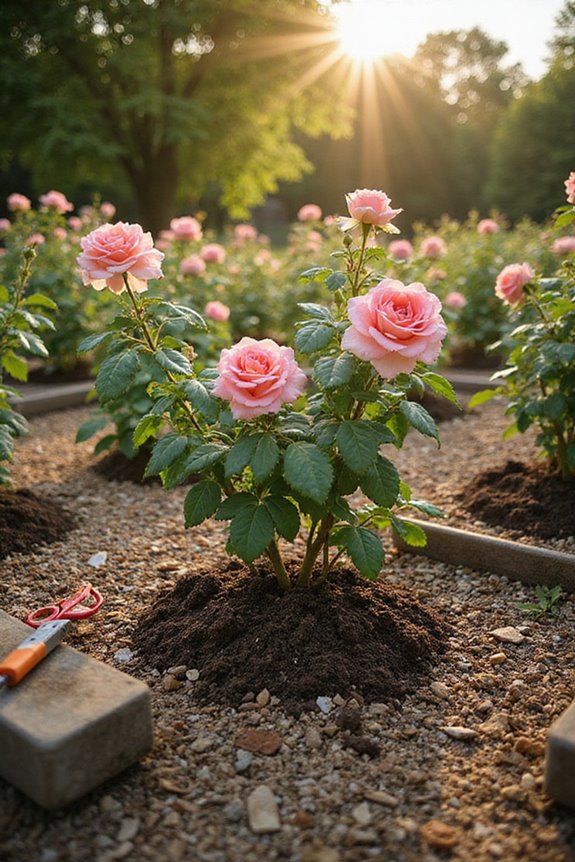
To improve heavy clay soil for our beautiful roses, we need to focus on enhancing drainage and soil structure! Let’s start by incorporating organic matter like well-aged compost—it’s a powerhouse for nutrients! Aerate the soil, encouraging airflow, and don’t forget to add gypsum or coarse sand to break up compaction. A thick layer of mulch will stabilize moisture, suppress weeds, and enrich the soil. With these tips, our roses will thrive, and there’s plenty more we can learn to guarantee their success!
Key Takeaways
- Incorporate well-aged compost and organic matter to enhance soil texture and fertility for healthy rose growth.
- Construct raised beds to improve drainage and prevent root rot in heavy clay soil.
- Aerate the soil using garden forks or mechanical aerators to boost airflow and drainage capabilities.
- Regularly mulch with organic materials like straw or wood chips to stabilize moisture and reduce compaction.
- Test and adjust soil pH, aiming for a range of 6.0 to 7.0, to ensure nutrient availability for roses.
Understanding Heavy Clay Soil and Its Challenges
You may be interested



When we dig into the world of heavy clay soil, it’s easy to see both challenges and opportunities for our beloved roses! These clay characteristics, while high in nutrients, can act like a fortress for roots. They might struggle with poor drainage, leading to root challenges that can foster diseases. The compact nature of clay limits oxygen availability, making our roses gasp for breath! We’ve got to reflect on that during dry spells, the soil hardens like rock, which can hinder root penetration. By understanding these dynamics, we can enhance aeration and drainage. Think about incorporating organic matter and mulch to improve texture and fertility, as organic soils enhance microbial activity and improve long-term soil fertility. Let’s conquer those challenges together and watch our roses thrive with vibrant vigor!
Effective Drainage Improvement Techniques
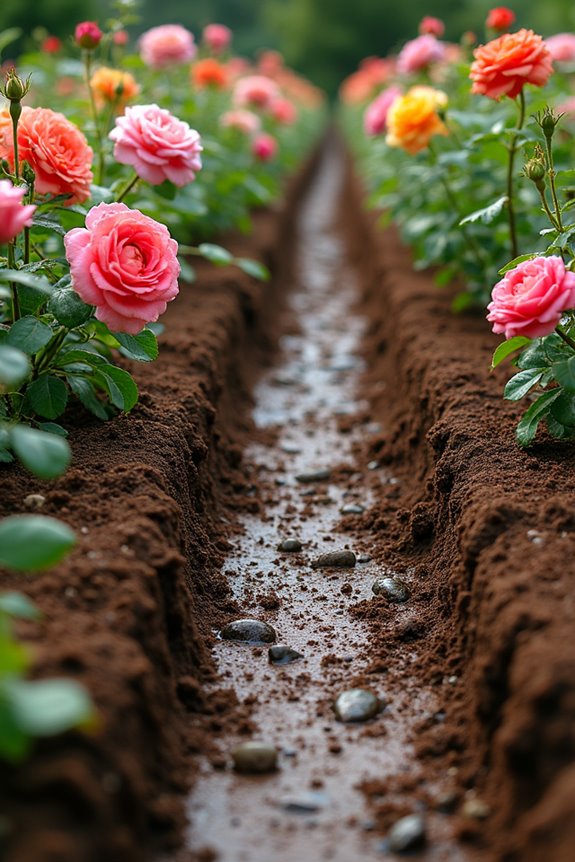
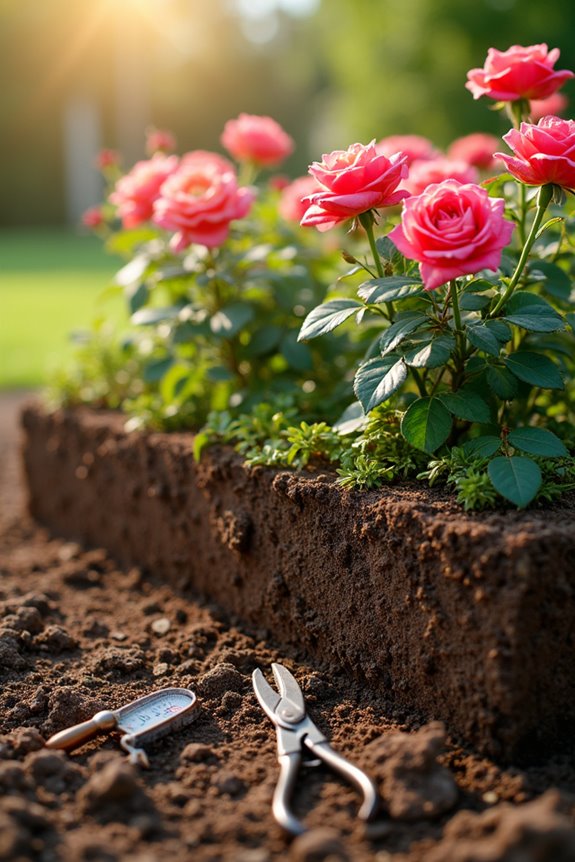
Facing the challenges of heavy clay soil doesn’t have to be an intimidating task; instead, it’s a fantastic opportunity for us to transform our gardening spaces! Let’s explore effective drainage improvement techniques that will make our roses thrive. We can contour our gardens with gentle undulations, allowing water to flow smoothly, reducing waterlogging. Using aeration methods like garden forks or mechanical aerators will create essential spaces for water and air to penetrate deeper. Plus, incorporating gypsum or coarse sand can greatly enhance drainage in our planting areas. Don’t forget to construct raised beds—they’ll provide controlled moisture while keeping our roses free from root rot! Additionally, ensuring well-draining soil is crucial to prevent root rot and promote healthy growth. With these techniques, we’re on the path to luscious, blooming roses!
Recommended Products

ORGANIC SOURCE: Greenway Biotech micronized azomite organic fertilizer packaged in resealable heavy duty bag. It is a distinct organic source of a broad spectrum of approximately 70 trace mineral elements and micro-mineral which are vital in both plants and animals

PREMIUM INGREDIENTS: This specifically crafted organic compost blend is the ideal planting mix to improve and revitalize the plant soil for rose varieties, flowers, and perennials.

Great for treating acidic soils
Soil Amendment With Organic Matter

Amending heavy clay soil with organic matter is like giving our roses a luxurious spa treatment, transforming their growing environment into a haven of health! By using organic composting techniques, we can enhance soil texture improvement and provide essential nutrients. Applying well-aged leaf compost at about 2 pounds per square foot annually enriches our soil, while worm castings boost beneficial microbes. Let’s also sprinkle in alfalfa meal for a nitrogen boost! Mixing these amendments well into the soil helps create airy, crumbly loam for ideal root growth. Don’t forget to renew that 2–3 inch layer of compost or leaf mulch every spring to maintain moisture levels and continued health. Our roses will thrive, and we’ll enjoy the vibrant blooms! Additionally, incorporating nutrient-rich attributes from specialty soil mixes can further enhance the overall health and blooming capabilities of your roses.
Recommended Products
TURBO-CHARGED LIQUID COMPOST - Specifically designed to promote soil health, this all-purpose compost fertilizer organic is good for nearly anything you grow. Root Ruckus works to promote plant and root growth, as well as increase fruiting, blooms, and harvest. It protects against plant shock and increases water retention. Root Ruckus humic acid for lawn increases the natural energy processes of your plants, leading to a stronger root system and improves the plants immune system.

IMPROVES SOIL STRUCTURE & NUTRIENT AVAILABILITY- GS Plant Foods Humic Acid Soil Amendment supports healthy soil by enhancing cation exchange capacity and helping the root zone access existing nutrients in the soil more efficiently. Derived from high-quality Leonardite.

Ready-to-Use Potting Soil: No mixing required! Michigan Peat General All-Purpose Premium Potting Soil is ready to use straight from the bag, saving you time and effort
Managing Soil Ph for Optimal Rose Growth

Managing Soil pH for Optimal Rose Growth
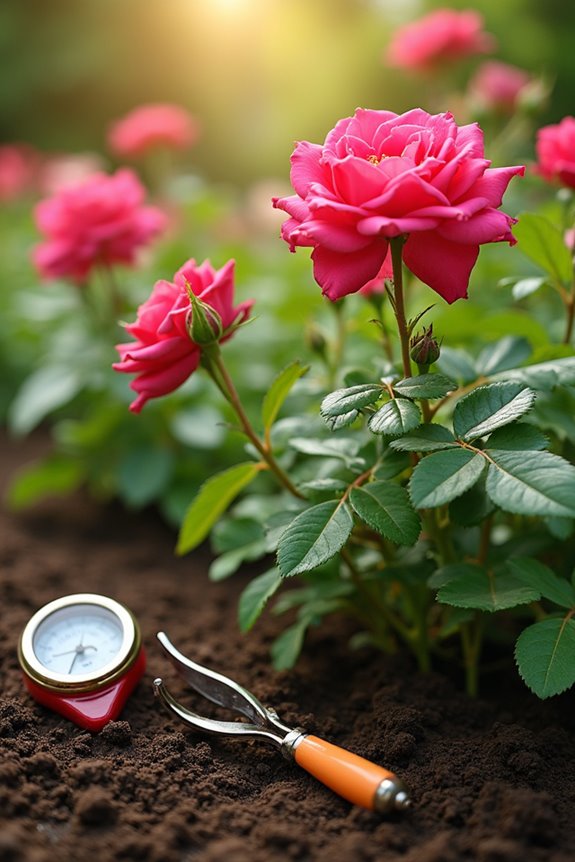
Understanding and managing soil pH is essential for our beloved roses to truly flourish! Roses thrive best in slightly acidic to neutral soil, ideally between 6.0 and 7.0, with ideal nutrient availability at around 6.5. Let’s get proactive: we should conduct pH testing using easy-to-find kits, as knowing our soil’s acidity helps avoid nutrient lockout. When pH dips below 6 or rises above 7, we could see yellowing leaves and stunted growth. If we detect these issues, gradual adjustments are key—lime can raise pH, while sulfur can lower it. Regular monitoring, especially after changes in amendments or watering, guarantees our roses get the best start! Additionally, incorporating organic soil amendments can further enhance nutrient availability and overall plant health. Happy gardening, friends; let’s nurture those glorious blooms!
Recommended Products

🔴{Great Soil pH Moisture Meter Combo for All Growers} YINMIK soil test kits included a soil ph meter and a 3 in 1 soil Moisture EC meter . pH meter provides a new experience of soil pH test. Just stick the electrode into the soil, and immediately obtain the accurate pH value. Soil Moisture meter can fast get soil moisture and temperature , help you to know if you should water or not .

High Accuracy pH Tester: Measures pH levels from 0.00 to 14.00 with ±0.1 pH accuracy; Features one-touch automatic calibration with included buffer powder packs for easy setup

pH Measurement: This pH meter offers great versatility to accurately measure the PH value of a wide range of media such as soil, plants, solution, food and water, outdoor, indoor. This pH tester expertly spans the realms of agriculture, food processing, and industrial applications, accurately assessing soil fertility, ensuring food safety's pH balance, and refining industrial process controls
Physical Soil Conditioning Strategies

When we think about nurturing our roses in heavy clay soil, implementing effective physical soil conditioning strategies is absolutely essential—after all, healthy soil means happy plants! To combat that pesky compact soil, let’s start by incorporating organic matter like composted bark and well-aged manure; this enhances drainage and boosts soil texture. Mulching with hardwood chips keeps moisture in and protects roots from temperature swings. Remember, less is more with tilling—opt for minimal disturbance to preserve soil structure. Using gypsum can also help clump soil particles for better drainage. Don’t forget to periodically mix in coarse organic materials for aeration. Together, we’re transforming our heavy clay into a paradise for our beautiful roses—let’s get growing! Additionally, ensuring your soil mix has adequate drainage is vital for rose health, as roses thrive in well-aerated environments.
Recommended Products
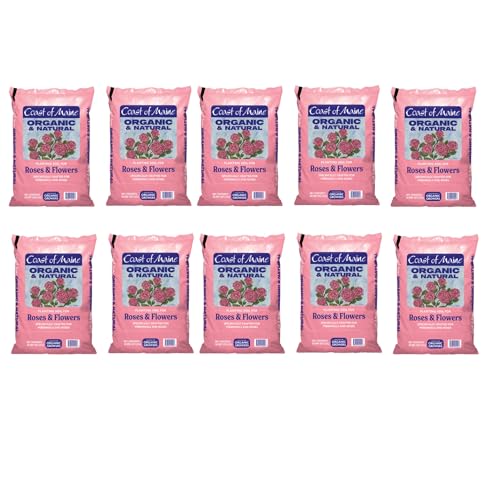
You will receive 10 (20qt) bags per order

PREMIUM INGREDIENTS: This specifically crafted organic compost blend is the ideal planting mix to improve and revitalize the plant soil for rose varieties, flowers, and perennials.

Heirlom Roses Mint Compost: Provides moisture retention in sandy, dry soils, while also rich in natural humus to help break up hard clay soils
Nutrient and Fertilizer Considerations
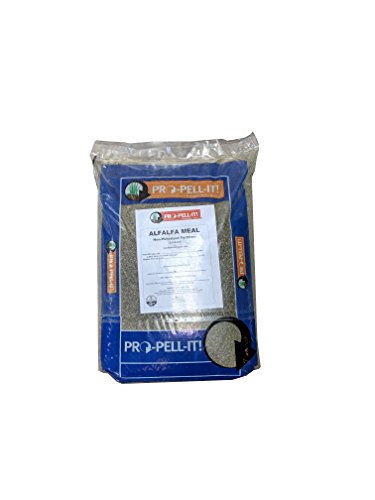
Nurturing our roses in heavy clay soil is all about getting the right nutrients to them, and that starts with understanding what our plants need! First, let’s confirm our soil is within the ideal pH of 6.0 to 6.5 for maximum nutrient availability. We recommend incorporating organic fertilizers like alfalfa meal for balance and slow-release through the season. Timing matters—let’s wait until we see new growth before fertilizing! For those essential macronutrients, think of nitrogen for lush leaves, phosphorus for strong roots, and potassium for vigor. Remember, a soil test is key for targeting specific NPK ratios. Let’s keep our plants well-fed and thriving, confirming abundant blooms and robust health!
Recommended Products

You will receive 10 (1.5 cu ft) bags per order

Down To Earth Citrus Mix is a twenty-five pound box of all natural fertilizer with 6-3-3 formula and is listed by the Organic Materials Review Institute (OMRI) for use in organic production
🌹 ROSE GROWER'S SECRET WEAPON — Contains triacontanol, a natural growth stimulant that promotes basal breaks (new canes from the base) and prolific blooming. Apply 1 cup per rose bush monthly during growing season for prize-worthy results.
The Importance of Mulching
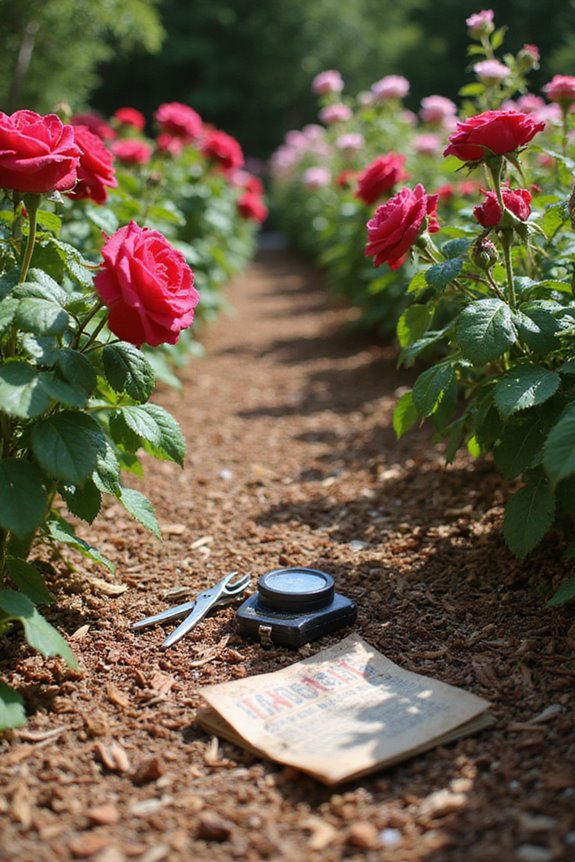
Mulching isn’t just a pretty topping for our rose beds—it’s a game-changer! By using organic mulch types, like straw or wood chips, we can lighten heavy clay soil, vastly improving drainage. Plus, a thick layer not only reduces water runoff but keeps the soil moisture levels stable. Remember to apply it about three inches deep for ideal results! Let’s not forget the benefits of temperature control; mulch can cool our soil by up to 20 degrees during those sweltering months. With clever mulching techniques, we can also suppress pesky weeds, minimizing their competition for our roses. Overall, incorporating mulch enriches our soil, encourages beneficial organisms, and turns our rose gardens into thriving paradises! Let’s get mulching!
Long-Term Maintenance for Improved Soil Health
To keep our heavy clay soil thriving for years to come, we need to stay proactive about long-term maintenance! Regular soil testing is key to understanding our nutrient levels and adjusting our amendments accordingly. Let’s be certain to incorporate loads of well-decomposed compost to boost microbial diversity and enhance soil structure! We can also mix in organic matter like horse manure and peat moss, improving moisture retention without the risk of waterlogging. And don’t forget: rotating crops and planting nitrogen-fixing companions not only builds richness but also keeps our soil dynamic. A consistent watch on our soil health will guarantee our roses flourish beautifully! Let’s cultivate richness, one scoop of compost at a time!
Tips for Successful Rose Planting in Clay Soil
When it comes to planting roses in heavy clay soil, employing a few key strategies can make a world of difference! First, we should select tough rose varieties like Floribunda, as they love clay’s moisture. Next, let’s focus on our planting techniques: dig a wide, deep hole and blend native clay with at least 50% organic matter—think leaf compost or well-decomposed manure! This boosts aeration and nutrients. We can also raise our planting beds to prevent compaction and improve drainage. Finally, don’t forget to mulch! A cozy layer of hardwood mulch not only conserves moisture but also helps our roses thrive. With these tips, we’re all set for a blooming success! Happy gardening!
Frequently Asked Questions
Can I Grow Other Plants in Heavy Clay Soil?
Yes, we can grow suitable plants in heavy clay soil. By incorporating drainage solutions like compost and raised beds, we can enhance root growth and thrive with a diverse range of resilient species in our gardens.
How Do I Know When to Stop Amending My Soil?
We can stop amending our soil when testing shows balanced nutrients, plants thrive, and structures are stable. If our soil smells earthy and roots grow deep, we’ve likely achieved ideal growing conditions.
What Time of Year Is Best for Soil Improvement?
The best time for soil improvement is during fall preparation. By amending soil then, we enhance its structure, making spring planting much easier. Let’s focus on improving our heavy clay soils in the autumn months.
How Often Should I Test My Soil Ph?
We should test our soil pH every 3 to 4 years for heavy clay soils. Regular soil testing helps us monitor pH levels and guarantees our garden’s health remains ideal for growth.
Can I Use Synthetic Fertilizers on Clay Soil?
We can use synthetic fertilizers on clay soil, but we shouldn’t rely solely on them. They provide quick nutrients but often leach quickly, so combining them with organic matter enhances clay soil nutrients for better results.