As an Amazon Associate, we earn from qualifying purchases. Some links on this site are affiliate links at no extra cost to you. Our recommendations are based on thorough research and editorial judgment.

How Thick Should Rose Mulch Be Applied?

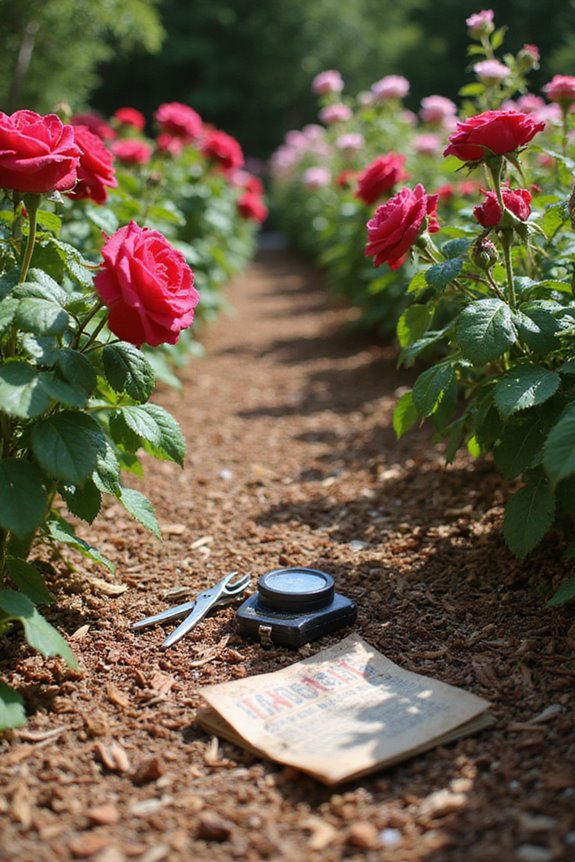
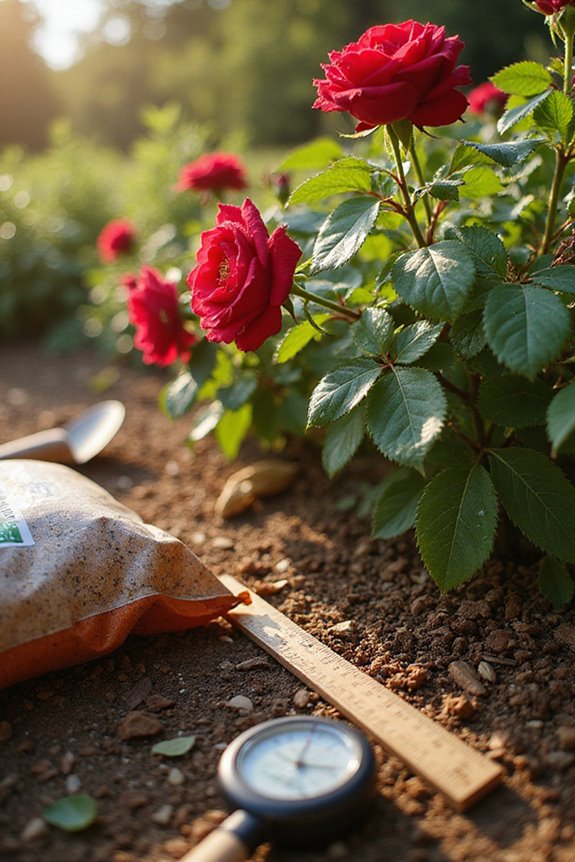
When it comes to mulching our roses, we want a thickness of 2 to 3 inches! This sweet spot helps retain moisture, keeps weeds at bay, and stabilizes soil temperature. For coarser mulches, we can go a tad deeper, around 3 to 4 inches, but let’s keep a little space—about 3 inches—around the bases of our roses! Maintaining that depth is key for happy, healthy blooms! Stick around, and we’ll share more tips on enhancing your rose garden!
Key Takeaways
- Apply a mulch layer of 2 to 3 inches for optimal moisture retention and weed suppression.
- Coarse mulches can be applied slightly deeper, up to 3 to 4 inches for better protection.
- Maintain a 3-inch gap at the base of the rose bush to prevent stem rot.
- Adjust mulch depth seasonally; thinner in spring and thicker in fall for winter protection.
- Regularly check and replenish mulch to maintain the ideal thickness of 2 to 4 inches.
Importance of Mulch for Roses
You may be interested



When it comes to nurturing our beloved roses, we can’t overlook the importance of mulch! This magical blanket not only keeps our rose roots consistently moist but also stabilizes soil temperature, preventing those extreme swings that can stress our roses. By doing so, we can help reduce watering needs and enhance rose health dramatically. Plus, mulch acts like a superhero against weeds, blocking sunlight and letting our roses compete for nutrients and water without interruption. And let’s not forget—it creates a cozy microenvironment for beneficial soil organisms! Additionally, using moisture retention techniques in combination with mulch can further boost the health of your roses. So, let’s spread a lovely layer of organic mulch around our roses, ensuring they thrive all season long. Happy gardening!
Recommended Mulch Depth
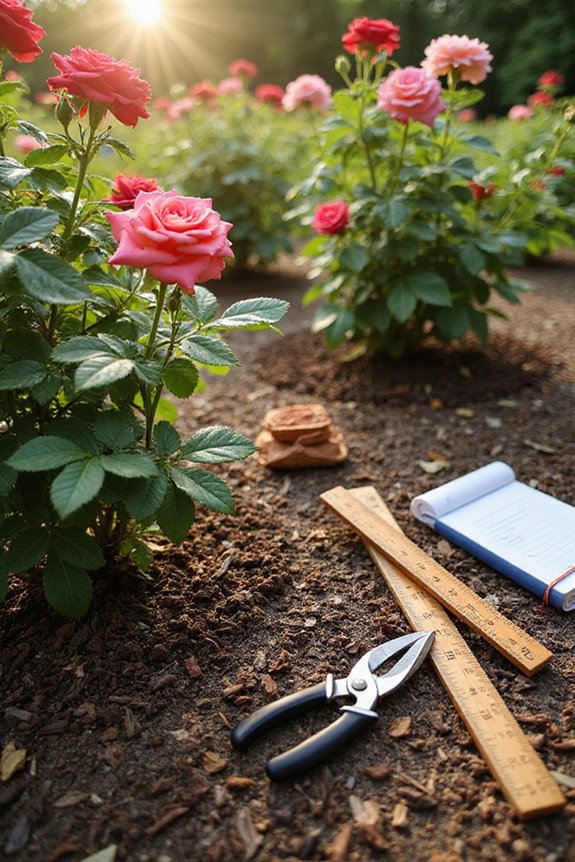
A perfect mulch layer of 2 to 3 inches is what we recommend for roses—think of it as a cozy blanket for our garden treasures! This depth provides excellent moisture retention while keeping pesky weeds at bay. Depending on mulch composition, we might adjust slightly; for example, coarse mulches can handle a bit more, around 3 to 4 inches, while finer ones prefer staying closer to 2 inches. Remember to keep the mulch 3 inches away from the base of the rose bush to avoid rot and pests. Plus, don’t forget: seasonal adjustments can be beneficial! Thinner mulch in spring encourages growth, while a thicker layer in fall wraps our roses warmly for winter. Durable materials can also contribute to protecting your roses while maintaining their aesthetics. Let’s cultivate that garden magic together!
Timing and Frequency of Mulching
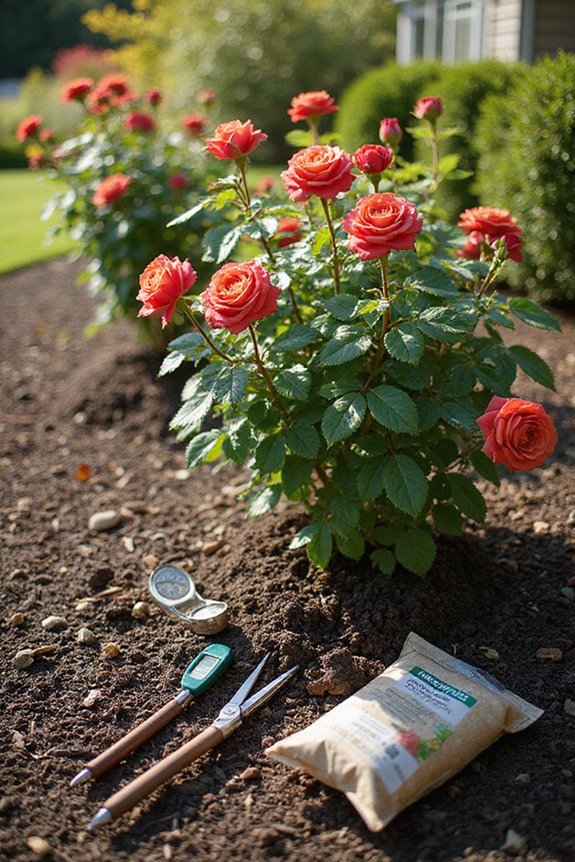
After we’ve established that perfect mulch depth, let’s talk about the timing and frequency of mulching, which are just as essential for our rose companions! We’ll want to apply our first layer of mulch right after the season’s first feeding, usually between late February and early April. Make sure the soil is clean; old leaves and weeds can invite pests! We should also plan for a second application in the fall if needed. Seasonal strategies are key—spring mulching retains moisture as roses bloom, while autumn protects roots from chilly temps. Regularly check the depth; mulching techniques work best when maintained at 2-4 inches. With consistent care, our roses will flourish beautifully! Additionally, using organic mulch can help improve soil nutrients, enhancing healthy rose growth! Happy mulching!
Types of Suitable Mulch for Roses

Choosing the right mulch for our roses can be an exciting way to enhance both their health and the beauty of our gardens! When considering suitable options, bark mulches, such as cedar and hemlock, stand out for their nutrient-rich properties and durability. These decomposed materials not only suppress weeds but also help regulate soil temperature. Shredded bark mulch, applied 2 to 3 inches deep, strikes the perfect balance for our roses. Composted materials like well-rotted manure and garden compost are fantastic for enriching soil and improving moisture retention. Pine straw, while lightweight and airy, can slightly acidify the soil. Let’s embrace these organic choices to create thriving, stunning rose gardens that we can truly be proud of! Additionally, using durable garden hoes can aid in maintaining the optimal mulch depth and ensuring healthy soil conditions.
Application Methods and Best Practices
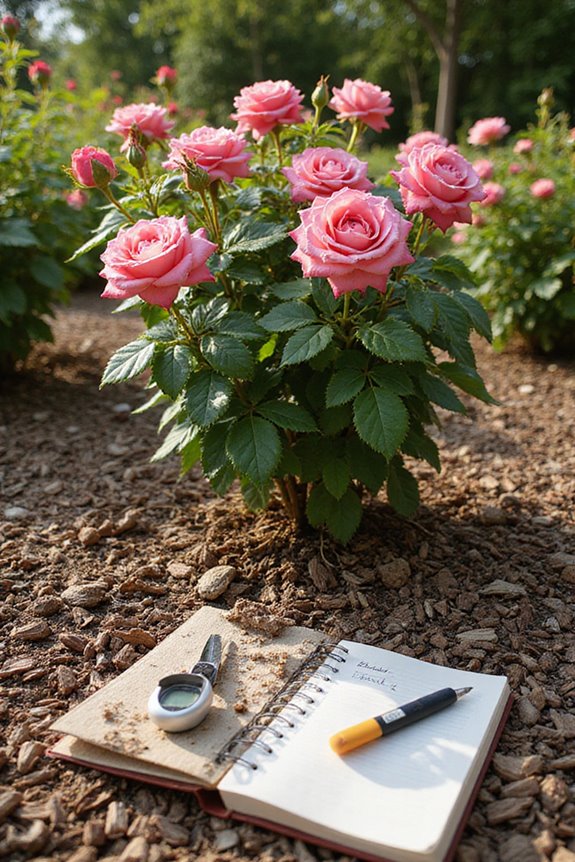
When it comes to mulching our beautiful roses, we can’t underestimate the impact of proper application methods and best practices! First, let’s prepare—remove those pesky weeds and clear any old mulch. Water the soil thoroughly to keep moisture locked in. For our application techniques, spread the mulch evenly to the width of the rose canopy, aiming for a thickness of 2 to 3 inches. This guarantees ideal moisture retention without suffocating our roses! Don’t forget to avoid “mulch volcanoes” that trap water near the stems. Finally, let’s keep an eye on our mulch materials, revitalizing them as needed to maintain the right depth. With these techniques, our roses will flourish beautifully! Additionally, using effective watering tools can significantly enhance overall plant health and growth. Let’s get mulching!
Benefits of Proper Mulch Thickness
Proper mulch thickness is one of the secrets to keeping our roses healthy and thriving! When we apply a layer of 2 to 3 inches, we achieve fantastic moisture retention, conserving up to 50% water in our rose beds. This is especially important during those sizzling summer days! Plus, it provides amazing ecological benefits by promoting cooler soil temperatures, insulating roots, and encouraging deeper rooting for nutrient uptake. By choosing organic mulch, like shredded bark, we not only nourish the soil but also foster beneficial earthworms that aerate our garden! Maintaining this balance helps shield our roses from pests and diseases, minimizing our workload in the process. Let’s guarantee our roses get the best care with the right mulch!
Considerations for Weed Control
While we’re all keen to see our roses flourish, tackling weeds is a key part of the game! To enhance weed suppression, we need to lay down a mulch layer between 2 to 3 inches thick. This depth suffocates pesky weed seeds, burying them too deep to germinate. Not only does mulch reduce light access for these nuisances, but it also adds nutritious benefits to our soil as it breaks down. If we’re feeling ambitious, layering up to 5 inches can considerably cut down on our maintenance time! Remember, timing is everything—apply mulch in early spring for maximum impact. By thinking ahead, we can create a beautiful rose garden that’s not just thriving, but thriving weed-free! Happy gardening!
Potential Risks of Incorrect Mulch Depth
Getting the mulch depth just right is essential to keeping our beloved roses healthy and thriving! Overmulching risks are real – layers thicker than 3 to 4 inches can suffocate roots, prevent proper moisture balance, and even create a haven for pests. Thick mulch traps moisture around our rose stems, leading to dangerous fungal infections. We should always leave a 2 to 3-inch gap at the base of our roses!
Let’s not forget the impacts of mulch application on soil quality! Excessive depth can deplete crucial nutrients and hinder aeration, resulting in weaker plants. Striking the perfect mulch thickness promotes happy, healthy roses, ready to bloom beautifully. So, let’s be mindful and keep our mulch depths in check for the ultimate rose garden!
Signs Your Mulch Needs Replacement
Have you ever wondered when it’s time to rejuvenate your rose mulch? We should keep an eye out for symptoms of discoloration, like fading hues that signal it’s losing its protective qualities. If we see excessive weed growth, that could mean our mulch has thinned out and lost its effectiveness. Check the thickness—if it’s below two inches, we definitely need to replenish! And let’s not ignore fungal issues; moldy mulch can harm our beloved roses and indicates poor conditions. If we notice compacted mulch exposing soil, it’s time to act! Regularly renewing our mulch keeps our garden vibrant, protects our plants, and guarantees that those roses thrive. Let’s keep our patches colorful and healthy!
Sustainable Mulching Practices for Rose Care
Sustainable mulching practices can truly transform our rose gardens, ensuring they flourish while we take care of the environment! By choosing organic materials like shredded bark, well-rotted manure, and compost, we enrich our soil naturally and effectively. Let’s prioritize sustainable sourcing—local and recycled options not only cut carbon footprints but also boost soil health!
Frequently Asked Questions
How Does Mulch Thickness Affect Pest Control for Roses?
Like a shield, proper mulch thickness nurtures our roses while deterring pests. By striking the right balance, we enhance pest resistance and enjoy mulch benefits, fostering a thriving garden ecosystem that welcomes beneficial creatures.
Can I Use Grass Clippings as Rose Mulch?
Yes, we can use grass clippings as rose mulch! They offer benefits like moisture retention and nutrients. However, let’s consider using hay mulch too, as it improves aeration and enhances aesthetics in our rose garden.
What Are the Signs of Mulch Quality Deterioration?
We’ll notice signs of mulch quality deterioration when we see its color fading, indicating decomposition. If it compacts or develops mold, our mulch’s effectiveness diminishes, worsening weed control and moisture retention over time.
Is There a Specific Mulch for Different Rose Varieties?
Yes, there’re specific mulch material differences for different rose variety preferences. Organic mulches benefit most roses, providing nutrients, while some heat-loving varieties thrive with inorganic options. Choosing the right mulch enhances growth and overall health for our roses.
How Do I Choose Between Organic and Inorganic Mulch?
When choosing between organic and inorganic mulch, we should consider organic benefits like soil enrichment and moisture retention, alongside inorganic drawbacks, such as limited nutrient supply and potential water issues. Both options have unique qualities worth our attention.