As an Amazon Associate, we earn from qualifying purchases. Some links on this site are affiliate links at no extra cost to you. Our recommendations are based on thorough research and editorial judgment.

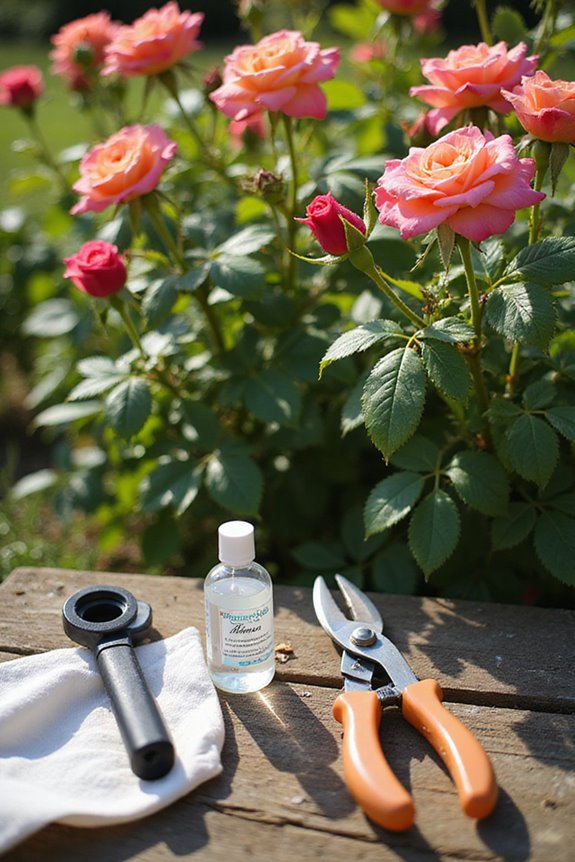
How To Disinfect Cuts On Rose Canes And Tools?

To keep our rose canes and tools in top shape, we must disinfect diligently! Start by using 70% isopropyl alcohol or bleach wipes on shears before each cut, especially on infected plants. Always cut at a 45-degree angle, about 2-3 inches below any symptoms, and immediately apply a fungicide to fresh wounds. We’re creating a garden free of infection together! And stay tuned, we’ll explore more about protecting our beautiful roses!
Key Takeaways
- Use 70% isopropyl alcohol or bleach wipes to disinfect pruning tools before and after each cut.
- Ensure to wipe or dip shears, especially when cutting infected canes, to prevent disease spread.
- Make cuts at least 2-3 inches below visible symptoms on the rose canes for better infection control.
- After cutting, immediately apply a suitable fungicide to fresh wounds to protect against pathogens.
- Regularly monitor roses for diseases and maintain proper cultural practices to reduce infection risk.
Importance of Disinfecting Pruning Tools
You may be interested



When we venture into our gardens, pruning tools become our trusty sidekicks, but if they’re not properly disinfected, we could unintentionally invite trouble! Tool sanitation is crucial. Each time we cut a rose cane, we’re at risk for pathogen transmission if we don’t clean our tools. Those pesky pathogens can hide in sap or tissue residues, spreading diseases like fire blight and fungal infections. Disinfecting after every cut—especially on infected plants—isn’t just smart; it’s essential! It drastically reduces the chance of our healthy plants falling victim to harmful infections! Additionally, using high-quality materials for your pruning shears can enhance the effectiveness of your sanitation efforts. So, let’s take a moment to confirm our tools are cleaned and sanitized! We’re not just safeguarding our roses; we’re nurturing a vibrant garden ecosystem! Happy gardening!
Recommended Products

FELCO 2 Hand Pruner – The world-famous Swiss-made bypass pruner built for precision and durability, featuring forged aluminum handles and replaceable hardened steel blades.
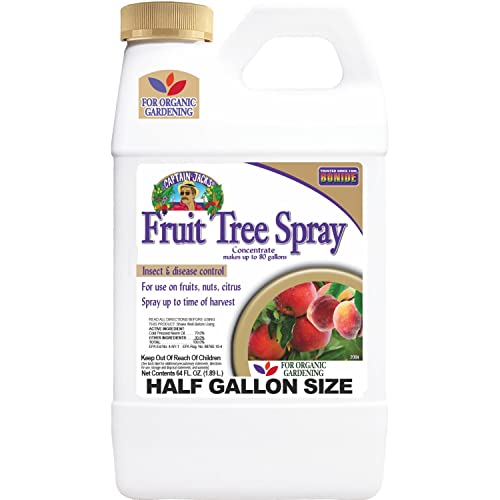
Control diseases and insects in your garden with Captain Jack’s Fruit Tree Spray Concentrate! Use on a variety of listed fruits, nuts and citrus plants.

Item Package Dimension: 9.0599999907588L x 8.3099999915238W x 5.5899999942982H inches
Step-by-Step Disinfection Process
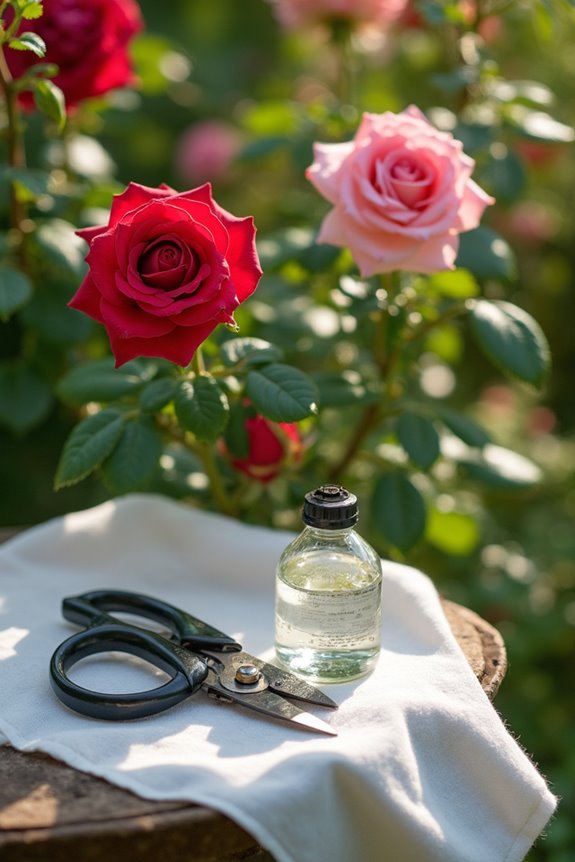
As we commence our cutting journey, it’s essential to set the stage for a thorough disinfection process that guarantees our rose garden stays healthy and vibrant! Let’s start by preparing our tools using effective disinfecting methods, like 70% isopropyl alcohol or bleach wipes. Before each cut, we’ll wipe or dip our shears, especially when tackling those infected canes, to keep diseases at bay. Remember, we should always cut at least 2-3 inches below any visible symptoms! After every cut, we’ll apply fungicide to shield those fresh wounds. Regularly monitoring rose diseases can help identify issues early and maintain plant health. Finally, don’t forget to sanitize our hands and securely dispose of pruned material—no composting infected canes! By following these steps, we’re giving our roses the best chance to thrive! Happy gardening!
Recommended Products
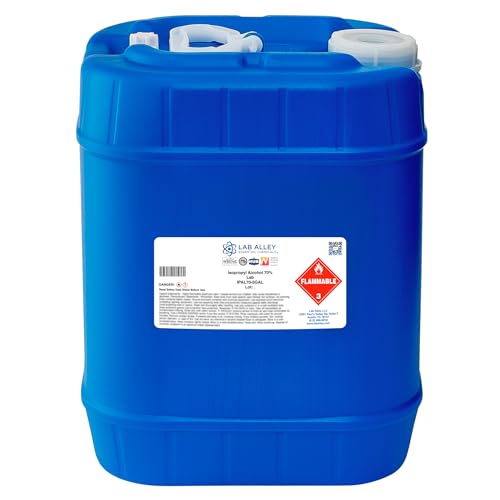
𝗟𝗮𝗯 𝗚𝗿𝗮𝗱𝗲 𝗜𝘀𝗼𝗽𝗿𝗼𝗽𝘆𝗹 𝗔𝗹𝗰𝗼𝗵𝗼𝗹 – 𝟳𝟬% 𝗙𝗼𝗿𝗺𝘂𝗹𝗮𝘁𝗶𝗼𝗻: Formulated with 70% isopropyl alcohol and 30% distilled water for controlled evaporation and effective cleaning performance in laboratory and industrial settings.
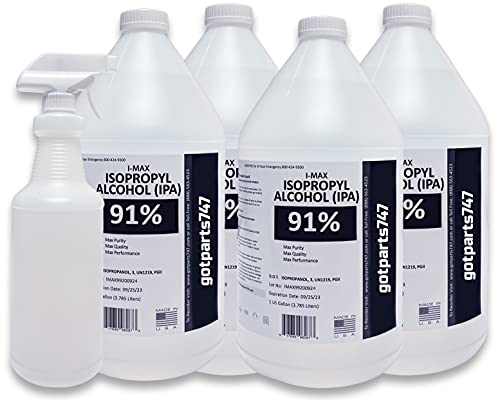
Isopropyl Alcohol - High Purity IPA 91% (4-1 Gallon) - Made in USA
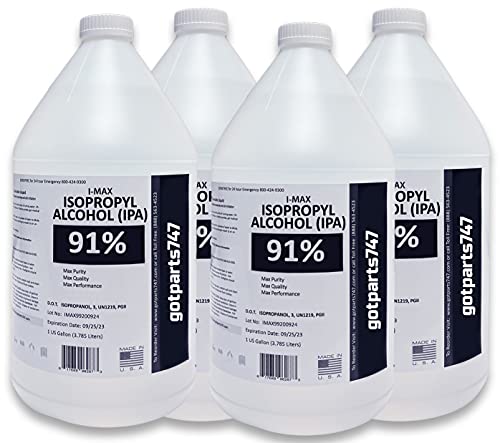
4 Gallons of High Purity USP Grade Isopropyl Alcohol 91%
Best Practices for Pruning Infected Rose Canes

Pruning infected rose canes isn’t just a task; it’s an opportunity for us to rejuvenate our beloved blooms! By using proper pruning techniques, we can enhance our rose garden’s health and beauty. First, let’s identify those pesky cankers; we need to remove all infected cane portions ASAP to prevent the spread of disease. Remember to make cuts well below the affected areas, ideally at a 45-degree angle just above an outward-facing bud. This encourages healthy growth! It’s essential to use sharp tools for clean cuts, minimizing infection risk. And don’t forget: proper cane removal includes disposing of prunings carefully. Using high carbon stainless steel blades can ensure your cutting tools remain sharp and effective for each pruning session. Let’s work together to keep our roses vibrant and flourishing! Happy gardening, friends!
Recommended Products
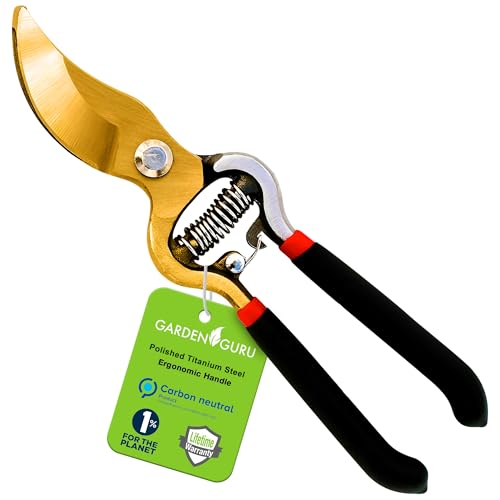
TITANIUM BLADE: This is a heavy, high quality pruning shear you’ll be proud to own or gift. These garden pruners are a classic design and come with a titanium blade for extra sharp cuts and extended durability.

Cutting giraffe: bypass telescopic loppers for fresh, young shoots, branches and branches up to 3.2 cm in diameter in tree crowns and dense bushes - without the aid of a ladder - with a maximum total range including users of 6 m

CUTCO Forever Guarantee provides for free sharpening and replacement forever.
Cultural Practices to Prevent Infection

In our quest for luscious, vibrant roses, embracing cultural practices to prevent infection is essential! First, let’s talk about plant spacing. Giving our roses room to breathe improves air circulation, reducing humidity that fungi adore. Next, our watering schedule plays an important role; watering early in the day allows canes and leaves to dry before evening, cutting down the risk of infection.
Don’t forget to remove any infected or dying materials promptly! We should be vigilant and check for signs of distress. Keeping our plants vigorous with balanced fertilization and regular monitoring sets them up for success. By combining these practices, we’ll cultivate robust roses that thrive—let’s keep those infections at bay and celebrate our blooming victories together! Additionally, utilizing balanced fertilizers enhances plant health, creating a strong defense against diseases.
Recommended Fungicides and Protective Sprays

Cultivating stunning roses means not only nurturing their growth but also safeguarding them from pesky fungal foes! For effective fungicide selection, we recommend using products with active ingredients like triforine, myclobutanil, or mancozeb. These fungicides are our trusted allies against fungal infections on rose cuts. Remember to apply these sprays every 7 to 10 days during active infection periods to keep those fungal spores at bay. For existing infections, a curative approach with mancozeb every 5 days can be essential! Don’t forget the power of both contact and systemic fungicides; they work together to protect our precious roses. Furthermore, be mindful of organic options available that can also contribute to maintaining the health of your rose garden. Let’s get our spray application right and enjoy the blooms while keeping our roses robust and blooming beautifully!
Recommended Products

Exceptional Disease Control: Multiple modes of action control devastating vegetable diseases including downy mildew. Pathogens are attacked at multiple growth stages for better overall disease control.

Thiophanate-Methyl - 41.25%

PROVEN BROAD-SPECTRUM FUNGUS PREVENTION: Gunner 14.3 MEC contains 14.3% propiconazole; the same active ingredient as Banner Maxx, the fungicide golf, landscape, and nursery pros trust for proven protection against more than 20 plant fungi.
How to Properly Dispose of Diseased Material
Disposing of diseased material properly is essential for maintaining a healthy garden, and we need to tackle it efficiently! First, let’s remove all infected rose parts, including roots, before bagging them in sealed plastic bags. This containment helps prevent disease spread!
We should never compost diseased materials or toss them in yard waste piles; this can lead to contamination. Instead, let’s aim for responsible disposal methods, like placing those bags in the trash!
And remember, after handling any diseased material, sanitizing our tools and cleaning up the area is vital to stop reinfection. With these proactive steps, we’ll keep our roses thriving and our gardens beautiful! Happy gardening, everyone!
Frequently Asked Questions
Can I Use Vinegar to Disinfect Pruning Tools?
Using vinegar to disinfect pruning tools is like trying to patch a leaky boat with tape—it just won’t hold. While it’s handy for cleaning, its effectiveness for tool maintenance and true disinfection isn’t reliable.
How Often Should I Disinfect My Pruning Tools?
We should disinfect our pruning tools frequently based on pruning frequency and tool maintenance needs. If we’re pruning high-risk plants, we need to disinfect between cuts; at least annually for general upkeep is essential, too.
Is It Necessary to Disinfect Tools for Healthy Plants?
Yes, it’s necessary to disinfect tools for healthy plants. By maintaining tool hygiene, we enhance plant health and support disease prevention, ensuring our roses thrive without the threat of pathogens lingering from contaminated tools.
Can I Reuse Disinfection Solutions Multiple Times?
We shouldn’t reuse disinfection solutions multiple times due to effectiveness duration limitations. Over time, their potency declines, increasing disease risk. Regularly replacing solutions guarantees maximum protection for our tools and plants.
What Are the Symptoms of Diseased Rose Canes?
We should be aware of rose cane infections’ symptoms, including dark spots, yellowing leaves, and distorted growth. Identifying these symptoms early helps us manage diseases effectively and maintain our rose plants’ health and beauty.