As an Amazon Associate, we earn from qualifying purchases. Some links on this site are affiliate links at no extra cost to you. Our recommendations are based on thorough research and editorial judgment.

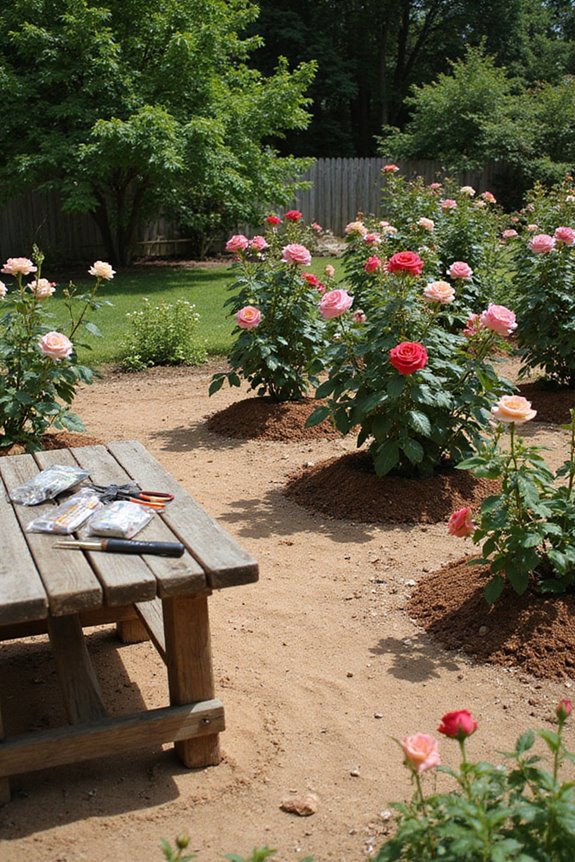
How To Improve Sandy Soil For Roses?

To improve sandy soil for our gorgeous roses, let’s boost its fertility with organic matter! We’ll mix in quality compost or well-rotted manure, which not only enhances water retention but also nourishes our plants. Adding a 1-2 inch layer of mulch keeps moisture in and weeds out, while drip irrigation provides steady moisture directly to the roots. With well-timed fertilization using slow-release formulas, our roses will thrive! Excited? We can explore more tips together!
Key Takeaways
- Incorporate organic matter like compost or well-rotted manure to improve water retention and nutrient availability in sandy soil.
- Regularly test and adjust soil pH to maintain optimal levels (6.0 to 6.8) for rose growth.
- Apply a 1-2 inch layer of mulch around roses to conserve moisture and suppress weeds.
- Use drip irrigation systems for consistent moisture delivery directly to root zones.
- Fertilize with slow-release fertilizers monthly, ensuring to water thoroughly after application to maximize nutrient uptake.
Understanding Sandy Soil Characteristics
You may be interested



When we think of sandy soil, we often picture a bright, sunlit beach – warm, loose, and full of potential! This fascinating soil composition consists mainly of large sand particles, creating spacious macropores. Because of these drainage characteristics, sandy soil drains quickly, often leaving plants thirsty if we don’t keep an eye on moisture levels. While its aeration helps roots thrive, the low water retention can lead to nutrient leaching. So, for our beloved roses, we’ll need to supplement with regular fertilization! Additionally, we should keep the soil balanced, aiming for a pH of 6.0 to 6.8. Regularly testing soil pH is crucial to ensure optimal growing conditions for our roses. By understanding these characteristics, we can harness sandy soil’s beauty and provide our roses with the loving care they truly deserve!
Benefits of Organic Matter Addition

Organic matter acts like a miracle worker for sandy soils, transforming the way we care for our beloved roses! By adding organic matter, we reap amazing benefits, such as improved water retention and enhanced nutrient availability. Think of it as a sponge, helping our sandy soil hold moisture and preventing our roses from drying out too quickly. Plus, organic matter fosters microbial activity, which is essential for nutrient cycling and plant health. With better soil structure, our roses enjoy improved aeration and root development, making them stronger and more resilient. So, let’s mix in some compost or well-rotted manure and watch our roses thrive! A little organic matter goes a long way to create a flourishing floral paradise! Additionally, using high-quality compost with diverse organic materials improves soil structure and supports nutrient cycling.
Effective Mulching Practices

Although mulching might sound simple, it’s one of the most impactful practices for nurturing our roses in sandy soils! By selecting the right mulch types, like composted straw or well-rotted manure, we enhance moisture and nutrient retention. Using coarse materials, such as chipped tree limbs, helps regulate soil temperature too. Additionally, incorporating moisture-locking features in our mulch mix can further support rose health.
Let’s clear the area of debris before applying a 1-2 inch layer of mulch around our roses. Spread it evenly, but keep it away from the stems to prevent rot.
Mulching benefits us by slowing water evaporation, reducing weed competition, and improving soil texture over time. So, let’s get excited about this essential practice to keep our roses thriving in sandy soil!
Water Management Techniques

After we’ve established effective mulching practices, it’s time to turn our attention to a key aspect of rose care—water management techniques! First off, we need to implement drip irrigation systems. They deliver slow, steady moisture directly to the roots, which is essential for our sandy soil that lets water pass quickly. Let’s also engage in regular moisture monitoring; checking foliage color and firmness will keep us in tune with our roses’ needs. Remember, during hot spells or the blooming season, we may need to water every few days. Applying water deeply—around 18 to 24 inches—ensures those roots reach for the good stuff. Additionally, using a 4-in-1 Soil Moisture Meter can provide accurate readings that help optimize our watering schedule. By staying vigilant, we’ll keep our roses vibrant and thriving. Let’s keep our rose garden flourishing!
Improving Soil Structure

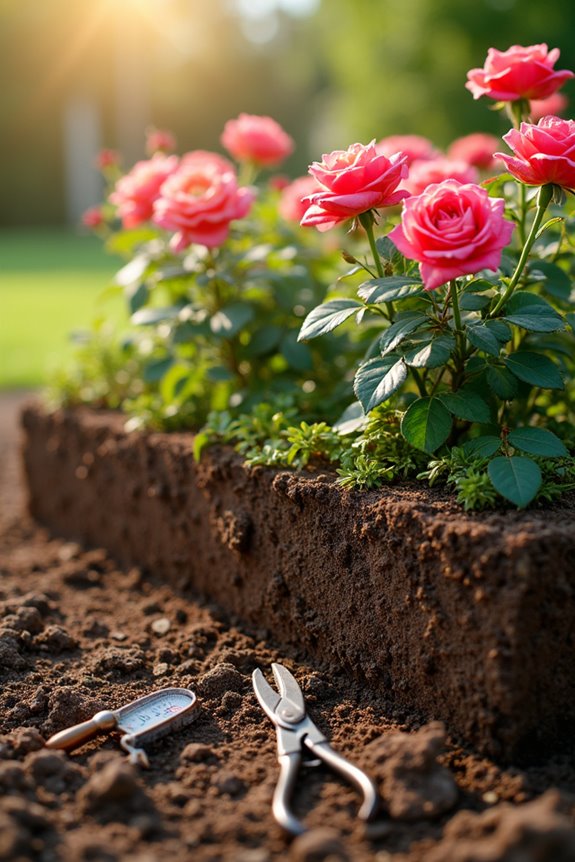
To create a thriving environment for our roses, improving soil structure is key! We can start by incorporating organic matter like compost, well-rotted manure, or peat moss to boost moisture retention and nutrient availability. Regular amendment layering, where we apply rich topsoil or silt, will gradually enhance our sandy soil’s texture. Let’s not forget about mulch—organic materials like shredded leaves or straw can suppress weeds while adding valuable nutrients over time. This not only improves microbial activity but also keeps our soil temperature balanced! Quick, frequent applications will keep the structure from deteriorating. Together, we can build a loam-like haven that our roses will love—healthy roots mean vibrant blooms! Adding nutrient-rich soils to the mix can significantly improve our roses’ growth potential. Let’s dig in and watch them thrive!
Fertilization Strategies for Roses
When it comes to fertilizing our roses, a balanced approach is essential for promoting healthy growth and stunning blooms! First, let’s consider fertilizer types: in sandy soil, we should apply a slow-release fertilizer like Osmocote® monthly during the growing season. Remember nutrient timing—start with high-nitrogen formulas in May for robust stems and leaves, then switch to higher phosphorus levels by July to kickstart blooming! Don’t forget magnesium; Epsom salts work wonders. We must water thoroughly after application to maximize root uptake and minimize foliar burn risks! Finally, let’s include organic amendments like compost to boost soil health. With these strategies, our roses can thrive, bringing joy and beauty to our gardens—let’s make those blooms pop!
Site Selection and Drainage Solutions
Finding the right spot for our roses is a delightful start to their flourishing journey! First, let’s make sure our chosen site receives at least 6–8 hours of sun exposure daily—roses absolutely love the sun! We should steer clear of areas near big trees or walls that could create nutrient competition or shade our blooms. Trust us, this will lead to healthier roses!
For ideal growing conditions, choose well-drained sandy soil, but remember to improve it with organic matter to retain some moisture. When we dig those holes, let’s make them twice as wide and deep as the root ball for better root spread. Finally, a lovely 3-inch layer of organic mulch can help keep moisture steady—our roses will thank us!
Frequently Asked Questions
How Often Should I Test My Sandy Soil for Nutrients?
We should test our sandy soil for nutrients every 2 to 3 years, especially after applying sandy soil amendments. This guarantees we monitor nutrient levels effectively, keeping our plants healthy and thriving.
Can I Use Synthetic Fertilizers in Sandy Soils for Roses?
We can use synthetic fertilizers in sandy soils, but let’s blend them with organic amendments to nourish our roses. With careful pH management, we guarantee a thriving environment, much like a flourishing garden after a gentle rain.
What Plants Can Thrive in Sandy Soil Alongside Roses?
We can use companion planting like lupines and drought-tolerant grasses alongside our roses. These plants not only enrich sandy soil with amendments but also enhance growth and attract beneficial pollinators, creating a thriving garden ecosystem.
How Do I Know When to Water My Roses?
We’ve learned to recognize our roses’ signs, like wilting leaves or dry soil, reminding us that water frequency depends on moisture indicators. Observing these clues helps keep our blooms vibrant and thriving through every season.
Are There Specific Rose Varieties That Grow Better in Sandy Soil?
Yes, certain rose varieties thrive in sandy soil, like Rugosa and EarthSong. We should also consider soil amendments, such as compost, to enhance moisture retention and nutrient availability for these beautiful blooms.