As an Amazon Associate, we earn from qualifying purchases. Some links on this site are affiliate links at no extra cost to you. Our recommendations are based on thorough research and editorial judgment.

Do Roses Like Wet Feet Or Well-Drained Soil?

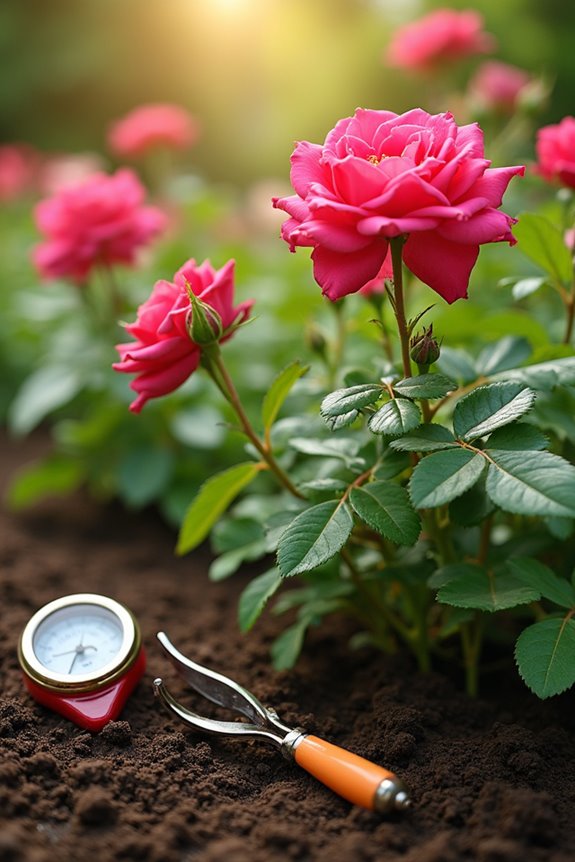
Roses absolutely adore well-drained soil! Wet feet can suffocate their delicate roots, leading to stress and disease. To keep them thriving, we should aim for about 50% soil aeration, mixing in organic compost for that fluffy texture they love! Regular deep watering helps develop their roots, while a lovely 2 to 5-inch layer of mulch keeps moisture in check. With the right care, our blooms will flourish—stick around, and we’ll explore how to keep our roses happy and healthy!
Key Takeaways
- Roses prefer well-drained soil, as waterlogged conditions can suffocate their roots.
- Healthy rose roots thrive in soil that is about 50% aerated to support growth.
- Excess moisture leads to root damage and creates favorable conditions for diseases.
- Proper soil drainage is crucial, with sandy soils performing better than clay.
- Regular monitoring for signs of overwatering is essential for rose health.
Understanding Rose Root Needs
You may be interested



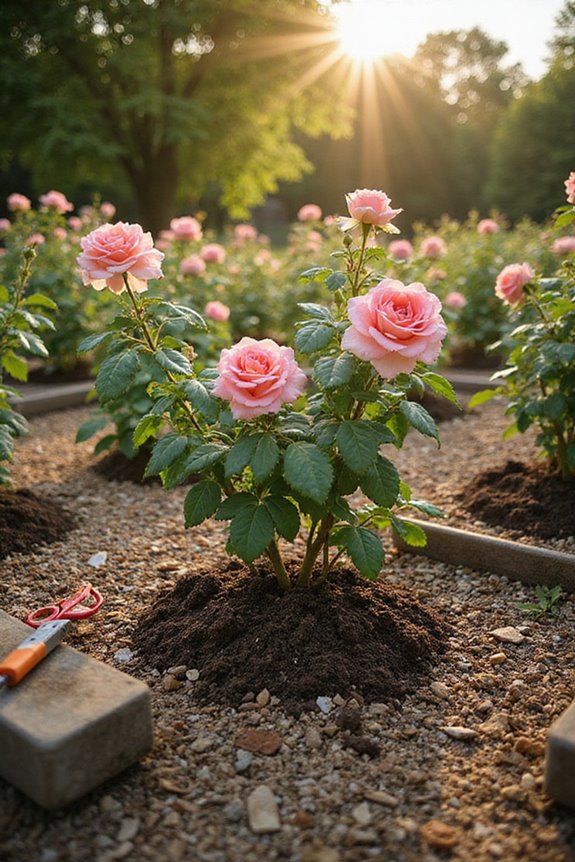
When we plunge into the world of roses, understanding their root needs is essential for helping them thrive! Healthy rose roots thrive in well-aerated, crumbly soil, allowing them to spread wide and absorb nutrients. We must remember that roses have delicate root hairs that are important for water uptake, so avoiding root disturbance during planting is crucial! Compacted or waterlogged soil can hinder these roots, leading to poor growth. To promote vibrant roses, we should aim for about 50% soil aeration—this balance keeps our roses’ roots happy and healthy. Let’s enrich our planting holes with organic matter like compost to create an ideal environment! With excellent soil, our rose bushes will flourish, becoming the star of our gardens! Additionally, ensuring proper drainage is crucial in reducing the risk of root rot in rose plants for optimal health and growth.
The Importance of Soil Drainage
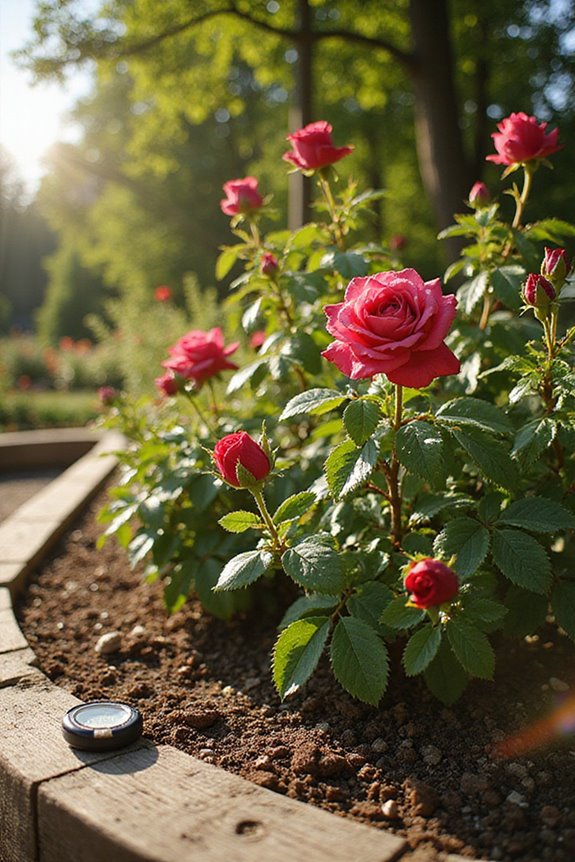
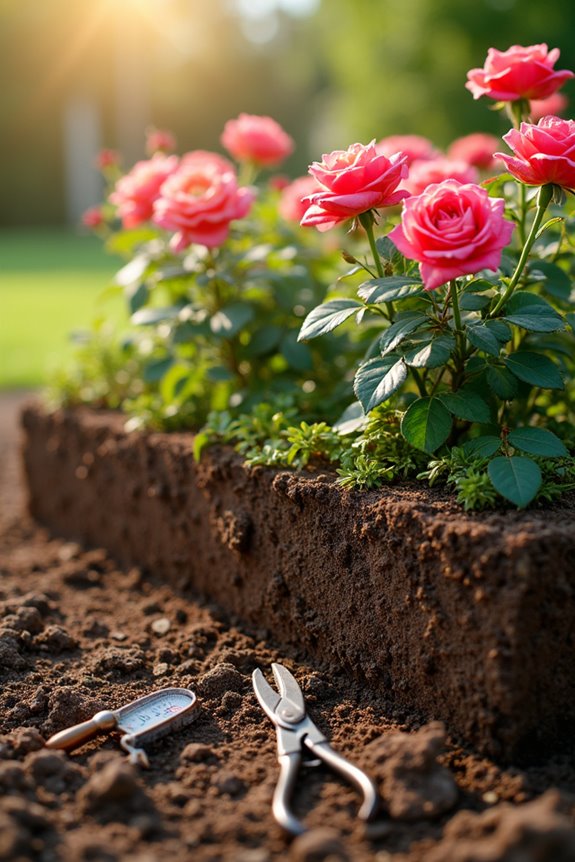
Soil drainage is absolutely essential for the health and flourishing of our roses, as it directly impacts their root development. Without proper drainage, we risk waterlogged conditions that displace oxygen, suffocating those precious roots! The right soil composition plays a key role—sandy soils drain quickly, while clay can spell disaster. To optimize drainage, we can implement techniques like mixing in compost or aged manure, which increases soil porosity. Raised beds are another excellent strategy, elevating roots above excess moisture. It’s also vital to perform a percolation test to monitor our soil’s drainage rate. Remember, happy, well-drained roots lead to vibrant blooms and an overall thriving garden! Adding moisture retention capabilities to the soil mix can help keep roses hydrated without causing oversaturation. Let’s give our roses the best chance to shine!
Recommended Products

Organic Compost Blend: Enhance the nutrient content and soil quality of lawns and raised garden beds with this organic blend, promoting healthy plant growth and soil vitality

Horticultural Grade Vermiculite: Premium organic fine vermiculite, ideal for potting soil for orchids, indoor plants, and succulents. Enhances water retention and nutrient availability for robust growth.

HOW TO USE: To use this plant soil for potting, fill a container about 1/3 full with potting mix, place your plant in the soil, and fill the rest of the pot, pressing lightly
Ideal Watering Practices for Roses

Have you ever wondered what makes a rose garden truly thrive? We can start by focusing on the ideal watering practices! For newly planted roses, let’s aim to water every 2-3 days, especially when it’s warm. Established beauties typically love a good drink once or twice a week, so moisture monitoring is key. Early morning is the best time to sprinkle – this way, foliage dries before evening. A deep, slow soak at the base is perfect for encouraging roots to dive deep! Remember, about 1 inch of water per week should do the trick. And don’t forget to keep an eye on those wilting flowers or dry soil—those are clear signs that they need us to water! Additionally, using a slow release fertilizer can enhance nutrient availability, supporting healthy growth alongside proper watering. Happy gardening!
Recommended Products

EASY TO USE: 4-pack Michigan Peat General All-Purpose Premium Potting Soil is ready to use right out of the bag with no additional mixing

EASY TO USE: 8-pack Michigan Peat General All-Purpose Premium Potting Soil is ready to use right out of the bag with no additional mixing

HEAVY FEEDER FORMULA: Specially formulated for heavy feeding of vegetables and flowers. This all-purpose fertilizer delivers nutrition to support demanding plants, helping gardeners maintain strong performance where standard feeding may fall short
Effects of Excess Water on Rose Health

Excess water can be a sneaky saboteur in our rose gardens, stealthily causing a host of problems that can quickly turn vibrant blooms into a wilted mess! When we have waterlogged soil, oxygen gets kicked out, leading to root damage and poor nutrient uptake. This spells trouble for our roses! The excess moisture effects also create a perfect storm for fungal diseases, ramping up susceptibility to issues like black spot and powdery mildew. Yikes! We need to guarantee our roses breathe by improving drainage and avoiding standing water, which suffocates roots. Keep an eye out for signs like wilting or yellowing leaves—these plant voices tell us it’s time to act! Let’s nurture those beauties back to health! Regular monitoring and the use of heavy-duty pest control products can help manage any potential outbreaks resulting from waterlogged conditions.
Nutrient Considerations in Moist Conditions

As we tackle the challenges of excess water, it’s important to also consider how moisture affects our roses’ nutrient needs. Nitrogen sources can leach away quickly in wet soil, so let’s increase our applications, especially during mid- and late-summer feedings! Using a balanced fertilizer like 10-10-10 is perfect for replenishing nitrogen while supporting robust rooting and bud set. Incorporating organic matter, such as compost or well-composted barnyard manure, can also improve nutrient retention and enhance microbial activity in the soil. This means our roses get more of the nutrients they crave! Regularly check moisture levels, and don’t forget to mulch after feeding—this keeps nutrients and moisture right where we want them! Additionally, using organic fertilizers can significantly enhance soil quality and nutrient availability. Let’s help our roses thrive together!
Preventing and Managing Wet Feet
How can we keep our precious roses thriving in soggy conditions? First, let’s tackle drainage solutions! Choosing well-drained soil is paramount; consider amending heavy clay with organic matter for improved aeration. Planting roses in raised beds or mounded soil can elevate roots above waterlogged zones, enhancing root health. We should also practice mindful watering—deepen those drink sessions but give ’em space in between to prevent oversaturation. Remember to pull weeds and debris near the base—they love pooling moisture! Regularly check for wilting or yellowing leaves; these symptoms may signal trouble below! With attention and care, we can enjoy our vibrant blooms despite the odds. Let’s keep those roses smiling in every season!
Recommended Products

PREMIUM INGREDIENTS: This specifically crafted organic compost blend is the ideal planting mix to improve and revitalize the plant soil for rose varieties, flowers, and perennials.

IMPROVES SOIL: Our soil and rose fertilizer booster infuses soil with a combination of selected ingredients that work together to improve soil structure and optimize soil conditions for increased plant vigor.

Heirlom Roses Mint Compost: Provides moisture retention in sandy, dry soils, while also rich in natural humus to help break up hard clay soils
Mulching Strategies for Rose Care
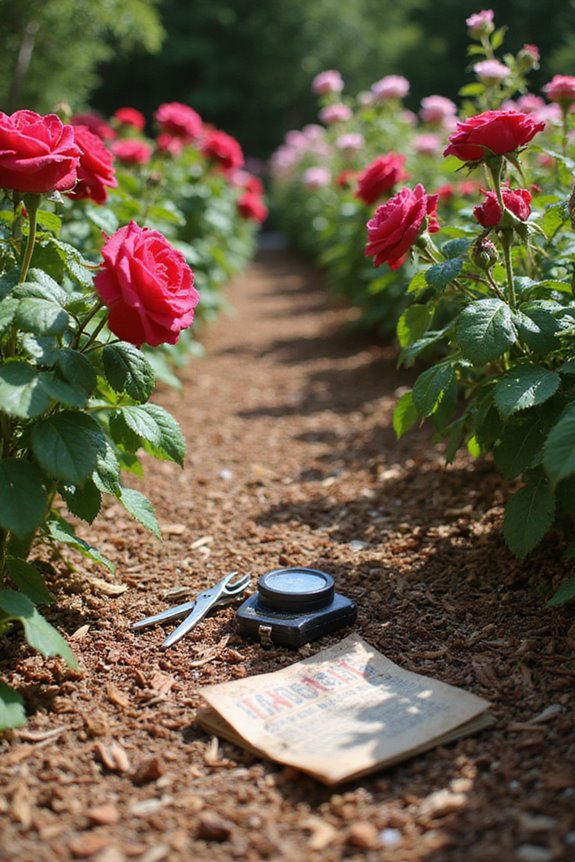
Maintaining healthy roses isn’t just about managing wet feet; it’s equally important to reflect on the protective layer of mulch that benefits our blooms tremendously! By using organic options like shredded pine bark or compost, we enrich the soil while providing essential mulch benefits. These options not only retain moisture but regulate temperature around our beloved rose roots, keeping them cozy and thriving!
Let’s apply a 2 to 5-inch layer of mulch in early spring, ensuring it doesn’t touch the stems to prevent disease. And if our mulch starts to break down during the season, let’s refresh it! With these strategies, we can enjoy vibrant, vigorous roses that flourish in their environment! Happy gardening!
Recommended Products

Superior Quality: Experience premium, long needle pine mulch for unmatched landscaping results.

BULK MULCH FOR LARGE PROJECTS: Pallet contains 80 bags of Scotts Nature Scapes Color Enhanced Mulch Deep Forest Brown; each 1.5 cu. ft. bag covers 6 sq. ft. when applied in a 3-inch layer

ORGANIC MULCH: With this Miracle-Gro Organic All Natural Mulch bulk pallet, you can cover your biggest landscaping and gardening projects
Signs of Overwatering and Underwatering
When we plunge into the world of rose care, understanding the signs of overwatering and underwatering is essential for keeping our blooms healthy and vibrant! Overwatered roses often show yellowing leaves, mushy stems, and even mold growth—yikes! Those limp, soft leaves scream “too much water!” Conversely, underwatering leads to dry, brittle leaves and wilting buds. Check your soil: if it’s dry several inches down, it’s time to water! Strike a balance—monitor watering frequency based on your plant’s needs and keep an eye on root health. Remember, we want our roses happy, not drowning! So let’s embrace this journey together, ensuring our beloved roses flourish in well-drained soil, bursting with beauty and color! Happy gardening!
Recommended Products

💧 COMMERCIAL-GRADE HYDRATION: Elevate your gardening with Soil Vigor, a professional-quality potassium polyacrylate. This super absorbent polymer acts as an automatic waterer for your plants, ensuring they receive consistent moisture without daily effort.

You will receive (10) 2-cubic foot bags of potting soil per purchase.

You will receive (10) 1.5-cubic foot bags of potting soil per purchase.
Frequently Asked Questions
Can I Plant Roses in Clay Soil?
Yes, we can plant roses in clay soil! By adding clay amendments like compost and ensuring proper potting techniques, we’ll create a more suitable environment for our roses to thrive and flourish.
How Do I Know if My Soil Is Well-Drained?
To determine if our soil’s well-drained, we can perform a drainage test. By observing moisture retention rates, we’ll see if it drains ideally, ensuring healthy growth for our plants and improved soil condition overall.
Are Certain Rose Varieties More Tolerant of Wet Conditions?
Like a knight battling soggy foes, we’ve found certain rose varieties, especially hybrids, excel in wet conditions due to their disease resistance. Alba and Rugosa types are champions, flourishing despite damp challenges. Let’s choose wisely!
What Signs Indicate Poor Drainage in Rose Beds?
We’ll notice signs of poor drainage in rose beds, like yellowing leaves, wilted plants, and water pooling. Implementing drainage solutions and soil amendments can greatly improve conditions, fostering healthier roses and vibrant blooms.
How Does Humidity Affect Rose Moisture Needs?
When it rains, it pours! In high humidity levels, roses’ moisture needs decrease due to better moisture retention. However, we must stay vigilant to avoid overwatering and prevent fungal diseases that can still arise.