As an Amazon Associate, we earn from qualifying purchases. Some links on this site are affiliate links at no extra cost to you. Our recommendations are based on thorough research and editorial judgment.

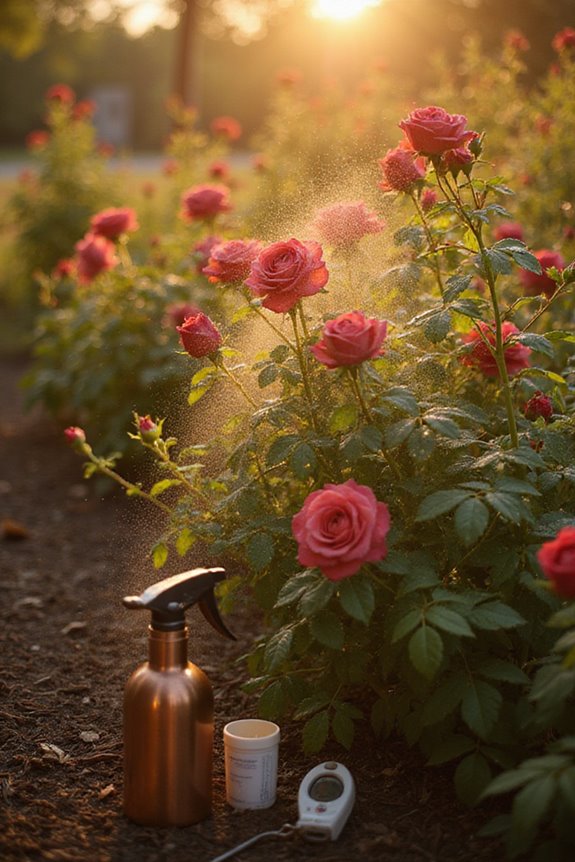
Is It Safe To Spray At Dusk Or Dawn For Roses?

Spraying roses at dusk or dawn is a safe and strategic choice. These cooler times help minimize leaf burn and allow our treatments to dry properly, cutting down on fungal risks. Plus, the reduced activity of pollinators during these hours keeps them safe! For best results, choose organic insecticides and always start from the bottom, moving up. With the right timing and techniques, our roses can thrive beautifully! Stick around as we explore more tips!
Key Takeaways
- Spraying at dawn or dusk is recommended to reduce the risk of pollinator exposure and increase spray efficiency.
- Evening applications with organic treatments minimize plant stress and are safer for beneficial insects.
- Cooler temperatures at these times lower the chance of leaf burn compared to midday spraying.
- Spray solutions dry better in the morning, reducing the risk of fungal infections on rose leaves.
- Always consider weather conditions, aiming for calm days with low humidity to enhance effectiveness.
Understanding the Timing for Spraying Roses
You may be interested


When it comes to spraying our beloved roses, timing is everything! To maximize spray efficiency while ensuring flower health, we should aim for those perfect hours at dawn or dusk. These calmer times not only protect our pollinators but offer cooler temperatures, reducing the risk of leaf burn. Spraying in the early morning allows our sprays to dry properly, while evening applications with organic treatments like neem oil help avoid stress on our plants. Let’s avoid midday spraying entirely; excessive heat can lead to evaporation and poor coverage! Remember, a thorough approach is key—start beneath the foliage to tackle pests, then spray the tops. By being mindful of timing, we can keep our roses vibrant and thriving! Applying solutions during ideal application temperatures ensures effectiveness and plant safety.
Recommended Products

BEST NATURAL SOLUTION TO BEAT MILDEW, MITES, AND MOLD - Crop Control is hands down the BEST choice to protect and cure Powdery Mildew, Spider Mites, Russet Mites, Broad Mites, Botrytis, Grey Mold, Aphids, fungal and parasitic species on plants. Uses plants natural defense systems to defend with zero harsh chemicals or toxins


Removes 99% of grease and grime in half the time (vs. Dawn Non-Concentrated; based on a P&G study, March 2024)
The Impact of Environmental Conditions
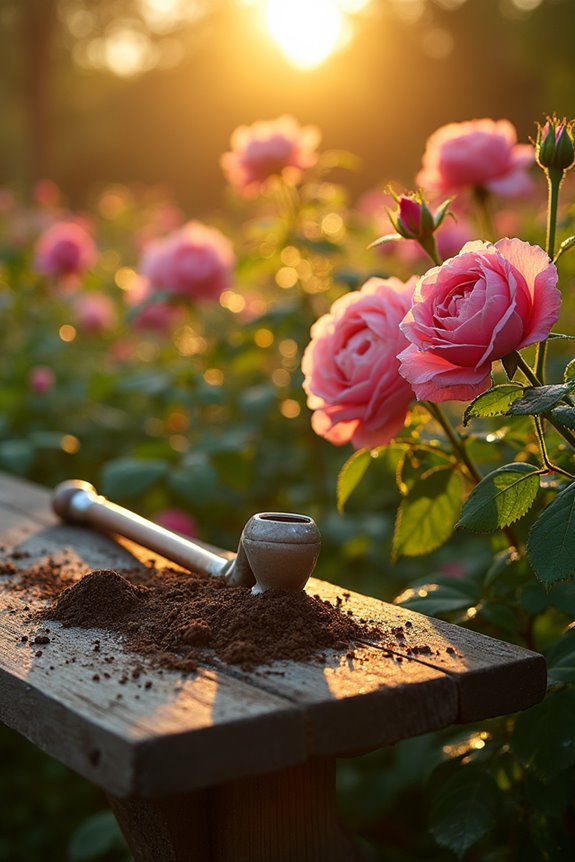
As we explore the impact of environmental conditions on our roses, it’s clear that understanding these factors is essential for a healthy garden! The interplay of environmental humidity and wind direction can greatly influence our spray timing. Spraying during high humidity can delay drying time, increasing the risk of fungal infections—yikes! We should always spray during calm weather, ideally with winds under 10 mph; this helps us control the spray direction and prevent drift. Remember to work against any slight breeze to minimize operator exposure. Opt for early mornings or late afternoons when temperatures are cooler, as these conditions reduce the chance of spray burn and losses from volatilization. With these considerations, let’s create a thriving rose garden together! You may also want to include environmentally safe fertilizers to enhance your roses’ resilience against disease and stress.
Recommended Products

IMPROVES SOIL: Our soil and rose fertilizer booster infuses soil with a combination of selected ingredients that work together to improve soil structure and optimize soil conditions for increased plant vigor.

ROSE FERTILIZER FEEDS UP TO 3 MONTHS: Miracle-Gro Shake 'n Feed Rose & Bloom nourishes your plants above and below the soil for up to 3 months, providing nutrients for more blooms and spectacular color (vs. unfed)

FOR USE ON: Use Rose-tone organic fertilizer for all types of roses including knockouts, and climbers. Also, for flowering plants including viburnum, bougainvillea & clematis.
Effects on Pollinators and Beneficial Insects

Protecting our feathered friends and buzzing buddies is essential for a flourishing rose garden! Timing our pesticide applications is vital to reflect on pollinator behavior. Spraying at dusk or dawn can reduce exposure, but we need to be mindful of warmer weather extending bee activity. Opt for low-toxicity insecticides with short residual effects to minimize pesticide toxicity. Remember, even a brief encounter with highly toxic products can be devastating to our hardworking bees! Plus, harmful residues can linger, impacting beneficial insects and pollinators by damaging their food sources. By maintaining continuous bloom sequences with native plants, we can help sustain these important allies. Incorporating organic soil nutrients and fertilizers can not only enhance rose health but also create a more resilient environment for pollinators. Let’s keep our gardens blooming and buzzing with life—together, we can create a vibrant ecosystem!
Recommended Products

CROP, GARDEN & HOUSEPLANT INSECT CONTROL. Trifecta Crop Control all-natural, plant-based formula effectively combats destructive spider mites, aphids, whiteflies, fungus gnats, and other soft-bodied pests on indoor and outdoor plants. Our biodegradable, eco-friendly solution is safe for use on edible crops, without chemical residues. Our gentle yet potent plant spray suffocates and dehydrates pests without harming beneficial insects or the environment, making it ideal for organic gardening.

DUAL ACTION FORMULA-Provides insect control along with deep greening fertilizer for complete root to blooms protection.

Only effective on spider mites (two-spotted mites, broad mites, russet mites), whiteflies, aphids, powdery mildew, and downy mildew
Best Practices for Effective Spraying
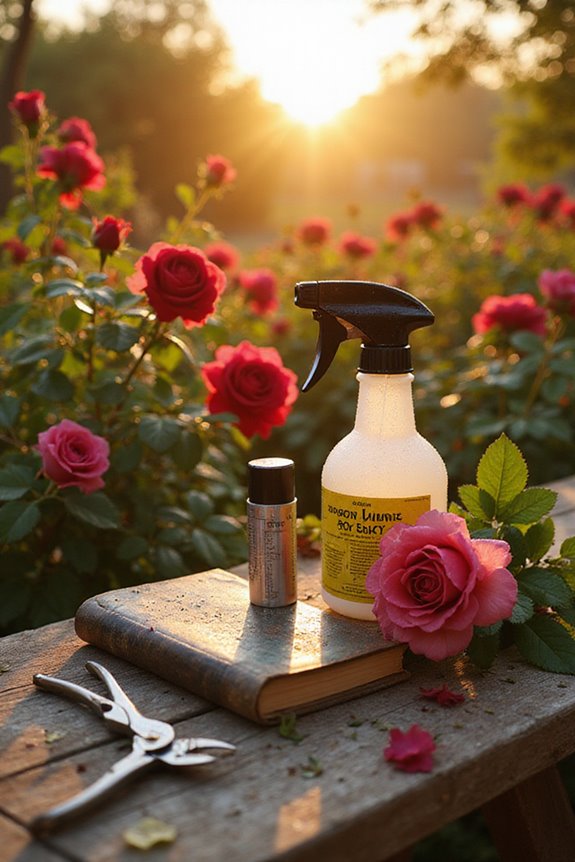
To achieve the lush, blooming roses we dream about, effective spraying practices are a must! Let’s start with ideal timing and conditions. We want calm, windless days for our spray techniques, avoiding extremes in temperature. Early mornings are perfect, as the air is still and wildlife is less active!
When spraying, we should always work from the bottom of the plant and move upwards, ensuring thorough coverage. Don’t forget to wear protective gear—long sleeves, gloves, and eye protection are essential! Mix our sprays with care, incorporating adjuvants for better adhesion. And remember to adjust our nozzles, allowing for coarse sprays to coat those beautiful leaves properly! Happy gardening, everyone! Let’s keep our roses thriving with confidence!
Recommended Products

【Stainless Steel Classic Water Tumbler】Water tumbler is made of gauge 18/8 stainless steel, liner of tumbler will not produce any taste. With an extra spray painting, good rust resistance, durable and convenient to use, easy to clean.

Complete Installation Package: the package includes 1 pieces of volleyball vertical upright storage bracket and all the necessary installation tools; You'll find everything you need in one package, eliminating the need to purchase additional accessories; Enjoy a seamless installation experience and immediate use

Plano Tackle Storage | Protecting your passion since 1952
Care Tips for Roses Related to Spraying
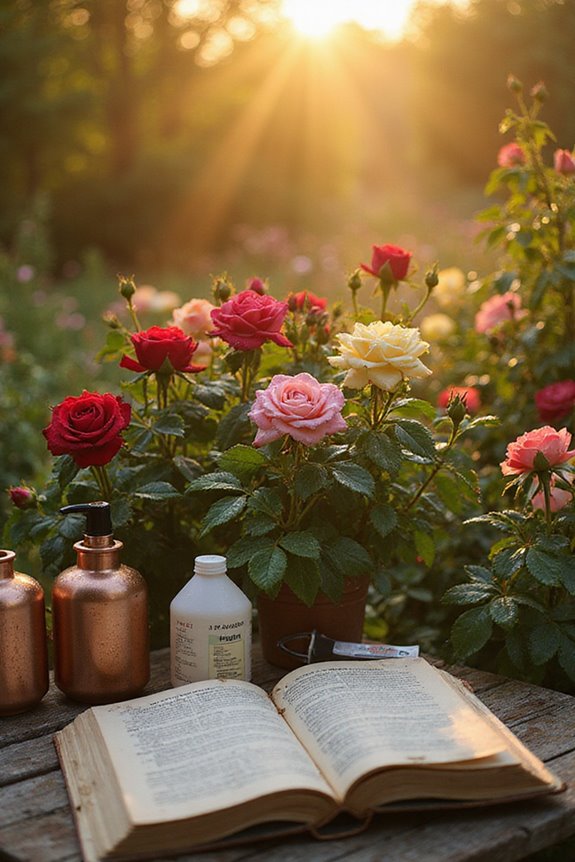
When we think about caring for our roses, spraying correctly is essential for their health and vibrancy! To maximize chemical efficacy, we should always use the right spray dilution; this guarantees effective coverage without overwhelming our plants. Timing is critical—early morning is the ideal choice, allowing our roses to dry properly and reducing pesky fungal risks. Let’s remember to avoid spraying during windy conditions and keep our lovely pollinators’ safety in mind. If we water our roses before spraying, it helps minimize spray burn! And don’t forget to target the undersides of leaves, where pests love to hide. Additionally, implementing regular garden monitoring and maintenance practices can significantly enhance the health of your roses. By following these care tips, we can enjoy beautifully healthy roses all season long! Happy gardening!
Considerations for Pesticide Selection
Selecting the right pesticide can feel challenging, especially since our beloved roses deserve the best care possible! Let’s explore pesticide types that protect our blooms while keeping the environment in mind. Organic options are fantastic first choices; they’re gentle on nature and effective! In contrast, chemical pesticides offer rapid results but carry risks for beneficial insects, so we should tread carefully. We have options like contact pesticides for quick fixes and systemic ones for prolonged protection—but let’s remember to choose wisely! Selective pesticides target specific pests, minimizing collateral damage. Proper application methods are essential, too; we want even coverage to maximize effectiveness. By making informed choices, we can keep our roses thriving and our garden ecosystem flourishing! Additionally, consider the application methods and frequency to ensure optimal effectiveness of the chosen pesticide.
Recommended Products

AgroMagen, GrowSafe Bio-Pesticide, Organic and Natural Miticide, Fungicide and Insecticide (5.2 Gal)
Only effective on spider mites (two-spotted mites, broad mites, russet mites), whiteflies, aphids, powdery mildew, and downy mildew

Each Organic Bedding Set includes: 1 Top Sheet, 1 Fitted Sheet, 2 Pillowcases

MAXIMIZE YIELDS – Grow healthier plants with Grower’s Ally Spider Mite Control. This natural miticide for spider mites kills and repels common soft-bodied insects, including adult and nymph spider mites.
Analyzing the Safety of Dusk vs. Dawn Spraying
Understanding the safety of spraying our cherished roses at dawn versus dusk is a key factor in keeping our gardens flourishing! When we consider spray effectiveness, it’s crucial to note that the time of day impacts our results. Spraying at dusk may enhance the persistence of chemical formulations on foliage, avoiding zenith heat that can stress plants. However, early morning sprays also pose risks due to residual dew, which can lead to harmful phytotoxicity. Let’s keep our beneficial pollinators in mind, too! By choosing dusk or dawn wisely, we can minimize harm and improve pest control efficiency. Tailoring our approach to the specific needs of our roses makes our gardening journey all the more rewarding! Happy gardening, friends!
Frequently Asked Questions
What Types of Pests Are Most Common on Roses?
When caring for our roses, we often encounter pesky little visitors like aphids and beetles. Effective aphid management is essential, as these charming nuisances can invite fungal diseases, tarnishing our beautiful blooms.
How Do I Identify Signs of Spray Burn on My Roses?
To identify spray symptoms, we should look for brown, crispy patches on leaves and wilting flowers. Monitoring these signs is essential for maintaining our roses’ health and ensuring they recover effectively from any potential damage.
Can I Use Homemade Sprays on Roses Safely?
When roses whisper their secrets, we realize homemade remedies can be safe with care. By using organic solutions, diluting properly, and testing first, we can nurture our blooms while minimizing risks to their health.
What Protective Gear Should I Wear While Spraying?
When we spray, we should always wear protective gloves and a respirator mask to guarantee safety. It’s essential we choose the right PPE to protect our skin and lungs from harmful chemicals.
How Do Weather Conditions Affect Spray Effectiveness on Roses?
We’ve found that weather conditions play an essential role in spray effectiveness. Ideal temperatures, moderate humidity, and calm winds enhance performance, while extremes can hinder efficacy and stress our beloved roses. We’ve learned timing is everything!