As an Amazon Associate, we earn from qualifying purchases. Some links on this site are affiliate links at no extra cost to you. Our recommendations are based on thorough research and editorial judgment.


Can I Compost Disease-Free Rose Prunings?

Absolutely, we can compost disease-free rose prunings! Let’s look for firm, vibrant canes, free of black spots. Before composting, chop them into smaller pieces to speed up decomposition. Mix those prunings with nitrogen-rich greens for balance. But remember, keep any diseased material away! Creating a hot compost pile—ideally between 104°F and 149°F—will help eliminate any lurking pathogens. With these tips, we can enrich our gardens while keeping them healthy. Excited to learn more?
Key Takeaways
- Yes, you can compost disease-free rose prunings to enrich your compost pile with nutrients.
- Ensure prunings are free of discolorations or black spots before composting.
- Mix rose prunings with nitrogen-rich green materials for balanced decomposition.
- Maintain optimal moisture levels and aerate regularly to promote healthy microbial activity.
- Always monitor the compost for unpleasant odors, indicating issues that need addressing.
Understanding the Risks of Composting Rose Prunings
You may be interested



When it comes to composting rose prunings, understanding the risks is critical if we want our beloved blooms to thrive! Leaving pruned debris on the soil creates humid microclimates perfect for fungal growth, inviting pests that can wreak havoc on our roses. Most home composts don’t reach the heat needed to kill harmful spores, like black spot and rust. That means instead of helping, we could unintentionally spread disease!
To safeguard our garden, we should prioritize pest management by thoroughly removing any infected materials. When in doubt, consider alternatives—like burning or discarding diseased prunings. Applying heavy-duty pest control can also help protect your roses from potential threats. Let’s keep our rose gardens healthy and vibrant, so we can enjoy their beautiful blooms for seasons to come!
Identifying Disease-Free Rose Prunings
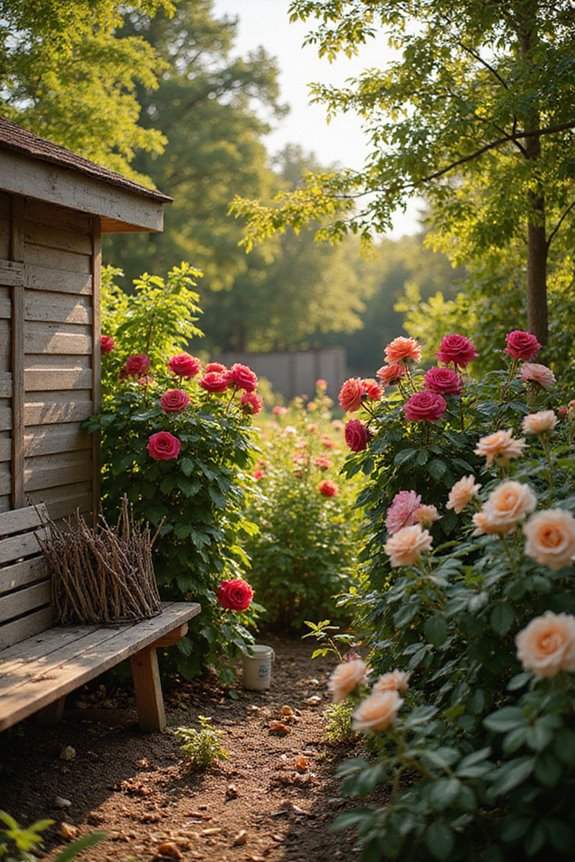
After understanding the risks associated with composting rose prunings, it’s time to focus on how we can identify those disease-free canes! When we’re out there, we want to look for canes that have a firm texture and a vibrant green outer layer—this shows they’re alive! Keep an eye out for any disease indicators like black spots or discolorations; these are definite red flags. We should also use proper pruning techniques, making clean cuts at a 45-degree angle just above the node, and always keep our tools sharp and disinfected! Remember to remove any weak or thin canes, as they’re more prone to disease. With these tips, we can confidently prune our roses and keep them healthy and thriving! Additionally, using gloves that provide thorn protection ensures that our hands remain safe while handling these plants.
Recommended Products

Goatskin Leather Shell: Made from premium goatskin leather for abrasion protection and dexterity; Work gloves flex with the hand while offering reliable protection

【ANSI A5 CUT RESISTANT】- Schwer arm protection sleeves are knit from a blend of aramid, stainless steel wire, and composite filament fiber, which delivers ANSI Level A5 cut protection, avoid injury caused by sharp materials such as a blade, trapezoid scraper, glass, tile, and so on

Cut & Puncture-Resistant - Got a project where your forearms are at risk? From pruning rose bushes to loading wood, our 8" lightweight arm guards are made with ultra-high-strength materials to protect against sharp and pointed hazards. These sleeves are certified ANSI/ISEA Cut Level A9 for extreme cut resistance and Puncture Level 5 to shield against sharps like wood splinters, glass, and metal edges. Note: Puncture-resistant ≠ Needlestick-resistant. Do not test with needles.
Best Practices for Composting Safe Rose Prunings

Composting rose prunings can be a fulfilling endeavor, especially when we set ourselves up for success! To embrace the best composting practices, we should start by removing any diseased or infested material and ensuring we’re not adding thorny or woody stems that decompose slowly. Let’s create a fantastic balance by mixing those prunings with nitrogen-rich green materials, like grass clippings or kitchen scraps! Regularly turning our compost pile boosts oxygen flow, and keeping moisture at just the right level promotes healthy microbial activity. Adding compost enriched with organic matter can further enhance the nutrient content in our rose beds. Once our compost is finished, we can use it to nourish our rose bushes, making sure to keep it off their stems. Happy composting, and let’s help our gardens thrive!
The Importance of Hot Composting
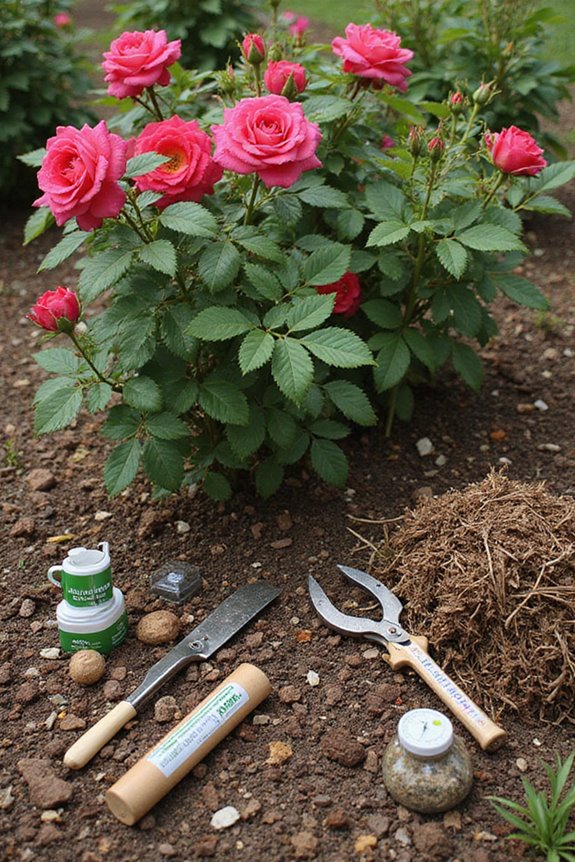
Hot composting is an absolute game-changer for us gardeners, especially when it comes to turning our rose prunings into rich, nourishing compost! By ensuring ideal microbial activity at temperatures between 40-65°C (104-149°F), we speed up decomposition considerably. This means we can transform our organic waste into usable compost in just 4 to 12 weeks! And here’s the kicker: those elevated temperatures also eliminate pesky plant pathogens and weed seeds. To achieve this, we need to balance rich green and brown materials while frequently aerating our piles. Insulated bins are fantastic for minimizing heat loss, keeping our compost cooking. Let’s embrace hot composting for healthier soil, vibrant plants, and a sustainable garden we can all be proud of! Additionally, maintaining a balance of green and brown materials ensures effective composting and enhances nutrient quality in the final product.
Techniques for Shredding Rose Prunings

When it comes to shredding rose prunings, there are several techniques we can use to make the process efficient and effective! First, let’s talk about pruners selection. We’ll want bypass pruners for thin stems and loppers for thicker canes, ensuring clean cuts every time. It’s also essential to pre-cut the prunings into manageable lengths, reducing strain and making shredding smoother. Don’t forget to remove large leaves and dead stems that could contaminate our compost. As we shred, let’s feed the machine gradually—too much green at once can cause a jam! By keeping our tools sharp and clean, we’ll enjoy a fast and successful shredding experience, preparing our rose prunings for fabulous compost in no time! Additionally, using ergonomic tools can help reduce hand strain and improve overall efficiency during the shredding process.
Recommended Products
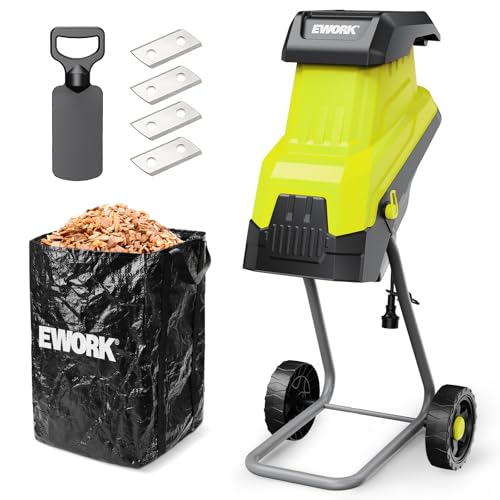
[15-Amp POWERFUL MOTOR] Unlike standard motors, EWORK EK-DT8401 features a professional-grade that delivers 4500 RPM consistent torque without overheating. This extended lifespan design ensures jam-free operation for years of heavy-duty garden cleanup, making it the ultimate solution for turning backyard debris into nutrient-rich compost.
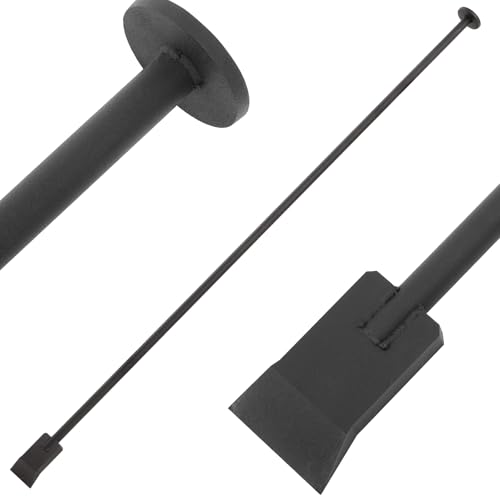
Garden Tool: the 72 x 3.6 inches/ 183 x 9 cm root cutter digging tool is ideal for digging out heavy rocks and tree stump roots; It can also be employed as a firewood cutter, bamboo root cutter, and tree root saw, saving you a significant amount of time compared to using a shovel

2 feet in length
Timing Your Pruning for Disease Prevention
As we gear up for pruning our beloved roses, timing can truly make a difference in keeping our plants healthy and vibrant! Following a proper pruning schedule, ideally in late winter to early spring, helps us promote robust growth while minimizing disease. We should wait until after the danger of harsh frost has passed—local climate guides our decisions. In warmer zones, we might start as early as January! Remember, pruning during dormancy helps minimize fungal pathogens. Let’s remove weak or diseased canes to cut down on disease reservoirs. Aim to cut at a 45° angle above an outward-facing bud—this enhances healing! Finally, don’t forget to sanitize our tools before and after use for best disease prevention! Happy pruning, everyone!
Key Maintenance Practices for Healthy Rose Beds
To cultivate a thriving rose bed, we must embrace a blend of essential maintenance practices! First, let’s focus on soil enrichment—applying a 1 to 3 inch layer of partially decomposed organic matter each year will boost nutrient levels and promote robust roots. Next, proper mulching is key; a few inches of decomposed pine bark or weed-free leaf mulch helps conserve moisture and fight pesky weeds. Remember to water deeply, about once a week, allowing roots to stretch into the soil rather than skimming the surface. And don’t forget to monitor for pests and diseases, acting quickly if any symptoms appear! With these rose bed maintenance strategies, we’ll surely enjoy stunning blooms season after season!
Alternative Disposal Methods for Diseased Prunings
While it might be tempting to toss those diseased rose prunings into the compost bin, we comprehend better! For effective disease management and peak plant hygiene, we should consider other disposal methods. First, let’s seal those infected prunings in plastic bags—you’ll contain any pesky spores and mites. If local regulations allow, burning is a fantastic option, as it eradicates pathogens in a flash! For deeper issues, burying non-woody material in bare soil can deactivate some diseases. Just remember, don’t mix in soil-borne infectants! If it seems overwhelming, off-site disposal is also a solid choice; local facilities often have high-temperature processing that guarantees safety. Whatever we choose, let’s keep those beautiful roses thriving and disease-free!
Recommended Products

【Size】: 12"x20", 350 bags on a roll, 12 Rolls in total.

【Bag Size】12" X 20", 1 rolls = 350 bags.Fits most produce roll dispenser stands.

Abundant to Apply: You will receive 50 pieces of fabric grow bags in classic black color, sufficient to meet your daily using and replacing demands for planting flowers, vegetables, and fruits, in your garden and plant nursery
Monitoring and Managing Your Compost for Safety
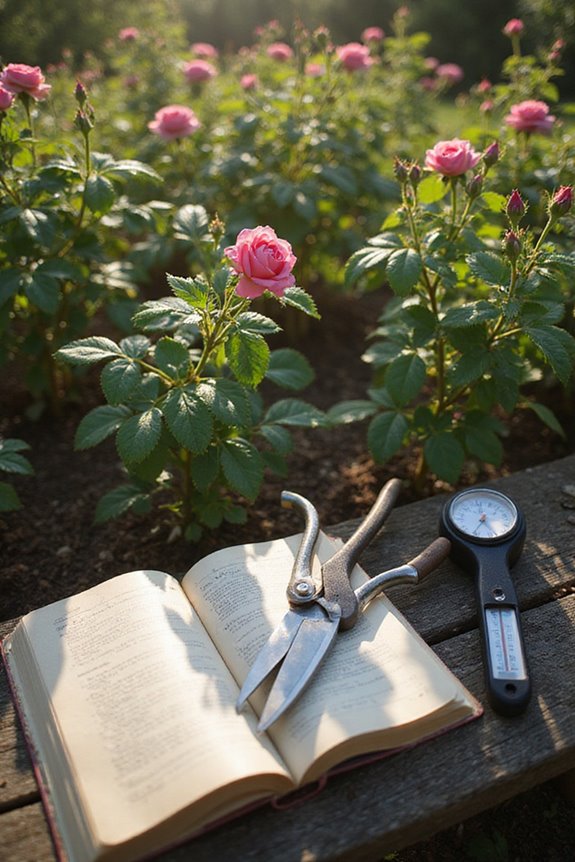
Keeping our compost safe and healthy is vital for cultivating vibrant roses! To guarantee we achieve this, we need to monitor our compost temperatures with compost thermometers, aiming to keep that sweet spot between 130°F and 160°F. This heat is essential for killing off pesky pathogens! Regularly turning our compost pile not only distributes heat evenly but also aids moisture management, which should be maintained at 40-60%. If our compost’s too wet, it can become a smelly mess, so let’s aerate it to promote those hardworking microbes! Don’t forget to inspect for any diseased material and remove it promptly. With these practices, we can enjoy a robust compost that’s perfect for nurturing our roses toward floral glory!
Frequently Asked Questions
Can I Mix Rose Prunings With Other Garden Waste for Composting?
Absolutely, we can blend rose prunings with other garden waste for composting! By harnessing clever composting techniques, we create a nutrient-rich wonder that our roses will absolutely adore, boosting their health and vibrancy like never before!
How Long Does It Take for Rose Prunings to Decompose in Compost?
Rose prunings typically take 12 months for complete decomposition, depending on compost factors like moisture, aeration, and chopping. By optimizing these conditions, we can improve the decomposition rate and create rich compost more efficiently.
What Role Does Moisture Play in Composting Rose Prunings?
Maintaining ideal moisture levels in composting rose prunings is like finding the sweet spot in baking. It fuels microbial activity while proper compost aeration prevents disease and optimizes decomposition, ensuring nutrient-rich compost we can all enjoy.
Can I Compost Rose Prunings in Winter?
We can compost rose prunings in winter, but it’s vital to maintain high temperatures in our compost pile. Proper management guarantees effective decomposition and reduces disease risks, keeping our compost healthy and safe for our garden.
Are There Any Safe Mulch Alternatives for Rose Pruning Debris?
Absolutely, we can use alternatives like wood chip mulch or straw mulch for rose pruning debris. Notably, straw mulch can improve soil quality remarkably, helping retain moisture while suppressing weeds in our gardens. Let’s explore these options together!