As an Amazon Associate, we earn from qualifying purchases. Some links on this site are affiliate links at no extra cost to you. Our recommendations are based on thorough research and editorial judgment.

How To Deadhead Roses For More Blooms?

To deadhead roses for more blooms, we need to remove spent flowers, invigorating the plant and redirecting energy into new growth! Start with repeat bloomers like hybrid teas and floribundas. Use sharp bypass pruning shears, cutting just below the flower stem at a 45-degree angle. Aim for above a five-leaflet set to encourage robust growth. Check weekly during summer, and wrap things up 6 to 8 weeks before frost! Excited to learn more about keeping our roses healthy?
Key Takeaways
- Deadhead by removing spent flowers to promote new blooms and redirect energy from seed production to growth.
- Use bypass pruning shears for clean cuts, trimming just above the first five-leaflet set at a 45-degree angle.
- Deadhead regularly during summer, checking weekly, and stop 6 to 8 weeks before the first frost.
- Choose repeat-blooming varieties like hybrid teas and floribundas for best results.
- Maintain healthy growth with adequate sunlight, proper watering, and disease prevention practices.
Understanding Deadheading and Its Purpose
You may be interested



When we plunge into the world of roses, one of the most rewarding tasks we can embrace is deadheading! Understanding the deadhead basics helps us invigorate our beloved blooms. By removing spent flowers, we redirect the plant’s energy—freeing it from the burden of seed production, allowing for vibrant new shoots to emerge. This simple form of light pruning not only keeps our roses looking pristine but also encourages a spectacular flush of blossoms! We should cut just above a healthy leaf, ensuring a 45-degree angle for peak health. Plus, deadheading reduces disease risks by eliminating decaying material. The joyous process enhances our rose physiology, making our gardens explode with color and fragrance throughout the season. Additionally, applying balanced NPK ratios can further support optimal growth and blooming in our roses. Let’s keep those roses glorious!
Selecting Roses Suitable for Deadheading
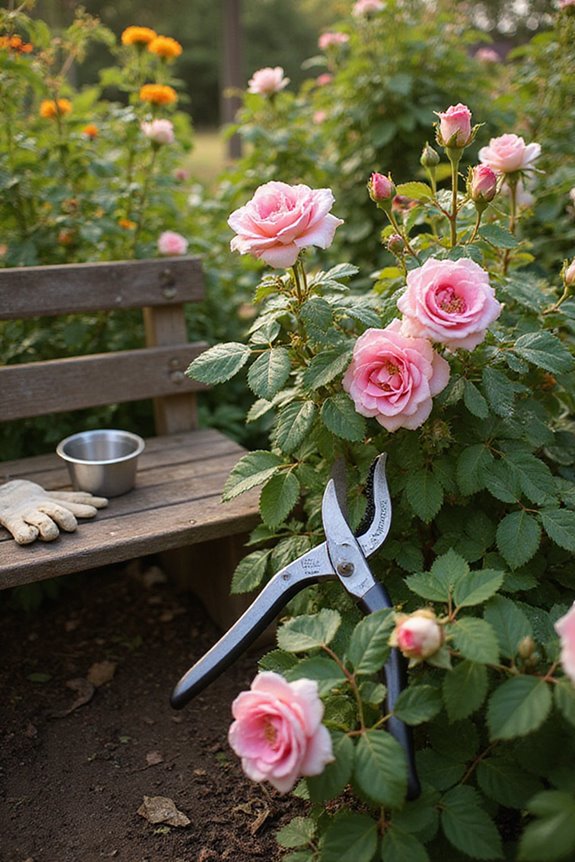
As we explore the delightful world of roses, it’s essential to choose varieties that truly thrive from a little deadheading love! When selecting roses, our rose selection criteria should focus on repeat-blooming types like hybrid teas and floribundas. These beauties will reward us with continuous flowers. A bloom frequency comparison reveals that climbing roses and shrub varieties also respond well to our deadheading efforts. Let’s aim for strong canes and disease-resistant cultivars to make our gardening experience smoother. Those vibrant, compact shrubs can bring charm without too much fuss! Remember, regular care and attention will keep our rose gardens in bloom and bursting with life! Additionally, using tools like high-carbon steel shears ensures clean cuts that promote overall plant health. So, let’s get planting those fabulous roses that truly appreciate a little extra love!
Recommended Products


The new Peace Rose stamp celebrates one of the most popular roses of all time.

Live Own Root Plant: Heirloom Hybrid Tea Roses Beautiful Day, is a live own root plant ensuring that the root, stems & flowers are all from the same variety and will produce more blooms
Tools and Preparation for Deadheading
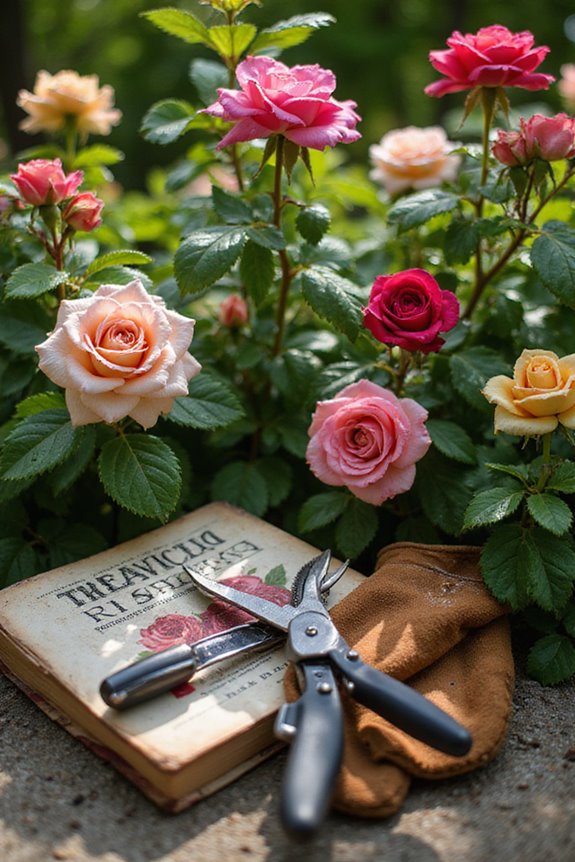
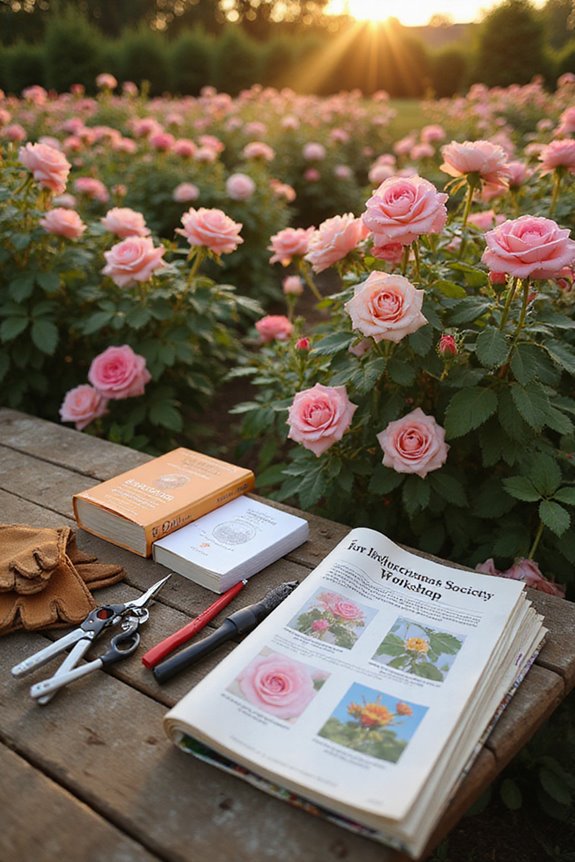
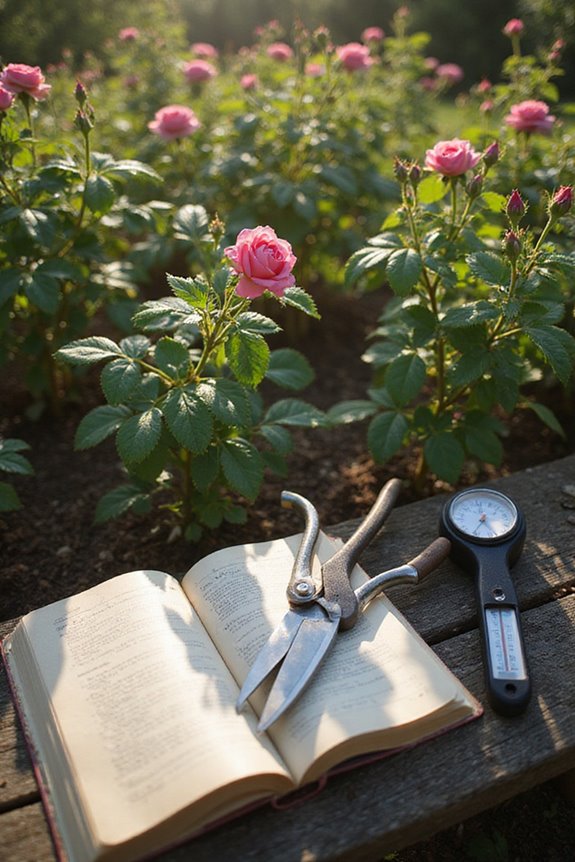
Before we can give our lovely roses the deadheading they deserve, we need to gather the right tools and gear to make the job efficient and enjoyable! For tool selection, choose bypass pruning shears for clean cuts that prevent cane damage—absolutely crucial for precision. If we encounter thicker canes, let’s whip out our trusty folding pruning saws. Don’t forget extendable loppers for those hard-to-reach branches! Protective gear is important too; high-quality leather gloves will shield our hands from those pesky thorns. A long-sleeve shirt and sturdy pants add extra protection. Let’s keep our tools clean and sharpened, ensuring lovely cleanness with every snip! Regular maintenance of tools ensures longevity and performance, making the deadheading process smoother. Now we’re primed to engage in the world of deadheading our roses!
Recommended Products

Great garden shears for serious gardeners. This is a heavy, high quality pruning shear you’ll be proud to own or gift. These garden pruners are a classic design and feel expensive. Every gardener needs this pruner, but most gardeners don’t have one.

Precision Plant Care for Professionals and Enthusiasts: These gardening shears are perfect for trimming herbs & flowers; Their compact, fine-tipped, rust-resistant high-carbon steel blades offer precise cutting in tight spaces, making them ideal for daily use in gardens, pots, and on delicate stems; Available in a convenient 12-pack - ideal for florists, landscapers, and nurseries who require multiple shears for continuous, high-volume trimming

CUTCO Forever Guarantee provides for free sharpening and replacement forever.
Deadheading Techniques and Cutting Points
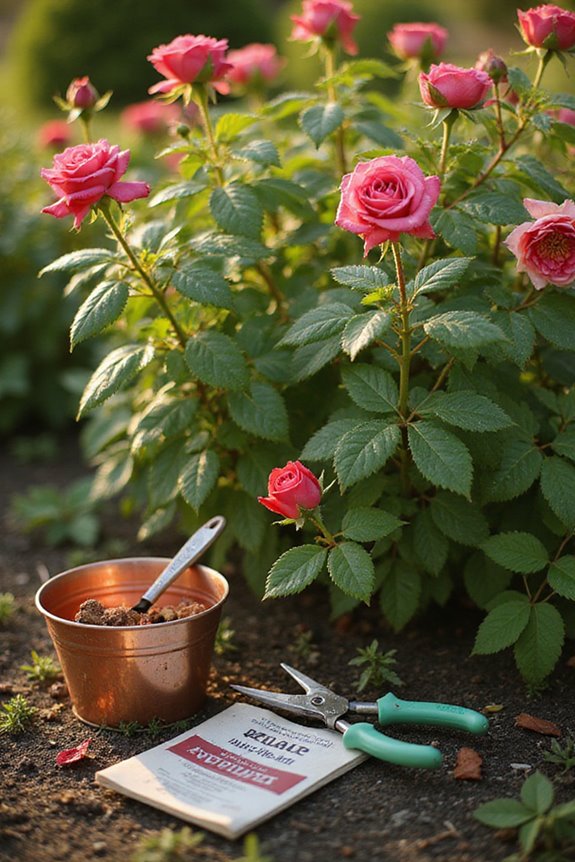
Deadheading roses requires both finesse and care, ensuring our blooms flourish beautifully! Let’s focus on cutting points and deadheading techniques that work wonders for our plants. First, cut just below the spent flower, right where it meets the stem—this helps new growth emerge. When we approach a cluster, we should remove faded flowers individually before tackling the entire group, always aiming above the first five-leaflet set for strength.
For a clean cut, angle our shears at about 45 degrees; this promotes water runoff, keeping our roses healthy. And remember, cutting just above an outward-facing bud encourages growth in the right direction! Regularly using high-quality pruning shears will help maintain sharp blades for clean cuts. With these techniques in hand, we’re set to enjoy vibrant, continuous blooms all season long!
Recommended Products

HARDENED STAINLESS STEEL BLADES: Designed with straight sharp blades for precision snips and cuts, these gardening scissors are great for pruning fruit trees, bonsai, and thorny bushes. Pruning shears are durable, sharp, and come with an easy safety lock for storage.


8-inch (203mm) cut-n-hold crew landscape and horticulture pruner
Timing and Frequency of Deadheading
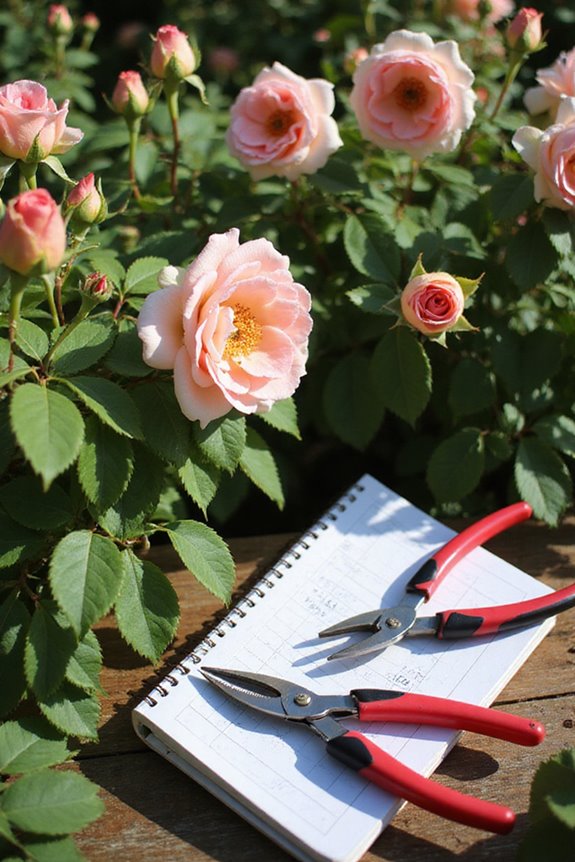
When we think about keeping our roses in peak bloom, timing and frequency of deadheading play a pivotal role! Let’s start early in spring when blooming begins, encouraging those vibrant summer flowers! Throughout the hot summer months, we should check our roses weekly, removing spent blooms to maximize reblooms. With seasonal adjustments, we can adapt our frequency based on local climates. As fall approaches, let’s remember to cease deadheading 6 to 8 weeks before the expected first frost, letting those hips develop for winter interest. Different rose varieties require different approaches, so knowing your plants is essential! By effectively timing our deadheading, we’ll create a stunning, ongoing display all season long—what a delightful reward for our efforts! Additionally, incorporating comprehensive fertilizer and nutrients during the growing season can significantly enhance the overall health and blooming potential of your roses.
Benefits of Deadheading Roses
Roses are a garden treasure, and understanding the benefits of deadheading them can transform our blooms into a spectacular display! By removing faded flowers, we promote energy conservation, redirecting our plants’ resources from seed production back to generating new blooms. This means more vibrancy in our gardens! Plus, keeping those spent blooms out of sight enhances garden aesthetics, ensuring our rose bushes look clean and healthy all season long.
Regular deadheading not only stimulates fresh new growth but also extends the flowering period, offering that continuous delight we all love. A well-maintained rose bush gives us a tidier, more appealing landscape. So let’s embrace deadheading—it’s a simple, rewarding task that brings beauty back to life in our gardens!
Common Mistakes to Avoid When Deadheading
Although we all want our roses to thrive, it’s easy to stumble into a few common missteps while deadheading! First, let’s bust some deadheading myths: timing is essential! Avoid deadheading during extreme heat or when rain is present to minimize stress and fungal risks. Next, we should cut above a leaf node, but not too far down the stem—preserving buds is key for fresh blooms! Remember, our tools must be sharp and clean; dull tools can lead to damage. Finally, let’s not forget different rose varieties need special attention—some, like once-flowering types, require selective deadheading! By steering clear of these common misconceptions, we can keep our roses blooming beautifully all season long!
Best Practices for Maintaining Rose Health
To help our roses thrive, we need to focus on a few key practices that assure their health and vibrancy! First, let’s make sure they get at least eight hours of full sun daily. Next, we should check the soil pH; it should be around 6.5 for best nutrient availability. Don’t forget about pest management—using organic solutions can keep our blooms thriving without harm! Watering deeply, about once a week, encourages those roots to stretch down. Mulching helps retain moisture and suppress weeds. Let’s prune responsibly, removing dead canes to enhance air circulation. And remember, fertilizing with rose-specific options every six weeks fuels our plants’ growth. With these practices, our roses will flourish beautifully this season!
A Seasonal Guide to Rose Care
With the changing seasons, our roses need a tailored approach to care that meets their specific needs and encourages stunning blooms year after year! In early spring, let’s start with structural pruning techniques to give them a strong foundation. As blooms begin to fade, we’ll regularly deadhead to promote fresh flowers and keep the plant vigorous. Remember to make clean cuts just above a five-leaflet leaf for ideal growth! Come fall, reduce deadheading as our roses prepare for dormancy. We can focus on cleaning up fallen leaves to minimize disease. Throughout, let’s adjust our watering and fertilizing habits, ensuring our roses thrive while basking in sunlight. Together, we’ll nurture our gorgeous garden!
Recommended Products

SPRING-LOADED HOOF AND FLORAL SHEAR: Handles dairy goat hooves, alpaca nails, and thick floral stems with reliable, precise performance for farmers, florists, and home gardeners.

Telescopes from 4’ – 7’, 1/4" cutting capacity

Pole saw & pruner provide 3 sections telescoping high-cut small tree branches and fruit picking, no need to climb ladders, this pruning shears easy making low cuts, extend from 5.6-13 feet reaching into dense roses, weeds or prickly shrubs
Frequently Asked Questions
Can Deadheading Roses Attract Pests or Disease?
Yes, deadheading roses can attract pests or disease if we don’t use proper techniques. By ensuring we dispose of pruned material carefully, we can enhance pest prevention and protect our plants’ health and vigor.
How Does Deadheading Affect Rose Fragrance?
Deadheading notably enhances rose fragrance for us. By removing spent blooms, we encourage fresh flowers that emit stronger scents, creating a continuous aromatic experience in our gardens while maximizing bloom enhancement throughout the growing season.
Is There a Best Time of Day to Deadhead?
We’ve found that deadheading in the morning fits perfectly into our routine. Cutting early minimizes stress and encourages blooms, while evening benefits, like cooler temps, sometimes can’t replace that fresh start each new day offers.
Can I Deadhead in the Fall?
We shouldn’t deadhead roses in the fall. In our fall gardening routine, it’s essential to allow rose hips to form, promoting winter readiness and providing benefits to wildlife while preventing fragile new growth from frost damage.
How Do I Know if a Bloom Is Spent?
To know if a bloom is spent, look for faded petals and wilting signs. If it’s completed its blooming cycle, those indicators suggest it’s time for us to remove it, encouraging new growth.