As an Amazon Associate, we earn from qualifying purchases. Some links on this site are affiliate links at no extra cost to you. Our recommendations are based on thorough research and editorial judgment.

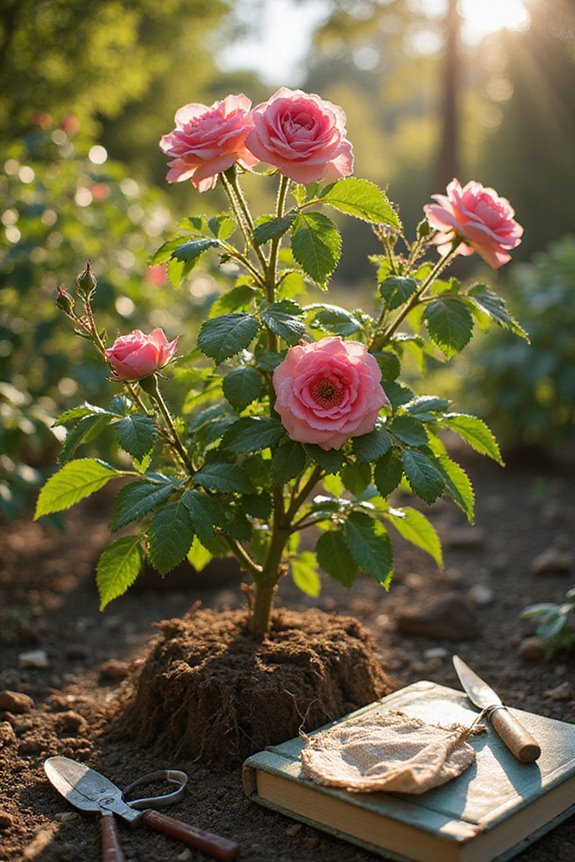
How To Divide Shrub Roses (If Possible)?

Dividing shrub roses can be tricky, but it’s manageable with the right care! We need to start in early spring, while they’re still dormant, trimming excess foliage first. Next, we’ll carefully dig out a healthy offshoot with strong roots, using clean cuts to minimize stress. Afterward, consistent deep watering and organic mulch help establish roots while keeping moisture intact. Plus, don’t worry! If you stick around, there are even more propagation tips to discover!
Key Takeaways
- Dividing shrub roses is generally not recommended due to their strong, non-separable roots that can lead to plant stress or death.
- If attempting division, do so in early spring while the plant is still dormant to preserve buds and minimize harm.
- Use garden tools to carefully separate a healthy offshoot with robust roots and canes, making clean cuts to prevent damage.
- After dividing, immediately transplant the offshoots, ensuring consistent deep watering to support root establishment.
- Consider alternative propagation methods like cuttings or layering to avoid the risks associated with division.
Understanding the Possibility of Division for Shrub Roses
You may be interested



When we think about dividing shrub roses, it’s important to understand their unique biology first! Most shrub rose varieties develop as singular plants, featuring sturdy roots that don’t naturally separate into independent crowns. Unlike herbaceous perennials, dividing them isn’t a straightforward task. Attempts at root separation can lead to significant stress or even death, which is something we definitely want to avoid! Many times, these robust plants are grafted, making division even trickier since we must preserve the graft union for successful growth. Instead of division, let’s consider propagation by cuttings or layering, allowing us to grow new plants without disturbing existing ones. Regular monitoring of plant health is crucial to ensuring successful propagation, so let’s nurture those gorgeous roses through careful practices that guarantee their health and longevity!
Preparation Steps for Dividing Shrub Roses

As we commence on the journey of dividing shrub roses, getting everything prepared is our first step toward success! First, let’s choose a well-drained site that enjoys bright, indirect light; think northern or eastern exposures. We’ll cultivate the soil to a depth of 4 to 6 inches, incorporating a generous soil amendment like compost or peat moss to boost fertility. If our soil is heavy, mixing in coarse sand will improve drainage. Remember to hydrate our plants before division to support root care! When we dig, we’ll take care to trim away any dead roots, setting the stage for robust growth! Additionally, incorporating organic materials can help balance the needs of both soil types, supporting healthy rose development. With the right tools in hand, we are well-equipped to nurture our lovely shrubs!
Recommended Products

FEEDS UP TO 6 MONTHS: Miracle-Gro Potting Mix is a gardening soil for outdoor containers that feeds all types of potted plants, including flowers, vegetables, shrubs, annuals, and perennials for up to 6 months

Horticultural Grade Vermiculite: Premium organic fine vermiculite, ideal for potting soil for orchids, indoor plants, and succulents. Enhances water retention and nutrient availability for robust growth.

💧 COMMERCIAL-GRADE HYDRATION: Elevate your gardening with Soil Vigor, a professional-quality potassium polyacrylate. This super absorbent polymer acts as an automatic waterer for your plants, ensuring they receive consistent moisture without daily effort.
Methods for Dividing Shrub Roses

Dividing shrub roses can be a truly rewarding experience, especially when we see our garden flourish with healthy new plants! To successfully use division techniques, we start by digging around the main plant in early spring, while the rose is still dormant. It is crucial to trim excess foliage to help reduce water loss. We then carefully separate a healthy offshoot, ensuring each division has strong roots and viable canes for the best root health. Using spades or garden forks, we make clean cuts to avoid tearing the roots. Remember, it’s all about maintaining moisture; transplant our newly divided roses right away. With a little effort and care, we can create stunning displays of blooms throughout our garden! Additionally, using pruning shears can facilitate clean cuts when dividing the plants, ensuring minimal damage to the roots.
Recommended Products

Great garden shears for serious gardeners. This is a heavy, high quality pruning shear you’ll be proud to own or gift. These garden pruners are a classic design and feel expensive. Every gardener needs this pruner, but most gardeners don’t have one.

HARDENED STAINLESS STEEL BLADES: Designed with straight sharp blades for precision snips and cuts, these gardening scissors are great for pruning fruit trees, bonsai, and thorny bushes. Pruning shears are durable, sharp, and come with an easy safety lock for storage.

Post-Division Care and Planting Guidelines

Caring for our newly divided shrub roses is essential for ensuring they thrive in their new home! First, let’s master our watering techniques—consistent deep watering helps establish roots without drowning them in soggy soil. Morning hydration is ideal, keeping leaves dry and reducing fungal risks.
Next, we should consider soil amendments. Testing and adjusting the pH to about 6.5 is fantastic for nutrient uptake! Adding balanced granular rose fertilizer in spring and mid-summer boosts growth. Don’t forget organic mulch—it retains moisture, regulates temperature, and keeps pesky weeds at bay.
Recommended Products

DEER REPELLENT GRANULES - Our granular repellent is easy to apply and works for deer, rabbit, elk, and moose. It is best used for lower-level ground vegetation, i.e., flowers, crops, bushes, seedlings, ornamental plants, shrubs, garden beds, and plants under 2 feet tall. It uses ingredients that promote strong plant growth and recovery.th and recovery.

Down To Earth Citrus Mix is a twenty-five pound box of all natural fertilizer with 6-3-3 formula and is listed by the Organic Materials Review Institute (OMRI) for use in organic production

VALUABLE NUTRIENTS: This calcium magnesium powder provides valuable nutrients to plants and helps change the pH of the soil by raising it to match the plants' needs. It also helps to Adjust the pH Level
Alternative Propagation Methods for Shrub Roses

If you’re looking to expand your rose garden, alternative propagation methods for shrub roses can open up a world of possibilities! Air layering is fantastic—just wound a flexible cane, apply rooting hormone, and bury it slightly to encourage roots. For quick results, try stem cuttings: use healthy stems, prune above a node, and plant them in a well-draining mix. Grafting techniques, like T-budding, let you combine different cultivars, boosting growth. If you’re feeling adventurous, seed propagation can yield unique results, although it’s less common. Finally, layering techniques, like simple layering, let multiple canes root while attached! Each method brings its own charm and excitement, making your garden truly spectacular! Let’s get propagating!
Potential Risks and Challenges of Dividing Shrub Roses
While exploring alternative propagation methods for shrub roses, it’s important to contemplate the potential risks and challenges that come with dividing these beloved plants. Dividing can stress their root stability, leading to significant damage. Trust us; weak roots mean poor water and nutrient uptake, making our roses more susceptible to pests and diseases. If we mishandle the process, we might even invite fungal infections to our garden party! Timing is essential; dividing outside dormancy might strip them of buds. We’ve found that pruning often keeps plants looking fabulous while boosting growth, instead of risking weakening their structure. So, remember: let’s stick to safer propagation methods like cuttings, ensuring our roses flourish rather than struggle! Additionally, regular garden monitoring is crucial for early detection of pests and diseases that may arise post-division. Happy gardening!
Frequently Asked Questions
When Is the Best Time to Divide Shrub Roses?
The best time to divide shrub roses is in early spring, before active growth starts. We should avoid summer conditions when plants stress easily and focus on ensuring ideal timing for successful establishment and growth.
How Do I Know if My Shrub Rose Is Healthy Enough to Divide?
To know if our shrub rose is healthy enough to divide, we should check the root system for thickness and guarantee the leaf color is vibrant green, indicating overall liveliness. Stability is key for success.
Can I Divide Shrub Roses That Are Blooming?
We shouldn’t divide blooming shrub roses; the blooms impact the plant’s energy, resulting in stress and poor recovery. Instead, let’s focus on care techniques that promote healthy growth without risking the roses’ health.
What Types of Shrub Roses Are Easiest to Divide?
The easiest shrub rose varieties for division success include Hybrid Musk and Rugosa roses. Their vigorous growth and strong root systems make them ideal candidates for propagation, ensuring we can expand our gardens effortlessly.
Should I Fertilize After Dividing My Shrub Roses?
We shouldn’t fertilize immediately after dividing our shrub roses. Instead, let’s wait until we see new growth, and then apply slow-release fertilizers around the root zone, ensuring proper application timing for the best results.