As an Amazon Associate, we earn from qualifying purchases. Some links on this site are affiliate links at no extra cost to you. Our recommendations are based on thorough research and editorial judgment.


How To Feed Roses For Continuous Blooms?

To feed our roses for continuous blooms, we start by applying a balanced fertilizer as new shoots reach 4-6 inches in early spring! We can mix organic options like compost tea with synthetic fertilizers for a delightful nutrient blend. Let’s remember to loosen the soil and check pH for ideal absorption. We should feed every 2-4 weeks, adjusting to lower nitrogen in fall. Excitingly, consistent care guarantees our roses thrive and flourish—stay tuned for nurturing tips!
Key Takeaways
- Begin feeding roses in early spring when new shoots are 3-6 inches long using high-phosphorus fertilizers for increased blooming.
- Apply balanced fertilizers every 2-4 weeks throughout the active growing season to support robust growth and continuous flowering.
- Incorporate organic options like compost tea or fish emulsion to enrich soil health and provide nutrients gradually.
- Adjust fertilizer types in spring for leaf growth and in fall to promote root strengthening, reducing nitrogen before winter.
- Water roses before applying fertilizers to prevent root burn and enhance nutrient absorption effectively.
Timing and Frequency of Feeding Roses
You may be interested



When we think about timing and frequency for feeding our beloved roses, it’s essential to kick things off just as the first leaves unfurl in early spring! We should apply our first feed when new shoots reach 3 to 6 inches in length, targeting nutrients that promote healthy leaf and cane development. For newly planted roses, we’ll start fertilizing when that exciting growth of 4-6 inches begins. Remember, we can’t feed dormant roses or those planted in fall until we see that vibrant regrowth! During the active growing season, we’ll want to feed every 2 to 4 weeks. Consistent feeding not only boosts growth but is crucial for ensuring robust root health. Let’s keep those blooms coming! Using a fertilizer with a high phosphorus ratio will greatly enhance flowering in your roses.
Types of Fertilizers and Nutrients

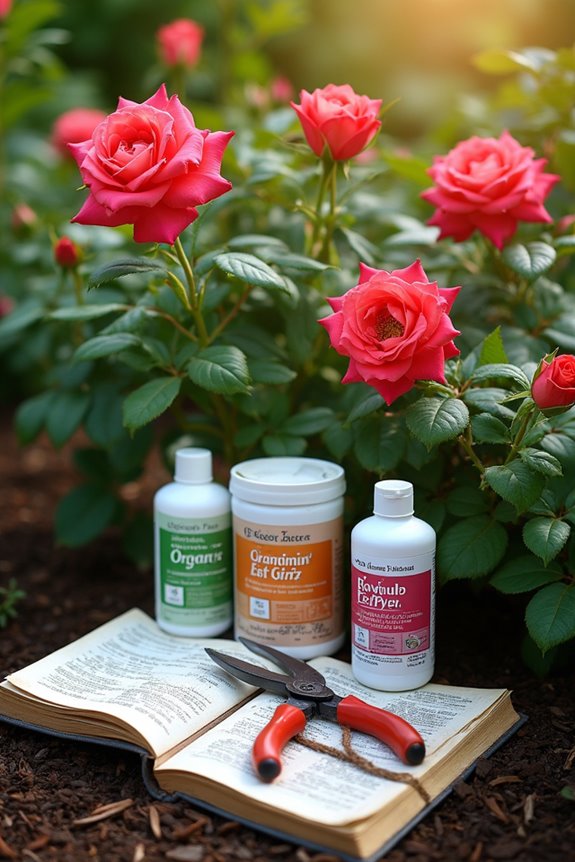
Taking care of our roses isn’t just about timing; it’s also about choosing the right fertilizers and nutrients that make them thrive! When considering organic options, we can turn to wonderful choices like compost tea, fish emulsion, or aged manure. These enhance our soil health, releasing nutrients slowly over time and supporting those beneficial microbes our roses love. However, they’ll need more frequent applications to keep those blooms coming! On the other hand, synthetic fertilizers work quickly but can risk burning our plants if overapplied. They provide instant nutrient boosts, but they lack the long-term benefits of organics. By keeping an eye out for nutrient deficiencies and balancing our selections, we can guarantee our roses flourish beautifully year-round! A well-balanced fertilizer with optimal NPK ratios ensures our roses receive the proper nutrition needed for vibrant blooms.
Preparation and Application Methods

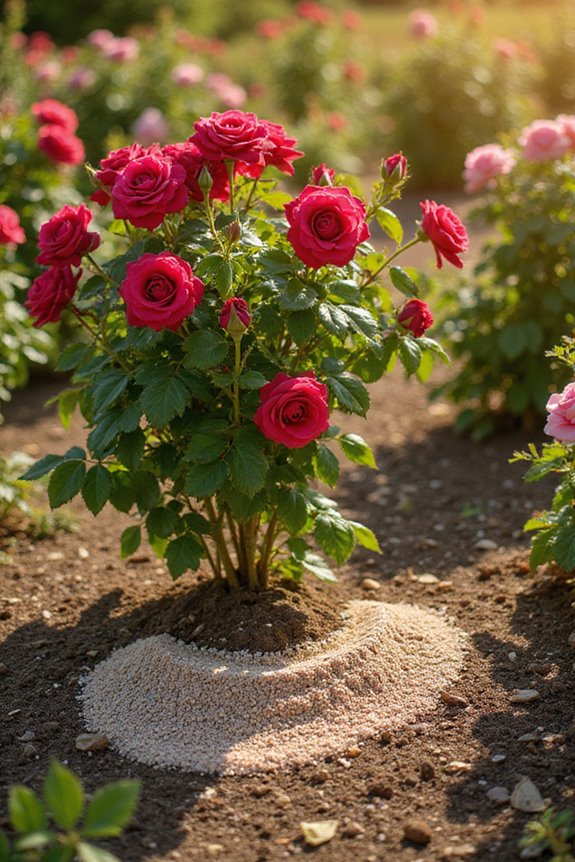
Preparing and applying nutrients to our beloved roses can feel like a rewarding dance of care! To start with proper soil bed preparation, we’ll clear away any weeds and debris—keeping our rose roots healthy and free to absorb nutrients. Loosening the soil gently with a fork helps encourage nutrient absorption and aeration! Next, testing our soil’s pH and adjusting it if needed guarantees our roses thrive in slightly acidic conditions (6.0–6.5 is ideal). Incorporate organic matter like well-aged compost before feeding to enhance nutrient retention. When feeding, sprinkle granular blends evenly around the base—just avoid the stems to minimize burn risks. Don’t forget to water in afterward to activate those essential nutrients! Additionally, applying a fertilizer with high phosphorus ratio can significantly promote vibrant blooms. Let’s create a flourishing foundation for continuous blooms!
Seasonal Fertilizer Adjustments
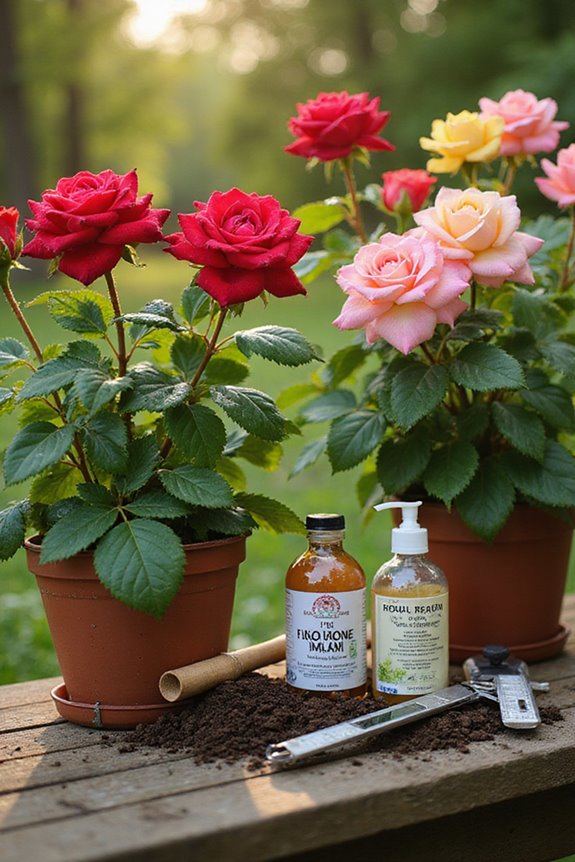
As we embrace the changing seasons, understanding how to adjust our rose fertilization techniques can greatly enhance their health and vibrancy! In spring, we should begin fertilizing once we see 4-6 inches of new growth. High-nitrogen fertilizers or alfalfa meal (N-P-K approx. 5-1-2) work wonders for leaf and cane development. Make sure to incorporate Epsom salts for added foliar health! Additionally, using a fertilizer with a balanced N-P-K ratio during the growing season helps support both strong foliage and beautiful blooms.
As we shift into fall, it’s time for adjustments! Let’s reduce nitrogen levels to encourage root strengthening rather than excessive foliage. Utilizing bone meal or rock phosphate will give our roses the phosphorus boost they need for robust roots. Remember, ceasing fertilization about 6-8 weeks before the first frost lets our beauties prepare for their winter slumber!
Importance of Balanced Nutrition for Continuous Blooming
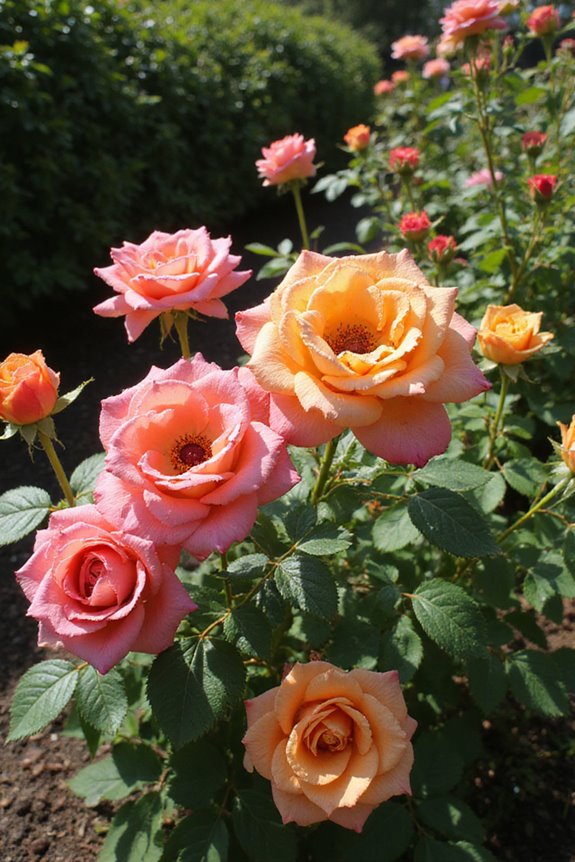
To keep our roses blooming beautifully throughout the growing season, it’s essential that we focus on balanced nutrition! Understanding macronutrient roles is key—nitrogen fuels lush leaves for vibrant blooms, phosphorus strengthens roots, and potassium enhances overall health. We must maintain the right N-P-K ratio to guarantee continuous flowering. Regular feedings every 4-6 weeks keep our roses thriving, so let’s start just before bud break in spring. Remember, watering before applying fertilizers prevents root burn and optimizes nutrient uptake! Soil pH around 6.0-7.0 is critical, too. Don’t hesitate to mix organic options like compost with synthetic fertilizers for a lush nutrient blend. Furthermore, incorporating slow-release fertilizers into your feeding schedule can provide sustained nutrition throughout the season. By nurturing our plants carefully, we’ll enjoy magnificent blooms month after month—just imagine the beauty in our gardens!
Frequently Asked Questions
How Do I Identify Nutrient Deficiencies in My Roses?
To identify nutrient deficiencies in our roses, we should look for various nutrient signs, like yellowing leaves or distorted growth. Observing these can help us maintain better rose health and encourage vibrant blooms.
Can I Use Compost Instead of Commercial Fertilizers?
Yes, we can confidently use compost instead of commercial fertilizers! The compost benefits include enhanced soil health and nutrient release. Regular compost application helps our roses thrive while minimizing environmental impacts from synthetic inputs.
What Pests Should I Watch for While Feeding Roses?
While caring for roses, we should watch for aphids and Japanese beetles, which alone can reduce blooms by 50%. Effective pest management helps guarantee our roses thrive and remain beautiful throughout the blooming season.
How Can I Tell if I’ve Over-Fertilized?
We can tell we’ve over-fertilized our roses by noticing over fertilization symptoms like yellowing leaves, stunted growth, and browning tips. Key rose health indicators, like limp roots or crusty soil, suggest nutrient toxicity.
Are There Any Organic Fertilizers Suitable for Roses?
Like nurturing a garden’s heartbeat, we can enrich our roses with compost tea and worm castings. Both are fantastic organic fertilizers, promoting healthy growth and vibrant blooms, ensuring our roses flourish beautifully throughout the season.