As an Amazon Associate, we earn from qualifying purchases. Some links on this site are affiliate links at no extra cost to you. Our recommendations are based on thorough research and editorial judgment.

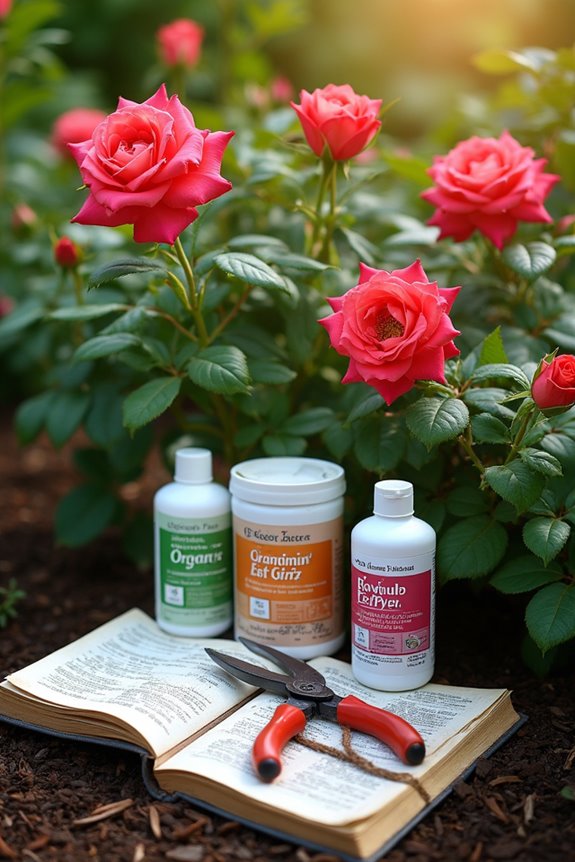
What Are Recommended Rose Fertilizers?

When it comes to keeping our roses flourishing, we’ve got some amazing options! We love using organic granular fertilizers like Rose Tone by Espoma for steady nutrition. Liquid fertilizers provide quick boosts during the growing season, perfect for container roses! Look for balanced N-P-K ratios like 10-10-10, or formulas with higher phosphorus for more blooms! Let’s start fertilizing in spring and don’t forget to switch to low-nitrogen mixes in late summer—adventure awaits in nourishing our gardens!
Key Takeaways
- Granular fertilizers like Rose Tone by Espoma offer slow-release nutrients for steady growth in roses.
- Liquid fertilizers provide quick nutrient boosts for mid-season and container-grown roses.
- Opt for organic fertilizers to nourish soil microbes and promote healthy, resilient plants with vibrant blooms.
- Use balanced N-P-K ratios such as 10-10-10 for general nutrition or 5-10-5 to enhance flowering.
- Apply fertilizers in early spring and continue every 4-6 weeks during the growing season for best results.
Types of Rose Fertilizers
You may be interested


When it comes to nurturing our beloved roses, understanding the various types of rose fertilizers is crucial to achieving vibrant blooms and lush foliage! We can choose from two popular categories: granular types and liquid options. Granular fertilizers, like Rose Tone by Espoma, offer a slow-release feeding schedule that promotes steady growth over time. They’re easy to apply—simply sprinkle them on moist soil! On the other hand, liquid fertilizers deliver quick nutrient boosts, ideal for mid-season stimulation and container roses. With high N-P-K concentrations, they cater to fast-growing plants! We should consider our roses’ needs and soil condition. By mixing these fertilizing methods, we can guarantee abundant blooms and robust health. Additionally, using fertilizers with balanced NPK ratios is essential for optimal growth. Let’s cultivate those beauties together!
Advantages of Organic Fertilizers
Organic fertilizers offer a treasure trove of benefits for our beloved roses, ensuring they thrive with a natural vigor that synthetic options often can’t match. By feeding the soil, these fertilizers nurture beneficial microbes, supporting plant health and enhancing soil fertility. With a steady release of essential nutrients, roses flourish without the risk of nutrient spikes that can stress their growth. Plus, the organic matter we add improves soil structure, making it easier for roots to dig deep! Fewer diseases and increased resilience to pests mean our roses are not only beautiful but also robust! Embracing organic practices in our gardens creates a lively ecosystem, allowing our roses to showcase their enchanting blooms for seasons to come! Additionally, using organic fertilizers can help promote optimal growth by providing essential nutrients like nitrogen, phosphorus, and potassium that are vital for rose development.
Characteristics of Synthetic Fertilizers
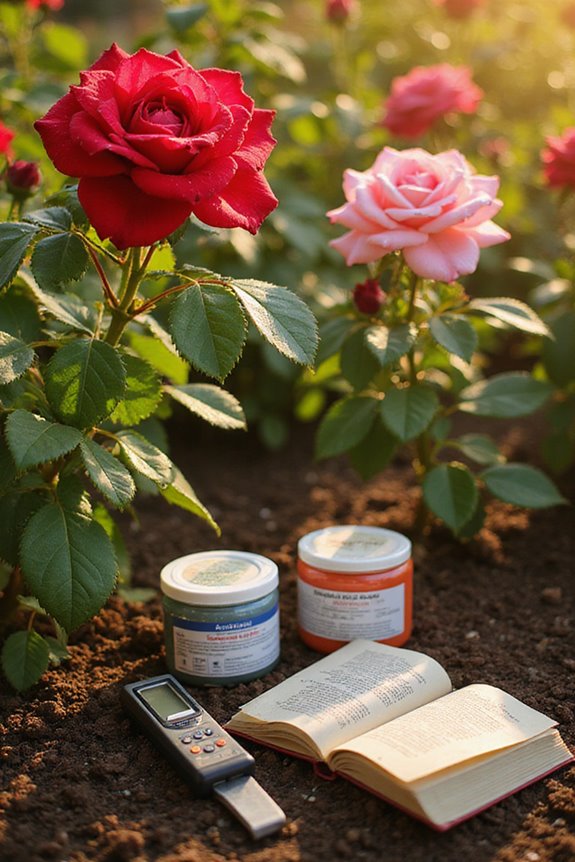
Synthetic fertilizers can be a game changer for our rose gardens, providing a quick burst of nutrients that our blooms crave! With their synthetic efficiency, these fertilizers often contain higher concentrations of nitrogen, phosphorus, and potassium, ensuring fast nutrient availability. They come in water-soluble granules or liquids, making it easy to feed our roses during active growth phases. Just remember, quick release means we must apply them carefully to avoid root burn! While they lack the micronutrients found in organic options, their targeted application and precision can give our roses the boost they need. So, let’s embrace synthetic fertilizers—used wisely, they can pave the way for stunning blooms and happy, healthy plants! In addition, granular options like those from Scotts can provide steady feeding, which is beneficial during the growth season.
Optimal Nutrient Ratios for Roses
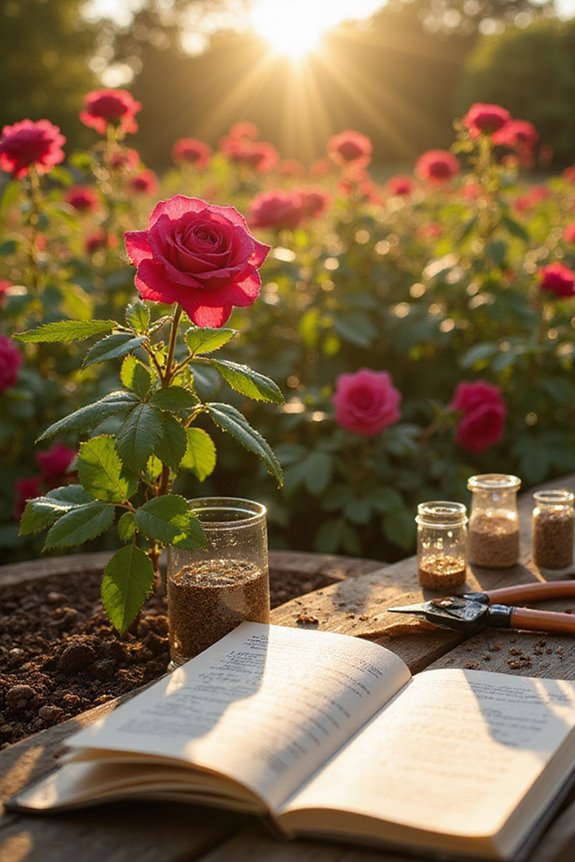
In our quest for breathtaking roses, understanding the ideal nutrient ratios can make all the difference! Achieving a perfect nutrient balance is essential for our beautiful blooms to thrive. For general nutrition, a balanced N-P-K ratio like 10-10-10 works wonders. As we navigate various growth stages, formulas such as 5-10-5 or 6-10-6 focus on flourishing flowers and strong roots. Remember, too much nitrogen can lead to lush leaves but fewer flowers—something we want to avoid! Prioritize phosphorus for robust root systems and abundant blooms, while potassium boosts flower size and plant vigor. Additionally, many fertilizers provide integrated pest management solutions that enhance plant health while promoting stunning blooms. By tailoring fertilizer to the specific needs of our roses, we’re setting ourselves up for a stunning garden display! Let’s nurture those beauties!
Best Practices for Fertilizer Application
What Are Recommended Rose Fertilizers?
Best Practices for Fertilizer Application
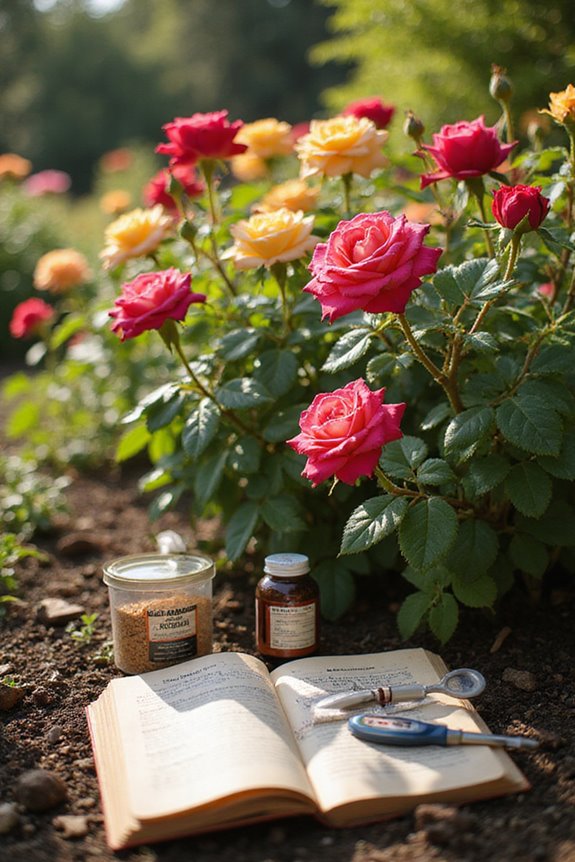
When it comes to keeping our roses thriving, mastering the best practices for fertilizer application is key! We should begin our fertilizer schedules in early spring, right when new leaves emerge. Every 4-6 weeks during the growing season, we can apply liquid fertilizers to keep those blooms vibrant. For our first-year roses, liquid is the way to go—no granular fertilizers for them!
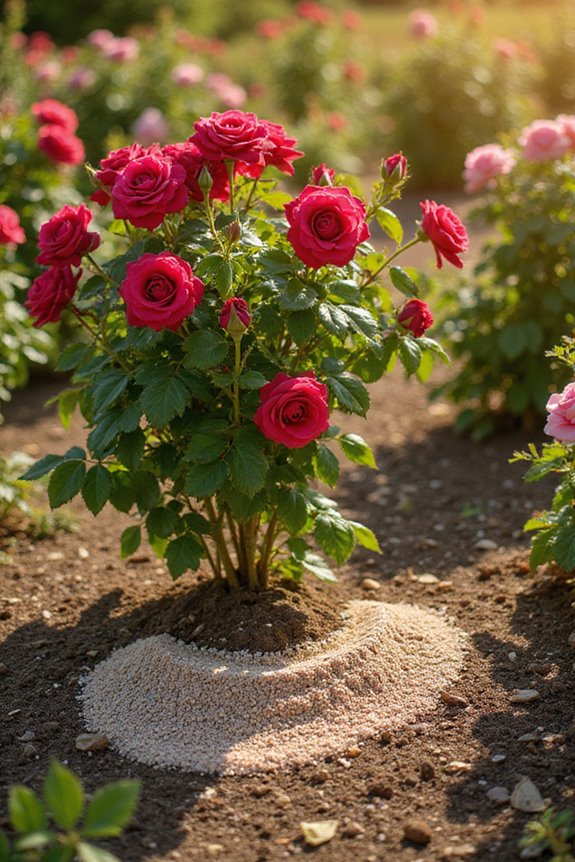
When using application techniques, let’s sprinkle granular fertilizers around the base of the plant, just before a good rainstorm or watering session. Don’t forget to water beforehand to avoid root burn! Additionally, using organic fertilizers can enhance soil health and promote robust growth. And, come late summer, let’s shift to low-nitrogen fertilizers to bolster root growth. A bit of care now lays the groundwork for stunning roses next season!
Frequently Asked Questions
Can I Use Regular Garden Soil for Potted Roses?
Imagine trying to grow roses in a blender! We can’t use regular garden soil for potted roses—it’s too dense. For ideal potted rose care, we need well-draining soil with the right composition for healthy growth.
How Do I Know if My Roses Are Over-Fertilized?
We can identify over-fertilization symptoms in our roses by watching for yellowing leaves and stunted growth. For recovery methods, we should flush the soil, adjust our fertilization practices, and guarantee proper drainage.
Are There Any Natural Alternatives to Chemical Fertilizers?
Picture our roses thriving, vibrant with color. We can turn to organic compost and homemade fertilizers to nourish them naturally, giving our blooms the love they deserve while avoiding harsh chemicals and fostering healthy soil.
When Is the Best Time to Stop Fertilizing Roses?
We should stop fertilizing roses by mid-August to guarantee ideal fertilizer timing. This helps our roses prepare for dormancy and reduces the risk of frost damage to any new growth before winter sets in.
How Do Weather Conditions Affect Fertilizer Application?
Oh, the drama of weather! It’s vital to contemplate weather patterns and soil temperature when applying fertilizer. Hot or cold extremes can jeopardize nutrient uptake, making us all second guess our gardening decisions.