As an Amazon Associate, we earn from qualifying purchases. Some links on this site are affiliate links at no extra cost to you. Our recommendations are based on thorough research and editorial judgment.


How To Improve Drainage In Rose Containers?

To improve drainage in our rose containers, we should guarantee that they have adequate drainage holes—aim for 1/4 to 1/2 inch in size! Next, let’s layer the bottom with broken pot shards or lightweight granules for ideal air circulation. Our potting mix should be a blend of high-quality compost, peat moss, and perlite for moisture retention without compaction. Finally, position pots on elevated surfaces to prevent water pooling. With these tips, our roses will thrive beautifully! Want to discover even more expert techniques?
Key Takeaways
- Ensure containers have adequate drainage holes, ideally 1/4 to 1/2 inch in size, located at the lowest point.
- Add a 1-2 inch layer of broken pot shards or lightweight granules at the bottom for effective drainage.
- Use a well-balanced potting mix that includes compost, peat moss, aged pine bark, and perlite for optimal aeration and moisture retention.
- Position pots on elevated surfaces like gravel or bricks to prevent water pooling and enhance air circulation around roots.
- Water deeply but infrequently, allowing soil to dry between waterings, and check soil moisture regularly until roses are established.
Ensure Adequate Drainage Holes in Containers
You may be interested



When it comes to ensuring our roses thrive in containers, we can’t overlook the importance of having adequate drainage holes. Choosing the right container types is essential! Make sure your pots come with properly sized holes, ideally between 1/4 to 1/2 inch, for ideal outflow. Holes should be strategically placed at the lowest point of the container, allowing excess water to escape freely. If your chosen pot lacks drainage holes, don’t hesitate to drill some before planting. Remember, larger containers typically have more or larger holes, which is perfect for healthy root expansion! Regularly check that these holes stay clear, as functional drainage is key to preventing root rot! Additionally, incorporating moisture-locking features in your soil can further enhance drainage and promote healthy root development. Let’s keep those roses flourishing!
Recommended Products

FEEDS UP TO 6 MONTHS: Miracle-Gro Potting Mix is a gardening soil for outdoor containers that feeds all types of potted plants, including flowers, vegetables, shrubs, annuals, and perennials for up to 6 months

DIMENSIONS: 36"L x 24"W x 24"H- Please see our images for exact dimension details.

High Quality Craftsmanship: Handcrafted Stoneware Planters Built to Last.
Use Drainage Material at Pot Bottom
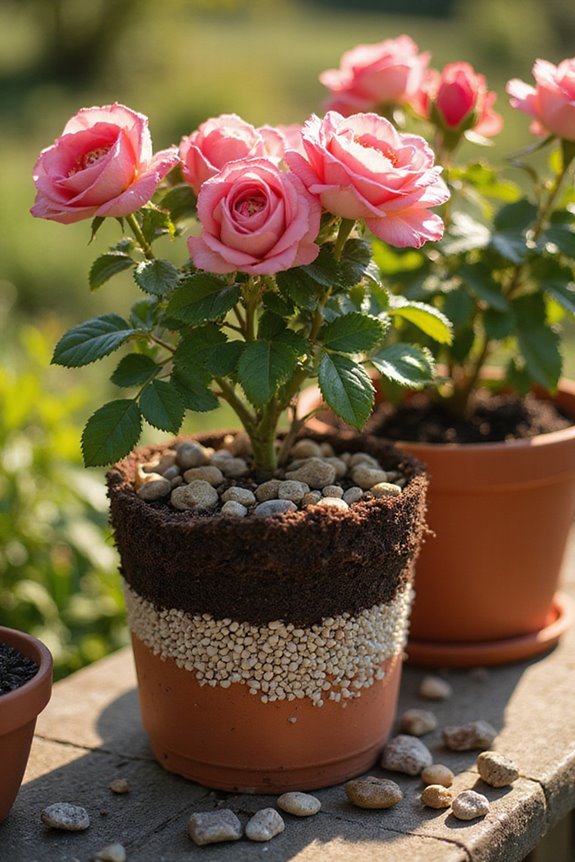
To really make our roses flourish in containers, we need to contemplate what goes at the bottom! A solid drainage layer is essential for happy, healthy plants. Let’s start with broken pot shards, which not only keep soil in but also guarantee our drainage holes stay clear. Alternatively, we can use lightweight drainage granules made from recycled plastics—these are fantastic for reducing pot weight while enhancing air circulation around our roots! It’s important to lay a 1-2 inch layer before adding soil, making sure it doesn’t completely block the drainage holes. With these tactics, we’ll prevent pesky root rot and keep our roses thriving! Additionally, incorporating well-draining soil will further enhance moisture retention while keeping roots healthy. Here’s to creating gorgeous, vibrant blooms in our container gardens!
Improve Potting Mix Composition
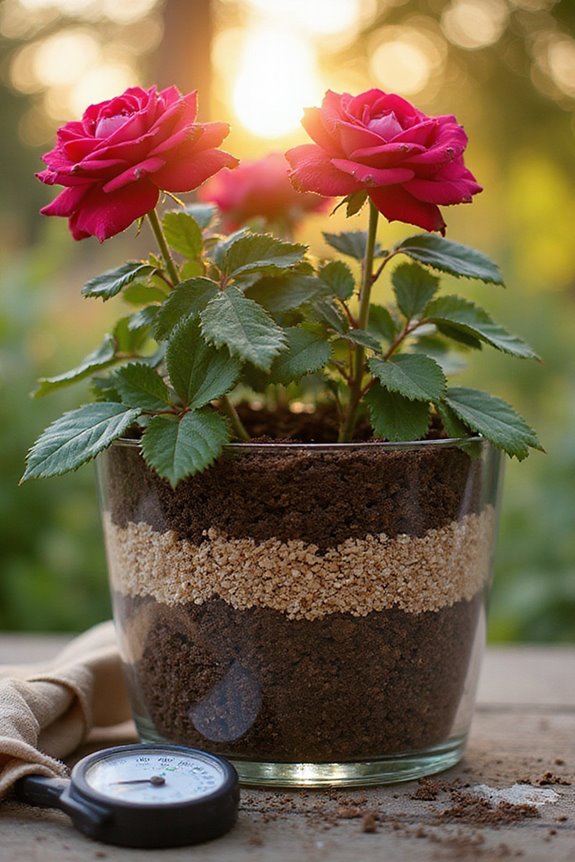
Improving our potting mix composition can truly elevate the success of our container-grown roses! Let’s aim for a blend that includes essential potting mix components. First, we can mix high-quality multi-purpose compost with peat-based compost, achieving richness and drainage. Adding composted cow manure enhances both nutrient availability and soil texture, while peat moss helps with moisture retention. Incorporating aged pine bark gives our mix organic structure and improved aeration! We should toss in some volcanic rock or pumice to create those coveted air pockets. And remember, a sprinkle of perlite prevents compaction while ensuring great drainage. Let’s skip dyed mulches—our roses deserve only the best! With this mix, our roses will thrive, growing strong and beautiful! Additionally, incorporating well-aerated soil can contribute to vibrant colors and robust health for roses.
Recommended Products

You will receive (10) 2-cubic foot bags of potting soil per purchase.

You will receive (10) 1.5-cubic foot bags of potting soil per purchase.

Coarse Horticultural Perlite: 4 pack large-grade perlite designed for potting soil, seed starting, propagation, hydroponics, organic gardening, and specialty plant mixes
Enhance Soil Drainage in Location
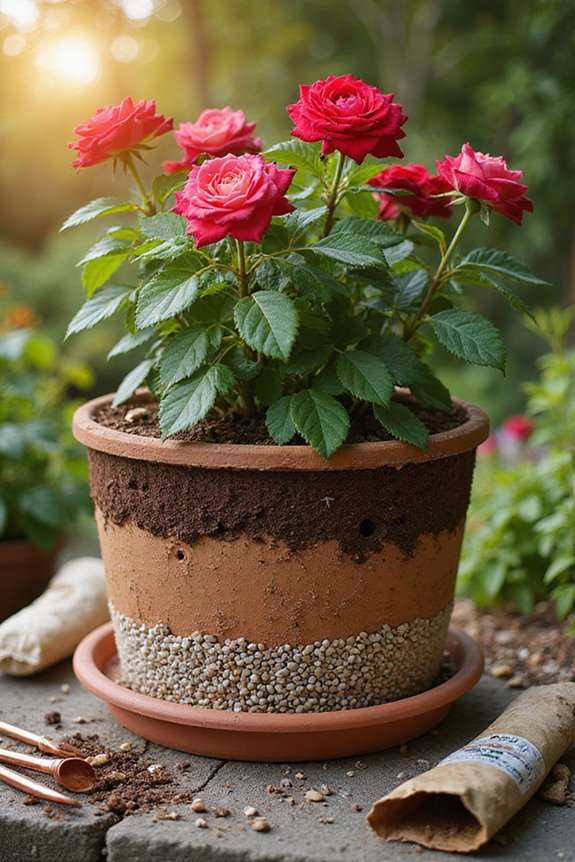
Enhancing soil drainage in our chosen locations can make a world of difference for our container-grown roses! To start, let’s select elevated surfaces, like gravel or bricks, to prevent water from pooling around our pots. This not only boosts drainage but also improves air circulation beneath our containers. We should avoid placing pots on solid concrete, as that can trap excess moisture and create soggy conditions. Instead, let’s choose level or gently sloping ground to facilitate runoff. And remember, steady air circulation helps reduce humidity, speeding up evaporation! By ensuring our containers sit in the right locations, we actively promote healthy roots and vibrant blooms. Let’s set our roses up for success! Additionally, using slow-release fertilizers can further enhance the overall health of your roses by providing essential nutrients over time.
Recommended Products
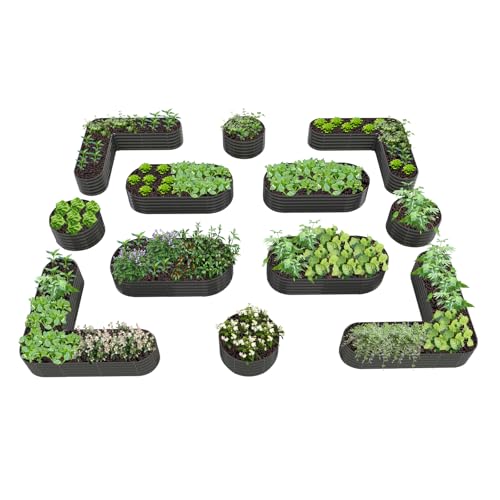
12-PIECE BACKYARD GARDEN SYSTEM – 4 oval, 4 heart, 4 round beds; all 18" deep in matching quartz grey; modular setup for fence lines, patio borders and focal points; one coordinated kit organizes your whole backyard farm garden; galvanized raised garden beds outdoor system for vegetables and flowers
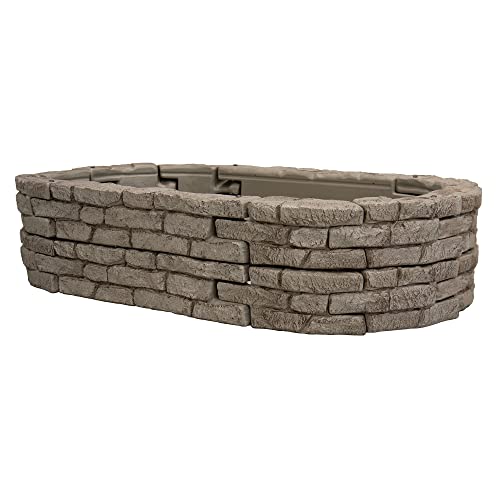
Natural Stone Look: Features a realistic stone appearance that complements outdoor landscapes while adding aesthetic appeal.
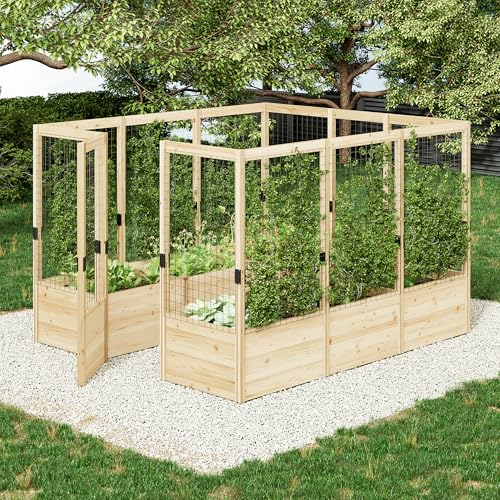
Deer Resistant Fence: Equipped with Deer Resistant fence, this raised garden bed kit provides an additional layer of protection, keeping unwanted animals at bay and safeguarding your plants.
Practice Proper Watering Techniques

When it comes to container-grown roses, proper watering techniques are absolutely essential for keeping them thriving! We should aim for ideal watering by soaking the soil deeply but infrequently—about 1.5 gallons at a time is best. Early morning is the perfect time to water, helping the soil dry evenly and reducing fungal disease risks. Plus, it promotes oxygen flow to the roots! Let’s avoid those late-night water sessions, as they can lead to moisture retention on leaves. If we’ve just planted our roses, let’s check the soil every 2-3 days until they’re established. And remember, using a watering can or drip irrigation allows us to deliver water straight to the root zone, enhancing drainage and keeping our blooms beautiful! Also, investing in a drip irrigation system can significantly reduce water waste while ensuring precise watering tailored to the needs of your roses.
Maintain and Refresh Potting Conditions
Keeping our roses happy in containers isn’t just about watering; it’s also essential to maintain and refresh the potting conditions. Let’s repot our roses every 1 to 2 years! This not only enhances soil aeration but also improves nutrient balance. We should use a high-quality, well-draining potting mix, and incorporate organic matter like compost to enrich it. Mixing in perlite or coarse sand increases pore space, ensuring our roots can breathe. Remember to apply a slow-release fertilizer every few months, supporting vibrant blooms! Regularly check for crusting on the surface—let’s break that up to keep moisture levels just right. By nurturing these potting conditions, we’ll cultivate stunning roses that thrive in our containers!
Troubleshooting Drainage Issues
How can we tackle those pesky drainage issues that keep our roses from thriving? First, let’s make sure our containers have proper drainage holes—these are important for air and water movement, promoting essential root health! If your pots lack holes, don’t fret; we can drill gaps in suitable materials like resin or plastic. Next, consider using a chunky, organic mulch layer to enhance drainage while retaining moisture, but steer clear of dyed varieties! Testing drainage is significant; fill your pot with water and monitor how quickly it drains. And remember, good drainage solutions prevent root rot; let’s keep our roses healthy and blooming! A little attention goes a long way in creating the perfect environment for our favorite plants!
Frequently Asked Questions
Can I Use a Plastic Container for Roses?
Absolutely, we can use plastic containers for our roses! Their lightweight durability is unmatched, supporting rose health through easy mobility while ensuring proper drainage. Let’s cultivate beautiful blooms with these practical yet effective planting options!
How Often Should I Check for Blocked Drainage Holes?
We should check for blocked drainage holes at least every few weeks during container care, especially in hot weather. Regular drainage maintenance helps prevent waterlogging and guarantees our roses stay healthy and vibrant.
What Size Container Is Best for Rose Plants?
To choose the ideal container size, we’ve found that larger pots foster robust growth, while rose container materials like clay enhance breathability. Balancing size and material guarantees our roses flourish beautifully together.
Can Roses Survive Temporary Waterlogging?
Yes, roses can survive temporary waterlogging due to their resilience. However, prolonged exposure may lead to detrimental waterlogging effects, impacting root health and growth. We must guarantee proper drainage to support their recovery and vigor.
Should I Prune Roots When Repotting Roses?
When we begin repotting, root pruning’s our secret weapon! By carefully trimming away excess roots, we reveal vibrant growth and energy—embracing effective repotting techniques that breathe new life into our beloved roses together.