As an Amazon Associate, we earn from qualifying purchases. Some links on this site are affiliate links at no extra cost to you. Our recommendations are based on thorough research and editorial judgment.

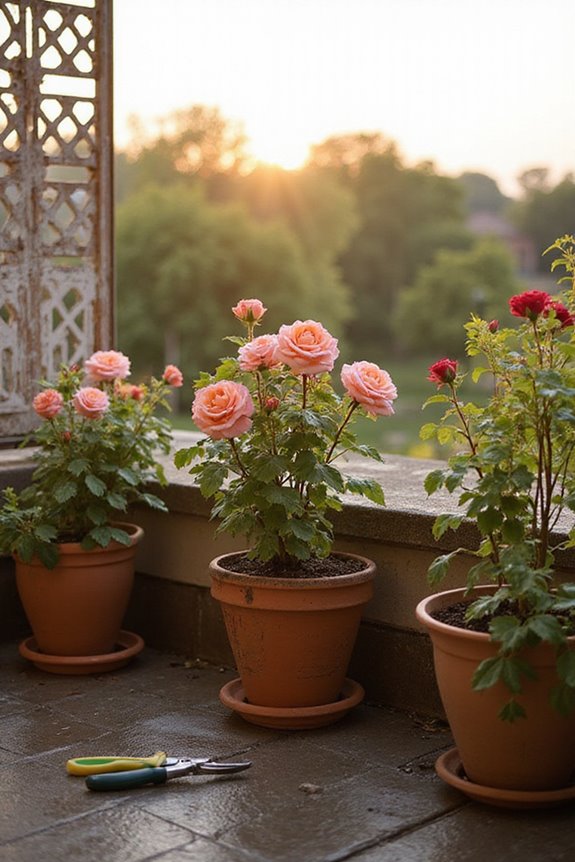
How To Secure Pots Against Wind For Rooftop Roses?

To secure pots against wind for our rooftop roses, let’s first consider strategic placement. Position pots in staggered rows, creating windbreaks with larger plants on the windward side! We can also fill planters with heavy materials like sand or concrete for stability. Using guy ropes or mechanical anchors adds extra security. Plus, choosing flexible-stemmed rose varieties offers a resilient edge. With these tips, we can create a thriving rooftop garden, and there’s even more to explore!
Key Takeaways
- Strategically place pots by identifying wind patterns and arranging them in staggered rows to disrupt wind flow.
- Use heavy planters filled with sand or concrete to provide stability against strong winds.
- Secure pots with mechanical anchors like flange or expansion bolts for added safety on rooftops.
- Construct windbreaks using semi-permeable materials, positioning them perpendicular to prevailing winds for maximum protection.
- Choose flexible-stemmed and wind-resilient rose varieties, and group them near windbreaks for sheltered microclimates.
Understanding the Impact of Wind on Rooftop Roses
You may be interested



When it comes to our beautiful rooftop roses, we might not always think about the impact of wind—though it’s an important factor we can’t ignore! Wind effects can be harsh, leaving our plants vulnerable to bending, uprooting, or even breaking. Those heavy canes? They might look impressive, but they also amplify stress on roots and stems. Plus, the drying effects of wind can lead to rapid water loss, leaving our roses thirsty and stressed.
Constant gusts can flex their branches, weakening them over time, and even carrying harmful debris that can damage those delicate petals! It’s vital we recognize these challenges, so our roses can truly thrive in their high-altitude haven. Regular monitoring is essential to ensure they’re well-protected against those blustery winds!
Strategic Placement of Pots for Wind Protection
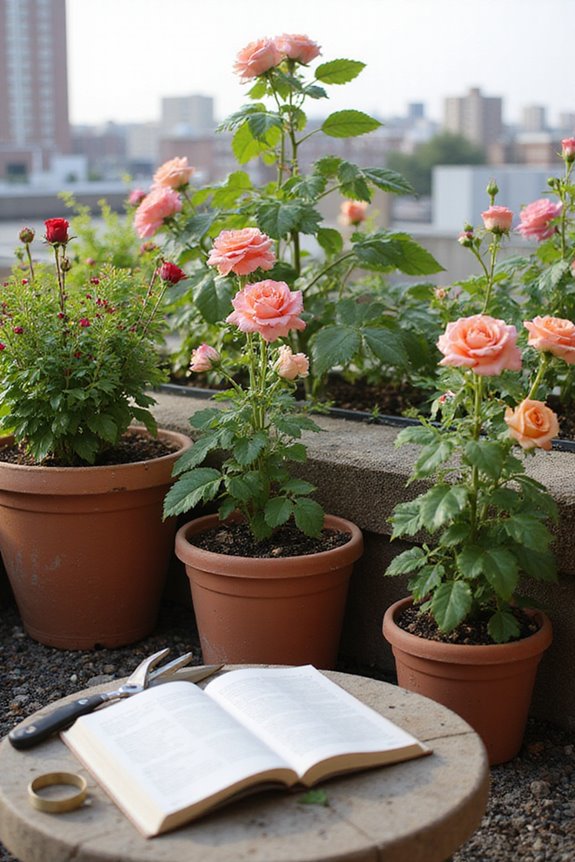
As we explore the delightful art of placing our pots for maximum wind protection, it’s essential to reflect on how the elements interact with our beloved flowers! First, let’s identify those wind patterns—knowing where the wind blows helps us position pots strategically. By placing larger, wind-resistant plants on the windward side, we create natural windbreaks that shield our more delicate roses. Arranging our pots in staggered rows not only disrupts wind flow but also adds visual interest! Grouping our pots closely reduces exposure, while incorporating companion plants like boxwood or sturdy juniper can provide extra shelter. Regular testing of soil health can also improve disease resistance and ensure our roses thrive in these dynamic conditions. Remember, creating varied pot arrangements and utilizing taller plants adds even more layers of protection—our roses will thrive, come what may!
Recommended Products

Spacious & Multi-Use: 10x20 FT gazebo offers ample space for outdoor dining, gatherings, or relaxation. It also serves as a bbq gazebo, grill gazebo, or shelter for vehicles and garden tools—perfect for any patio gazebo or backyard gazebo setup
Aluminum Sturdiness: The high-strength aluminum frame conceals a capacity of 350 pounds. Expert coating builds you an invisible armor that is not afraid of abrasion. From the patio to the deck, it steadily allows you to enjoy every moment of relaxation.

Commercial-Grade Weed Barrier Fabric: Heavy-duty woven fabric built for landscaping and commercial installations where long-term weed control and durable ground coverage are required
Physical Anchoring Methods for Stability

While we’ve explored how strategic placement can help shield our pots from pesky winds, let’s take it a step further and focus on solid anchoring methods! First, let’s think about pot weight—we can fill our planters with heavy sand or even concrete for added stability. These materials not only increase the weight but also provide a weatherproof base. Next, consider mechanical anchors like flange or expansion bolts; they guarantee secure bases that hold our pots firm against gusts. Additionally, using guy ropes or ratchet straps adds yet another layer of protection! By combining these techniques, we create a sturdy fortress for our rooftop roses. With a little extra effort, we’ll keep our plants thriving amidst the breezy challenges of urban gardening! Using slow release fertilizers enhances plant stability by providing consistent nutrients, helping roses better withstand environmental stressors.
Recommended Products

Premium Epoxy: Pennant Topside is a 2-part, waterborne linear polyurethane designed for marine topside applications, above or below the waterline; Easy to apply by brush, roller or sprayer

EFFORTLESS FILLING WITH A WIDE MOUTH DESIGN: Our sand bag filler tool simplifies the process of filling sandbags. This sandbag funnel reduces spillage, saving time and materials. Whether for flood prevention, landscaping, or general construction, this wide mouth funnel for sand ensures efficient, hassle-free operation.

【40 lbs River Rocks】The mixed color river rock is about 2-3 inch. FANTIAN colorful rocks include various shades of brown, white, black and different shapes,they are very clean and have no dust or powder attached. These polished river rocks are loved by bonsai gardeners and Zen gardeners
Constructing Effective Windbreaks
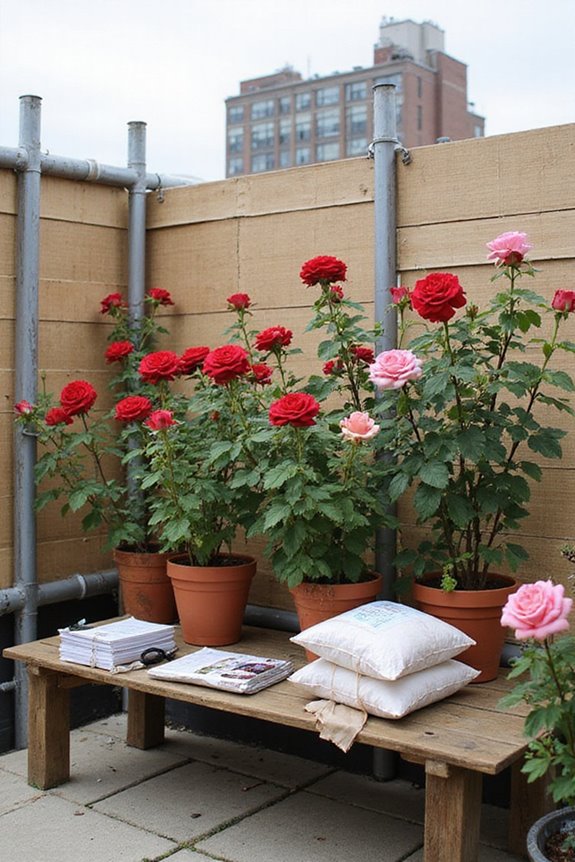
How can we create an oasis of calm for our containers in the midst of unruly winds? To begin, let’s explore effective windbreak materials like windbreak nets, climbing plants, and dense shrubs! By choosing semi-permeable structures, we can reduce turbulent eddies while allowing airflow. Mix evergreen and deciduous plants; evergreens provide year-round protection, and deciduous varieties add seasonal benefits.
For windbreak design, ascertain height matters—taller windbreaks can shield larger areas and extend protection downwind. Position them perpendicular to prevailing winds for ideal coverage, and make sure they’re continuous to avoid gaps. Remember to anchor with sturdy posts and secure bases! Additionally, incorporating organic materials into the soil can enhance disease resistance and support the overall health of your rooftop roses. By layering plants of varying heights, we’ll craft a beautiful barrier for our beloved rooftop roses. Let’s get growing!
Insulation Techniques to Shield Roots

When temperatures plummet and winds howl, it’s essential we protect our beloved plants’ roots from the harsh elements! One effective way is using foam insulation inside our pots. Let’s cut the rigid foam to fit the planter walls, leaving space for drainage at the bottom. Then, we can line the interior with foam—securing it with waterproof tape if needed. For added warmth, we should wrap pots with multiple layers of plastic, followed by breathable burlap to fend off mildew and conserve heat! Adding mulch layering of pine needles or shredded bark around the base will help, too, buffering those temperature extremes while keeping moisture close. Our roses will thank us come spring! Additionally, specialty rose formulations are designed to support vibrant blooms, ensuring our plants thrive despite the cold.
Recommended Products

𝐏𝐫𝐞𝐦𝐢𝐮𝐦 𝐃𝐨𝐮𝐛𝐥𝐞-𝐒𝐢𝐝𝐞𝐝 𝐀𝐥𝐮𝐦𝐢𝐧𝐮𝐦 𝐁𝐮𝐛𝐛𝐥𝐞 𝐑𝐨𝐥𝐥: Constructed with heavy-duty aluminum foil on both sides and an air bubble core, this reflective foil roll delivers superior bubble insulation for attics, walls, HVAC systems, and industrial spaces. The thermal foil surface deflects heat and cold, maintaining stable interior temperatures for year-round comfort and energy savings.

What You Get: you will receive 2 roll of closed cell rubber with adhesive foam, and measure about 78 x 16 x 1/2 Inches/ 200 x 40 x 1.3 cm, allowing for easy installation to fit various applications; With this proper size, you can achieve precise insulation and weatherproofing without wastage or need for extensive cutting

Versatile & Stylish: Ideal as an indoor or outdoor mat, this 24x36 inch Artwork Door Mat enhances any entryway, porch, or outdoor kitchen with its unique design. Add a touch of style and functionality to your space.
Plant Care Adaptations for Wind Resilience
As we wrap our roses in warmth for the winter, it’s also time to think about how we can help them stand strong against those fierce gusts of wind. First, let’s choose wind-resilient varieties, especially those rated for our local USDA zones; flexible-stemmed roses are less prone to breakage! When it comes to fertilizer application, opt for a slow-release formula that promotes strong root development, crucial for stability. We should also keep an eye on pest management to prevent infestations that weaken our roses. Strategically positioning compact or grafted varieties near windbreaks, like needle-leaf shrubs, creates a sheltered microclimate, making our rooftop roses more robust and ready to thrive—no matter the weather! Happy gardening!
Preventive Maintenance and Regular Monitoring
While most of us love the gentle breeze on a sunny day, strong winds can pose a real challenge for our beloved potted plants! To keep our roses thriving, regular pot inspections are vital. Checking for cracks or leaning pots after windy days guarantees stability. We should always verify our plant ties and stakes are secure, too! Moisture monitoring is key; dry soil can lighten pots, making them more vulnerable to tipping. By grouping pots together, we can create a supportive community against the wind. And let’s not forget to adjust pot placements based on wind patterns. Keeping a keen eye on our plants helps us catch any issues early—our roses will surely appreciate the extra TLC!
Selecting Wind-Tolerant Rose Varieties
Selecting the right rose varieties for windy conditions can make all the difference in our gardening success! We should steer clear of tall rose standards; instead, let’s choose compact shrub roses that thrive in the breeze. Look for tough foliage, like that of Rugosa and Alba roses, which can bravely resist wind damage. We’ll focus on roses that maintain a compact shape and are easy to prune to minimize exposure. Some of the best selections include Rugosas for their resilience and Alba roses for their robust growth. Climbing varieties like New Dawn can also be great but need proper support. With the right variety selection, we boost our chances of growing stunning roses, even in challenging rooftop environments!
Recommended Products

[ VERY SHARP & STRONG POWER ] -- The KOMOK professional cordless pruning shears’ blade is forged from SK5 high carbon steel and powered by brushless motor. It is extremely sharp and durable, making it easy to cut 1.65 inch/42 mm branches. Also its service life is 3 to 5 times that of a conventional brush motor. LED digital display shows number of cuts made and current percentage of battery charge. The number of cuts made can be useful to monitor your workload.
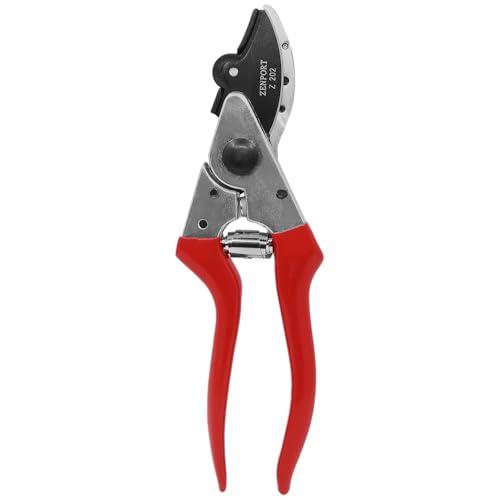
8-inch (203mm) cut-n-hold crew landscape and horticulture pruner

Frequently Asked Questions
What Are the Best Soil Types for Pots on Rooftops?
Did you know that rooftop gardens can support up to 40 pounds per square foot? For our container gardens, we prefer lightweight mixes with perlite and organic matter to keep rooftop plants thriving and healthy.
How Can I Prevent Pests on My Rooftop Roses?
To prevent pests on our rooftop roses, we can use natural pest deterrents like neem oil and practice companion planting with herbs like basil and marigolds to repel harmful insects while promoting a healthy garden ecosystem.
What Flower Companions Can Benefit Rooftop Roses?
We believe incorporating flowering companions like lavender, catmint, and annuals can enhance our rooftop roses’ health and beauty. Using these rooftop gardening tips, we can create vibrant, thriving container gardens together!
Should I Fertilize My Roses During Winter Months?
About 70% of gardeners believe winter fertilization boosts rose health. We shouldn’t fertilize during rose dormancy, but instead, we can prepare them in early spring to promote vigorous growth when they awaken from their winter slumber.
What Are Signs of Poor Drainage in Pots?
We should watch for yellowing leaves, waterlogged soil, and foul odors as signs of poor drainage. If we notice root rot or wilting, it indicates our plants are struggling in excessive moisture.