As an Amazon Associate, we earn from qualifying purchases. Some links on this site are affiliate links at no extra cost to you. Our recommendations are based on thorough research and editorial judgment.

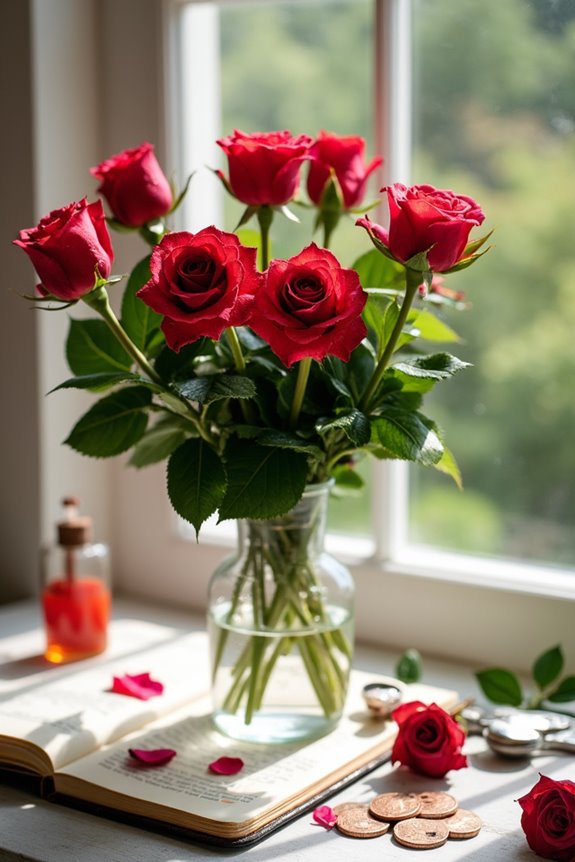
How To Keep Cut Roses Fresh Longer?

To keep our cut roses fresh longer, we should start by cutting the stems at a 45-degree angle right below a node, allowing for better rooting! Using clean tools is a must. Next, let’s fill a vase with lukewarm water and change it daily, keeping it free from leaves that might rot. Adding floral preservative extends vase life and keeps petals vibrant! If we want even more tips and tricks for rose care, there’s so much more to discover!
Key Takeaways
- Cut stems at a 45-degree angle below a node and remove excess foliage to reduce water loss.
- Use lukewarm water initially, then switch to cool water, ensuring it’s changed regularly to prevent cloudiness.
- Apply floral preservatives to enhance hydration, nutrient absorption, and extend vase life.
- Maintain a cool environment (0.5 to 5 °C) with high humidity (80-90%) to slow metabolism and support recovery.
- Store cut roses away from direct light and incorporate organic materials in water for improved health.
Essential Stem Cutting Techniques
You may be interested



When we plunge into the world of cut roses, the first step to guaranteeing they stay fresh and lively is mastering essential stem cutting techniques! To get started, we must select stems that are just blooming, about 6 to 10 inches long, with 3 to 4 nodes. Remember, cutting techniques matter! We’ll want to make that bottom cut at a 45-degree angle right below a node—this creates a larger surface area for rooting. Using clean, sharp tools guarantees we minimize infection risks! After cutting, dip that end in rooting hormone to boost our success. Additionally, utilizing quality pruning shears can help ensure precise cuts, which is crucial for maintaining the health of the stems. Finally, let’s keep our cuttings moist, trimming any excess foliage to reduce water loss. With these pruning methods, we’re on our way to vibrant roses!
Optimal Vase Water Management

After we’ve honed our skills with those all-important stem cutting techniques, it’s time to focus on how we manage the water in our vases! First, let’s remember that water temperature matters; starting with lukewarm water helps roses absorb moisture quickly. Once they’re settled in, we switch to cool, fresh water for ongoing care. Regular water changes are essential—aim for every day, or at least when the water looks cloudy. Maintaining high water levels allows all stems to stay submerged, preventing wilting and ensuring hydration. We should also remove any leaves below the water line to deter bacterial growth. Additionally, keeping the water clean and free of debris creates an inviting environment**** for our cut roses to shine and thrive! Let’s make our vases a sanctuary for beauty!
The Role of Floral Preservatives

Floral preservatives play an essential role in helping our cut roses thrive and maintain their beauty, so let’s explore how they work! These clever solutions contain sugars that provide much-needed energy, biocides that fight off harmful bacteria, and acidifiers that enhance nutrient absorption. By reducing pH levels, preservatives allow our roses to drink up the water more effectively, keeping them hydrated and vibrant! The floral preservatives benefits include extended vase life, preventing wilting and fading petals. To maximize this longevity, we should refresh the solution regularly and recut the stems—think of it as a spa day for our blooms! Embracing these techniques guarantees our delightful roses stay lively and fragrant for days to come! Additionally, using BioAdvanced 2 In 1 Rose Fertilizer and Insect Killer can further enhance the overall health of the roses before cutting them.
Recommended Products
HYDRATION DURING TRAVEL – Specifically engineered to keep cut flowers fresh and vibrant for 2 to 5 days while in transit, ensuring your bouquets arrive at their destination looking like they just left the cooler.

1 Gallon Bottle

Ideal Environmental and Storage Conditions

Have you ever wondered what makes roses stay vibrant and lovely for longer? To truly extend their freshness, we need to focus on temperature control and humidity management. Keeping our cut roses in the ideal range of 0.5 to 5 °C (32.9 to 41 °F) slows down their metabolism, which is essential for maintaining that beautiful bloom! Humidity plays its part too—aim for 80% to 90% relative humidity, as this keeps roses hydrated and turgid. Remember, too low humidity can lead to wilting, while too high can introduce mold! A dark, cool environment supports their recovery, so let’s store them away from bright light. Additionally, incorporating organic materials into the water can enhance the overall health of the roses. With these tips, we’ll keep our roses looking fabulous longer, and that’s what we all want!
Pruning and Regular Maintenance
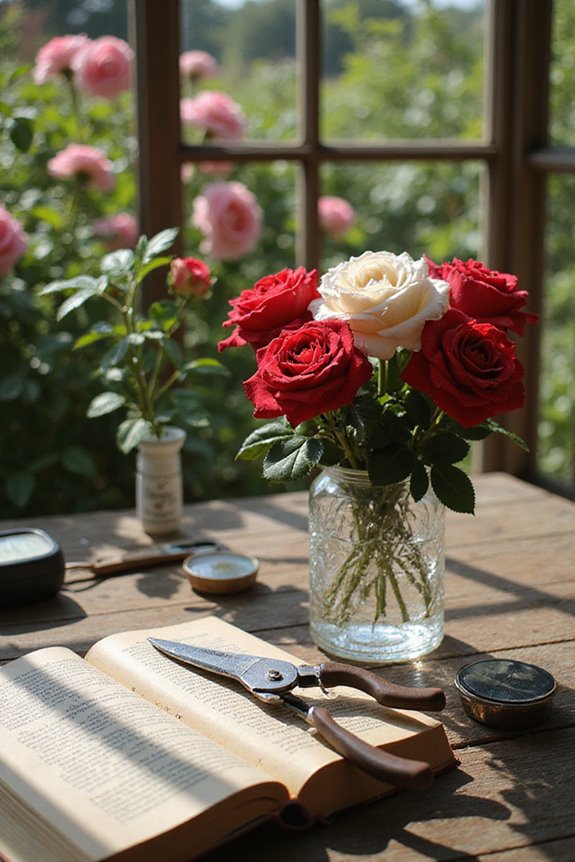
While we might admire the beauty of our roses, keeping them vibrant requires a bit of love and care, especially through pruning and regular maintenance! Pruning benefits our beloved blooms by shaping them and promoting air circulation, which helps prevent diseases. Let’s prune annually in early spring, cutting at a 45-degree angle above outward-facing buds. Remember to deadhead faded blossoms throughout the growing season for repeat blooms. A light fall pruning is perfect for certain varieties to combat winter winds. Plus, maintaining sharp, sterilized tools is essential—clean cuts reduce infection risks! Additionally, using high carbon steel blades ensures smooth and clean cuts, ultimately enhancing the health of your rose bushes. With these maintenance tips, our roses will flourish, giving us those stunning blooms we cherish! Together, we can cultivate a breathtaking garden that brings joy!
Reviving Wilted Roses
After putting in all that effort with pruning and maintenance, it’s a real bummer when our vibrant roses turn limp and wilted! Luckily, we can use some handy rehydration techniques to revive them. Start by submerging the entire rose—stems, leaves, and blooms—in warm water for 20-60 minutes. This helps them absorb water, combating wilting caused by dehydration. Next, trim an inch off each stem at a 45-degree angle underwater to boost water intake. After they’re revived, clean the vase, fill it with fresh water mixed with floral preservative, and re-cut the stems. Let’s handle them gently and keep them in a shaded spot! Our beloved blooms will bounce back in no time!
Alternative Preservation Methods
When it comes to preserving the beauty of our cherished cut roses, we’re in for a delightful journey! One fantastic method is using silica gel. By gently burying our sturdy, fully opened roses in silica gel within an airtight container, we can absorb moisture, avoiding color loss! The drying process typically takes a few days— or we can speed it up using microwave drying for quick results! Just remember to monitor carefully to avoid burns. Another alternative is air drying—simply hang our rose buds upside down in a dark, ventilated space for a couple of weeks. Both techniques retain the charming essence of our blooms, letting us enjoy their beauty long after cutting! Let’s get preserving!
Recommended Products

DURABLE & SAFE CONSTRUCTION – Built to last with high-grade aluminum and brass. Rated for a max pressure of 150 PSI / 1.0 MPa, our system is engineered for industrial reliability. The metal bowl provides clear visibility of the filter status, giving you peace of mind during operation.

【Caution】This 1/2" NPT 4-stage air drying system is designed for compressed air systems with a maximum input pressure of 150 PSI / 10 Bar / 1.0 MPA. Exceeding this limit may damage the regulator or filter components. Always operate within safe pressure ranges.

【3-Stage Physical Separation】 (Stage 1: Bulk Water Removal | Stage 2: Oil Residue Trapping | Stage 3: Vapor Dehumidification):This heavy duty system provides a mechanical solution for heavy moisture and oil residue in air lines; Stage one utilizes a 5 micron fiber medium to intercept 95% of bulk water and solid debris; Stage two employs a 0.01 micron coalescing layer to capture 99.98% of liquid oil remnants; Stage three forces air through desiccant beads to supply bone dry airflow
Frequently Asked Questions
How Long Should Cut Roses Typically Last in a Vase?
Cut roses typically last about 7 days in a vase, but with proper rose care, we can extend their vase longevity to 10 days or more, depending on the variety and environmental conditions.
Can I Mix Different Flower Types in the Same Vase?
Mixing different flower types in the same vase can feel like a beautiful dance, but it brings compatibility issues that can shorten the life of our arrangements. Let’s carefully choose to guarantee harmony and longevity.
What Should I Do if My Roses Start Drooping?
If our roses start drooping, we should recut the stems underwater, submerge them in warm water, and refresh their vase with clean water daily. These rose care tips can provide effective drooping solutions and restore their liveliness.
Is It Safe to Use Tap Water for Cut Roses?
Imagine a crystal-clear stream nourishing vibrant blooms. While tap water can be used, poor water quality may hinder rose preservation. Let it breathe overnight, enhancing safety and ensuring our roses stay radiant as they bloom.
Can Cut Roses Thrive in a Low-Humidity Environment?
Cut roses struggle in low humidity due to moisture loss. With proper rose care, like frequent hydration and using humidifiers, we can mitigate these effects and prolong their beauty, but they’ll still face challenges.