As an Amazon Associate, we earn from qualifying purchases. Some links on this site are affiliate links at no extra cost to you. Our recommendations are based on thorough research and editorial judgment.

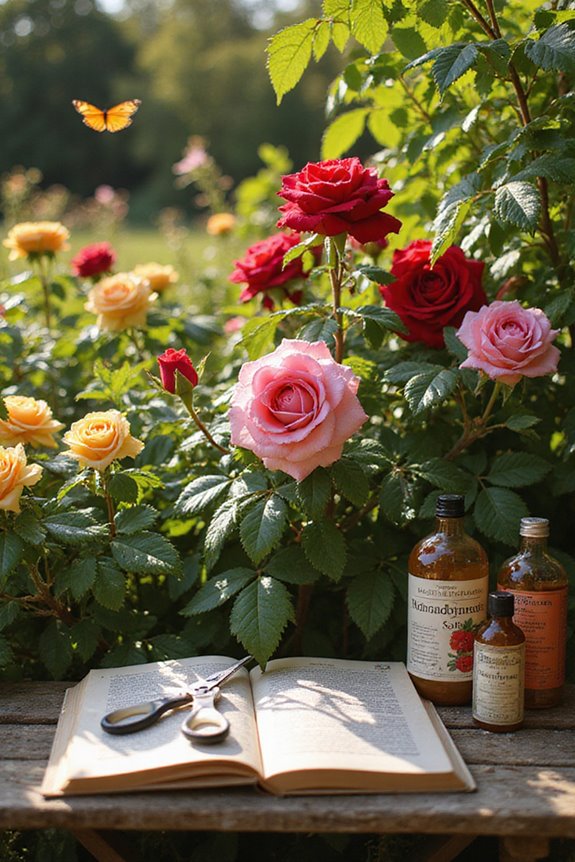
Which Authoritative Rose Care Guides Are Trusted?

If you’re keen to boost your rose gardening skills, we trust fantastic guides like *Roses for Dummies* for solid basics and Roger Phillips’ *Best Rose Guide*, which features over 850 stunning varieties! You’ll love Amanda Beales’ step-by-step care tips and Paul Zimmerman’s organic methods for easier upkeep. Perfect for both beginners and seasoned gardeners, these resources will enhance your rose-growing journey and help you flourish in your garden! Stick around, and there’s more to explore!
Key Takeaways
- *Roses for Dummies* provides a foundational understanding of rose history and cultivation techniques for novice gardeners.
- Amanda Beales’ *Roses (A Care Manual)* offers detailed, step-by-step guidance on successful rose care practices.
- David Austin’s *The English Roses* features exquisite photography and insights into rose breeding, appealing to both enthusiasts and breeders.
- *Botanica’s Encyclopedia of Roses* combines botanical science with practical rose care tips for comprehensive understanding.
- Paul Zimmerman’s *Everyday Roses* promotes an organic approach, making rose gardening accessible and sustainable for casual gardeners.
Overview of Rose Care Literature
You may be interested



If we want to cultivate a magnificent rose garden, diving into the wealth of rose care literature is a fantastic place to start! With titles like *Roses for Dummies*, we can familiarize ourselves with rose history and gather crucial cultivation techniques. Amanda Beales’ *Roses (A Care Manual)* offers step-by-step guidance that we can trust! For colder climates, Bob Osborne’s *Hardy Roses* provides essential advice on soil pH and pruning methods. Let’s not forget Roger Phillips’ *Best Rose Guide*, which illuminates over 850 roses, helping us select varieties suited to our gardens. Additionally, many of these guides include seasonal care tips to enhance the health of our roses. By exploring these references, we’ll empower our passion for roses, ensuring our gardens flourish with vibrant blooms and enchanting scents! Let’s get growing!
Notable Authors in Rose Gardening

When we think of notable authors in rose gardening, a few names immediately spring to mind, each with their unique contributions to the world of roses! David Austin’s “The English Roses” stands out with its stunning photography and deep insights into rose breeding innovations. Paul Zimmerman’s “Everyday Roses” presents an easygoing, organic approach that makes gardening a joy! Peter Beales’ “Classic Roses” celebrates heritage varieties with a commercial grower’s savvy. Meanwhile, Michael Marriott shares expert recommendations that help us choose the best cultivars. For those craving encyclopedic knowledge, “Botanica’s Encyclopedia of Roses” is an unparalleled resource, blending botanical science with practical tips! Together, these authors inspire us to cultivate beautiful, thriving rose gardens, while understanding essential soil type, pH and hardiness zones is crucial for successful rose care!
Comprehensive Guides for Beginners

Are you ready to plunge into the beautiful and rewarding world of rose gardening? We’re excited to help beginners choose the right rose varieties and perfect their planting techniques! Start with easy-to-grow options like Knock Out or Drift roses, known for their resilience against pests and stunning blooms. When planting, make sure you dig a hole twice as wide as the root ball and amend the soil with organic compost for vigorous growth. Remember to water deeply, allowing the roots to establish themselves effectively, but avoid wetting the foliage! After pruning in early spring, don’t forget to add a 4-inch layer of mulch to keep those precious roses cool and happy! Additionally, utilizing the right portable hand tool sets can significantly enhance your gardening experience and make maintenance easier. Let’s nurture our garden dreams together!
Organic Methods and Sustainable Practices

After exploring the fundamentals of rose care, it’s time to embrace organic methods and sustainable practices that not only support your beautiful blooms but also benefit the environment! By focusing on soil health, we can boost our roses naturally. Incorporate rich, well-draining soil and add organic fertilizers like compost and Epsom salts to enhance fertility and vigor. Remember, keeping our soil’s microbiome healthy is essential! Utilizing products like OMRI-certified fertilizers can further promote sustainable gardening initiatives while ensuring a balanced ecosystem. When watering, we should aim for controlled amounts at the plant base, preventing root rot. Let’s cultivate biodiversity by inviting beneficial insects and using companion plants! Regularly inspecting our roses for pests guarantees early intervention, keeping them thriving. With these organic practices, we’ll enjoy flourishing roses and a healthier garden!
Climate-Specific Rose Care

To thrive, our roses need care tailored to their climate, which makes understanding local conditions essential! Each region demands unique climate adaptations for success. For instance, in tropical areas, we’ll want China or Knockout roses, providing high drainage to combat humidity. In Mediterranean climates, let’s embrace Tea or Climbing roses while ensuring they’re mulch-protected against heat stress. Remember, timing is key—spring or early fall planting works best in temperate zones! Regular soil tests help maintain ideal pH levels for nutrient availability. Keep an eye on watering needs; hot climates may require deep watering up to three times a week. By choosing the right regional varieties, we’ll create vibrant, flourishing rose gardens that boast beauty year-round!
Pruning Techniques for Different Varieties
While our beautiful roses enchant us with their blooms, proper pruning techniques are essential to keep them thriving! For hybrid tea and grandiflora roses, let’s prune in early spring, cutting back canes to 12-18 inches. Remember to maintain a vase shape for the best blooms. Floribunda lovers should aim for 24-36 inches while ensuring air circulation! For climbing roses, leave them untouched for three years; then, trim lateral branches to encourage new growth. With shrub and landscape roses, we can cut them back by half and open the center for light and airflow. Always use sharp tools and sterilize them to keep our plants healthy! Join us as we nurture these impressive rose varieties into robust blooms!
Pest Management Strategies
As we immerse ourselves in the vibrant world of rose pest management, it’s essential to remember that a proactive approach can make all the difference! First, we can start with effective pest identification techniques. Regularly monitor our roses, especially at bud break, to catch those pesky aphids and beetles early! If we spot them, a strong water spray can swiftly dislodge them from our plants. For tougher cases, consider using insecticidal soaps or systemic insecticides like imidacloprid. Let’s not forget the magic of biological controls, like parasitic nematodes, which target soil-dwelling larvae! By combining these strategies, we’ll keep our roses healthy and thriving! Together, we’ll cultivate a stunning garden that enchants everyone!
Soil and Watering Requirements
There’s a delightful secret to achieving glorious roses, and it starts with their soil and watering needs! We need a nutrient-rich, well-draining soil composition with a pH level between 6.0 and 7.0, perfect for our radiant blooms. Mixing in compost or peat moss not only enhances aeration but also helps retain moisture. For those lovely roots, let’s make sure our planting holes are deep and spacious, preventing any waterlogging.
Watering is essential—let’s aim for about 1 inch of moisture per week! If our soil is sandy, we may need to water every 4-10 days, while clay soils might only need it every few weeks. Remember, deep watering encourages robust root growth! Happy gardening! 🌹
Regional Rose Growing Challenges
When it comes to growing roses, we can’t ignore the unique challenges each region presents! From regional pest pressures like aphids and thrips to the disease specter of black spot, every gardener faces a distinct battle. In humid zones, powdery mildew can flourish, urging us to choose disease-resistant varieties. We also need to tackle climate adaptation challenges—high-altitude gardeners should opt for cold-hardy roses, while those in arid areas must manage soil salinity. A microclimate strategy can be essential, whether that’s using raised beds in soggy regions or greenhouses to combat extreme temperatures. By understanding our local conditions, we can flourish in our rose-growing endeavors. Let’s embrace those challenges and enjoy our stunning blooms!
Aesthetic and Arranging Guides for Roses
While crafting stunning arrangements may seem challenging, we can transform our rose-growing passion into beautiful displays with just a few simple techniques! By exploring aesthetic techniques from guides like *Arranging Roses*, we can learn to select varieties based on color and form to create eye-catching arrangements. We should cut our roses at the bud or half-open stage, ensuring longevity and structure in our designs. Mixing roses with lush foliage or other blooms enhances texture and volume. Let’s combine fresh and dried rose elements for unique arranging styles! Remember, proper care—including pruning and pest management—is key for healthy blooms. With these tips, our gardens will flourish and our displays will dazzle! Happy arranging!
Frequently Asked Questions
What Are the Best Beginner Rose Varieties to Start With?
For our rose selection, we recommend beginner varieties like Knock Out®, Little Mischief, and Flower Carpet Pink. These roses thrive easily, require minimal maintenance, and bring beautiful blooms, making them perfect for novice gardeners like us.
How Do I Know if My Roses Are Healthy?
We can tell our roses are healthy by observing vibrant foliage, firm stems, and full blooms. If we notice rose symptoms like discoloration, wilt, or pests, it might be time to adjust our care practices.
When Is the Best Time to Plant Roses?
The best time to plant roses is early spring or fall, considering climate. We should use proper planting techniques, ensuring good drainage and sunlight, to promote healthy roots and vibrant blooms throughout their growing season.
Can I Grow Roses in Containers Successfully?
Absolutely, we can grow roses in containers successfully! By meeting soil requirements and ensuring proper drainage, sunlight, and watering, our container gardening experience can flourish. Let’s choose the right roses for stunning blooms!
How Often Should I Fertilize My Roses?
We should fertilize our roses every 3-6 weeks during the growing season, using appropriate fertilizer types to guarantee they receive essential rose nutrients, adjusting for their specific needs based on growth and environmental conditions.