As an Amazon Associate, we earn from qualifying purchases. Some links on this site are affiliate links at no extra cost to you. Our recommendations are based on thorough research and editorial judgment.


What Monthly Tasks Keep Roses Thriving?

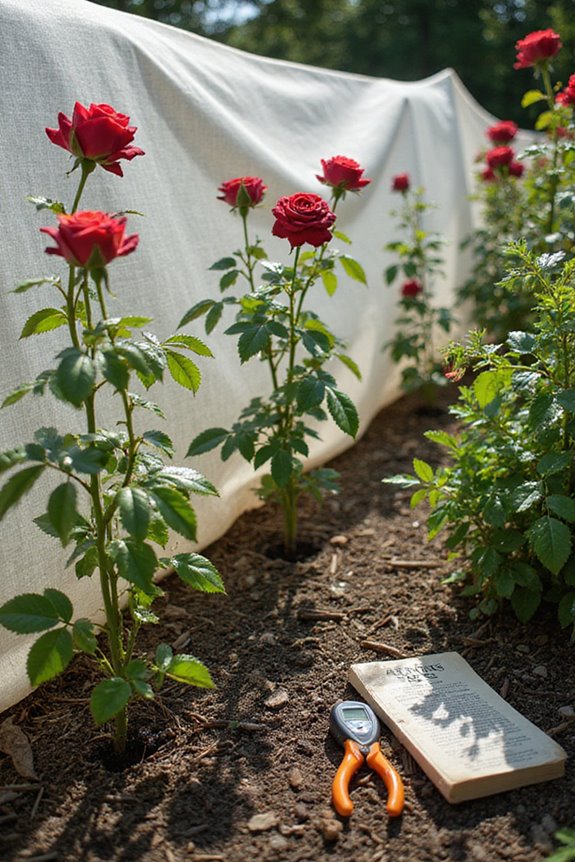
To keep our roses thriving all year, let’s follow a monthly routine! We’ll start with pruning in January, then finalize it in February, while mulching for nourishment. Come March, we’ll feed with organic fertilizers and boost growth with Epsom salts! In April, it’s all about maintenance and disease management. As summer heats up, we’ll prioritize watering and deadheading. Finally, in late summer and fall, we’ll prep for dormancy. Excited to cultivate beauty? There’s so much more to explore!
Key Takeaways
- Prune hybrid teas and floribundas in January to eliminate weak growth and promote airflow, using sharp bypass pruning shears.
- Apply mulch in February to insulate rose bushes and retain soil moisture as temperatures begin to warm.
- Feed roses with organic fertilizers in March, switching to soluble fertilizers as new leaves develop for optimal growth.
- Deadhead spent blooms in April and May to encourage continuous flowering and maintain healthy growth throughout the spring and summer.
- Prepare roses for dormancy in late summer by ensuring proper watering, removing debris, and applying protective mulch as temperatures drop.
January: Dormancy and Pruning Preparation
You may be interested



As we plunge into January, we’re not just waiting for spring—we’re preparing our beloved roses for a glorious comeback! Mid to late January is the prime time for pruning many rose types, like hybrid teas and floribundas. We need to be mindful of cold damage, so let’s avoid pruning too early! Let’s cut back those canes, eliminating weak growth, and create an open center for better airflow. Use sharp bypass pruning shears, like the Felco No. 2—precision matters! After we finish, we can apply dormant oil to combat pests before those new buds emerge. Keeping our roses healthy now will guarantee spectacular blooms come spring! Additionally, utilizing sharp tools will enhance our gardening efficiency during the pruning process. Let’s make this winter our rose’s secret weapon!
February: Finalizing Pruning and Mulching
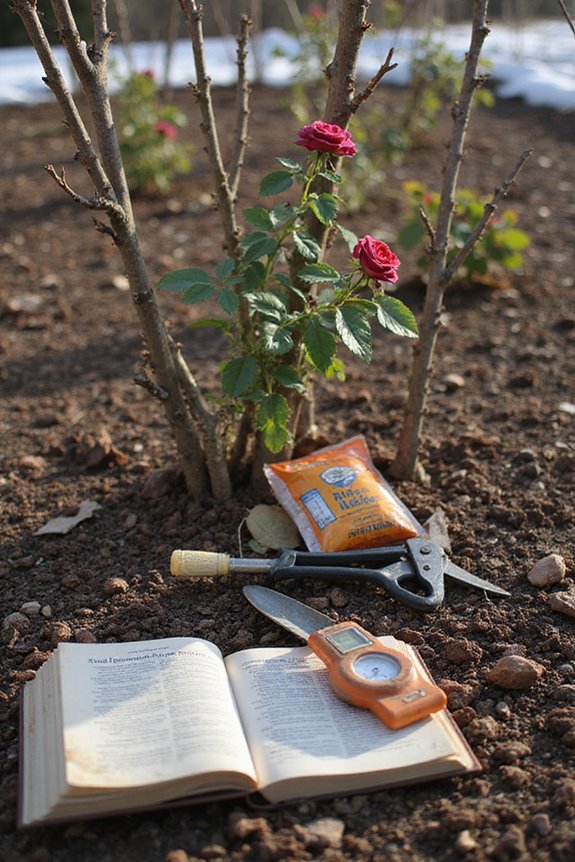
Though winter may still hold its grip, February offers us the perfect opportunity to finalize our pruning and prepare our roses for a spectacular spring awakening! Let’s embrace effective pruning techniques by removing weakened, dead, or diseased canes now that our roses are fully dormant. Remember to cut back canes to an outward-facing bud; this encourages lovely outward growth and better air circulation. After our pruning tasks, we can apply a 4 to 6 inch layer of mulch around the base of our rose bushes! This wonderful mulch benefits our plants by insulating their roots, retaining soil moisture, and suppressing pesky weed growth. Additionally, using high-quality pruning shears will greatly enhance the ease and effectiveness of your pruning tasks. With these simple tasks, we’ll set our roses up for a vibrant spring flourish!
March: Feeding and Early Growth

With spring just around the corner, March is the month we rally to feed our roses and nurture their early growth! As we monitor our plants, let’s kick off nutrient timing by applying organic base fertilizers at the month’s start. When our new leaves pop up and reach about three inches, we’ll switch to soluble fertilizers, like mixing one tablespoon per gallon of water—let’s aim for that weekly for consistent care on March 8 and 22. A splash of fish emulsion on March 15 boosts nitrogen, igniting vigor! We can sprinkle Epsom salts for that extra green glow. Additionally, keeping an eye on nutrient deficiencies can help us fine-tune our feeding regimen. Remember, growth monitoring is key; let’s adjust our feeding based on how our garden responds while keeping pests at bay. Happy gardening!
April: Growing Maintenance and Disease Management

April brings a vibrant energy to our gardens, and it’s the perfect time for growing maintenance and disease management! Let’s start by removing any winter protection materials, ensuring our roses breathe and thrive. We should embrace smart pruning techniques, eliminating dead or damaged wood to enhance air circulation and light penetration—this helps with disease prevention! Don’t forget to deadhead lightly and plant new roses, giving them room to flourish. As the weather warms, let’s keep an eye out for common diseases like black spot and powdery mildew. Applying preventive fungicides early can save us headaches later! With diligent monitoring and care, our rose garden will burst with life and beauty this season. To promote robust growth, consider using a balanced NPK ratio in your fertilizer selection to support vibrant blooms. Happy gardening, everyone!
May-June: Peak Growth and Bloom Support

As May and June usher in the peak of rose growth, it feels invigorating to watch our gardens transform into vibrant displays of color and life! It’s time to amp up our fertilizer application for repeat-bloomers—let’s feed them monthly to support lush foliage and prolonged blooms. Don’t forget our watering schedule; roses need about an inch weekly, keeping the leaves dry to boost disease prevention. Employ mulching techniques to retain moisture and suppress pesky weeds! Pruning tips are crucial too: deadhead those spent flowers for an extra burst of bloom duration. Let’s also keep our eyes peeled for pests and signs of disease. High phosphorus ratio fertilizers can be particularly effective in promoting stunning blossoms. Adequate sunlight exposure is essential—ensure they get at least six hours daily to thrive! Happy gardening!
July: Summer Care and Transition to Dormancy
July brings its own set of challenges and joys for rose enthusiasts! As temperatures rise, heat management is key to keeping our roses thriving. Let’s provide afternoon shade in scorching areas, preventing sun-scorched leaves and crispy petals. Light-colored mulch works wonders to maintain cooler soil! We should check for pesky pests like aphids and act quickly using organic controls. Regularly deadheading faded blooms encourages new cycles, too! Remember to water deeply and consistently, aiming for well-drained moisture, especially during dry spells. As we shift toward dormancy, let’s taper off fertilization and watch for any signs of stress. Together, we’ll guarantee our roses are not just surviving, but flourishing through the heat of summer!
August-December: Dormancy Preparation and Maintenance
From August to December, we commence on an essential journey in preparing our beloved roses for their winter slumber! First up is a thorough ground cleanup—we must remove fallen leaves and debris to banish lurking pests and diseases. Next, let’s fine-tune our watering regimen; keep those roots hydrated until the ground freezes! During this time, we’ll master pruning techniques, trimming weak canes to about two to four feet for protection. Don’t forget to loosely tie canes to shield them from wind. Finally, mulching methods come into play—apply a cozy layer of shredded bark or wood chips to insulate against temperature swings. With mindful nutrient management, we’ll set the stage for resilient blooms in spring! Happy gardening!
Frequently Asked Questions
What Are Signs of Poor Rose Health During Dormancy?
During dormancy, we should watch for wilted leaves, discolored stems, and any dormant symptoms like stunted growth. These signs indicate our roses may be unhealthy and require our immediate attention to revive them.
How Can I Identify Nutrient Deficiencies in My Roses?
Noticing our roses’ distress feels like a heartbreak! We can identify nutrient symptoms by observing yellowing leaves, stunted growth, or twisted new growth. Quick deficiency detection is key to restoring their vibrant beauty and health.
What Types of Roses Are Best for My Climate?
When choosing rose varieties, we must consider our specific climate. Cold-hardy options thrive in cooler zones, while heat-tolerant varieties flourish in warmer areas. Let’s explore what best fits our local conditions for thriving roses.
How Can I Propagate Roses at Home?
To propagate roses at home, we can take rose cuttings, prepare a suitable soil mix, and maintain humidity. By following these steps, we’ll encourage healthy roots and grow our beautiful new rose plants successfully.
When Is the Ideal Time to Transplant Roses?
Like time travelers, we’ve learned that transplant timing for roses shines best in early spring, before new growth. Seasonal factors like climate influence our choice, so let’s plan carefully for a successful change!