As an Amazon Associate, we earn from qualifying purchases. Some links on this site are affiliate links at no extra cost to you. Our recommendations are based on thorough research and editorial judgment.

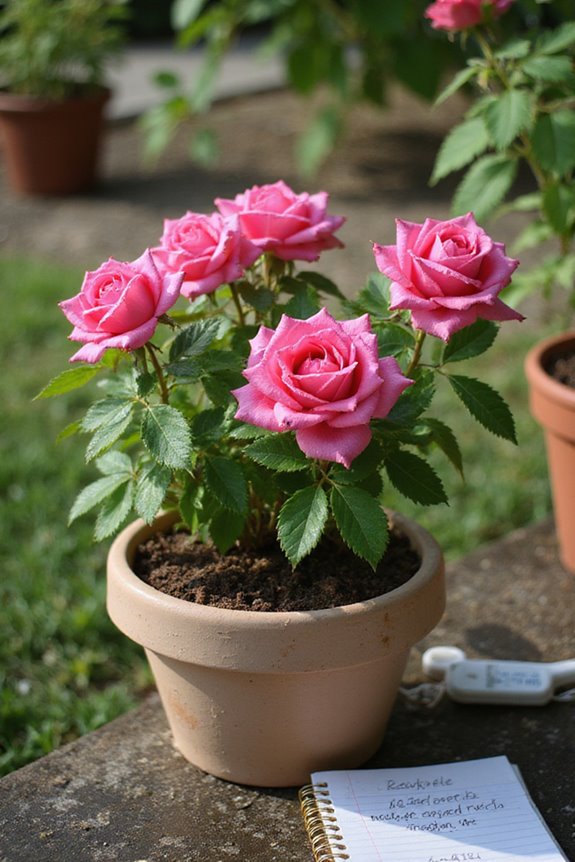
How To Prevent Salt Build-Up In Container Roses?

To prevent salt build-up in our container roses, let’s keep a few key strategies in mind! First, we should water deeply when the top 2 inches of soil are dry, and perform a biannual flush with clean water. Using organic fertilizers is a smart move, as they minimize harmful salts. Additionally, larger pots improve drainage and root health. Excited to learn about more techniques that will keep our roses vibrant and flourishing? Stay tuned for essential tips!
Key Takeaways
- Flush containers with clean water every 4 to 6 months to remove excess salts.
- Use filtered or rainwater to minimize salt introduction.
- Fertilize with a diluted solution more frequently to reduce soluble salts.
- Improve soil drainage by using pots with large holes and adding gravel.
- Water thoroughly when the top 5 cm of soil is dry to prevent salt accumulation.
Understanding Salt Build-Up in Container Roses
You may be interested


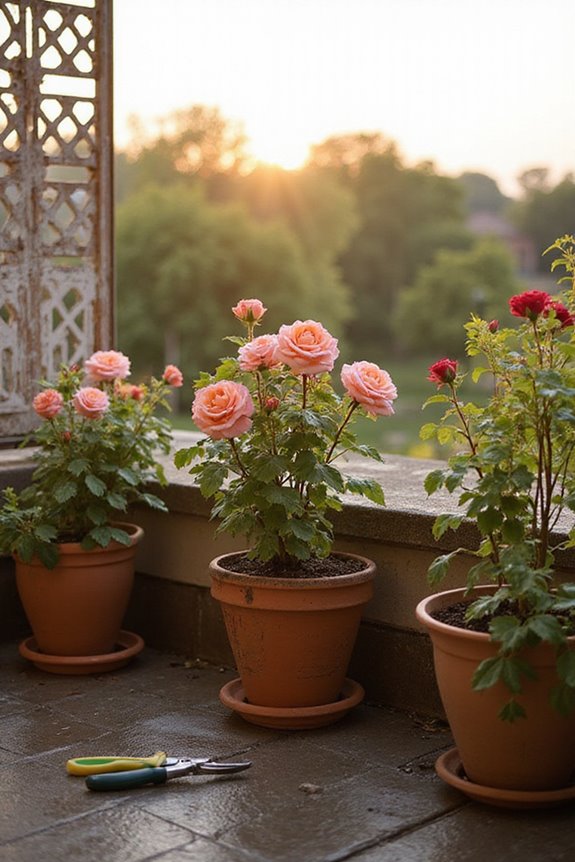
When we plunge into the world of container roses, one important aspect we all need to keep an eye on is salt build-up. Various salt sources, such as municipal water and fertilizers, can create a hidden challenge for our beautiful blooms. Over time, these salts accumulate in the soil, especially if we don’t encourage sufficient leaching frequency. Regularly flushing our containers helps wash away these unwanted minerals. If we’re growing in smaller pots, it’s even more essential to keep an eye on our watering practices. By ensuring good drainage and using quality potting mixes, we can create a thriving environment for our roses. Additionally, using organic fertilizers, such as Espoma Organic Rose-Tone, can help reduce harmful salts in the soil. So, let’s stay vigilant and keep our container roses healthy and happy!
Effects of Salt Accumulation on Rose Health

As we explore the effects of salt accumulation on our beloved container roses, it’s crucial to remember that a seemingly minor issue can transform into a significant challenge for our blooms! Salt buildup leads to toxic ion effects, causing cellular dehydration and inhibiting growth. Our roses may struggle with nutrient deficiencies, as excessive salinity interferes with the absorption of essential elements like nitrogen and potassium. This not only impacts their vigor but also diminishes flower quality. Additionally, oxidative stress wreaks havoc, introducing reactive oxygen species that threaten leaf integrity and bloom potential. Let’s keep an eye on our watering practices and soil health to guarantee our roses flourish with vibrant colors and robust growth, rather than wilting under the burden of excess salt! Furthermore, organic materials and amendments can enhance soil health, fostering beneficial microbial activity that aids in managing salt levels effectively.
Effective Watering Practices to Prevent Salt Build-Up

How can we guarantee our container roses thrive without the worry of salt buildup? We can start by monitoring our watering frequency! Water our roses thoroughly but only when the top 5 cm of soil feels dry—this prevents overwatering and keeps nutrients balanced. Timing is key, too! Early morning watering allows foliage to dry and reduces disease risk.
Let’s also consider moisture retention: using soil mixes rich in organic matter can enhance this, and larger pots give roots more room to breathe. Remember, a biannual flush with clean water helps wash away built-up salts, keeping our roses happy and healthy! Additionally, incorporating soil aeration techniques can further support plant health and growth. With these practices, our container roses can bloom beautifully, free from the troubles of salt!
Recommended Products

FEEDS UP TO 6 MONTHS: Miracle-Gro Potting Mix is a gardening soil for outdoor containers that feeds all types of potted plants, including flowers, vegetables, shrubs, annuals, and perennials for up to 6 months
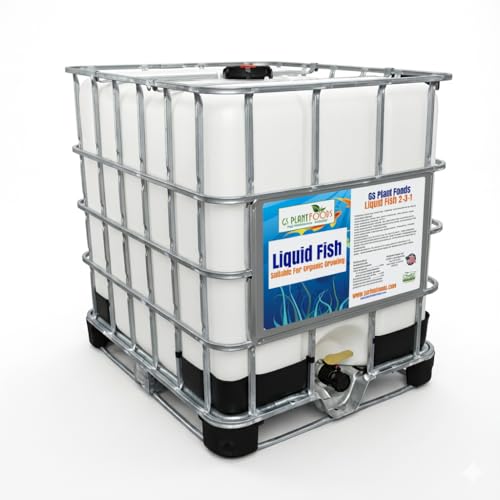
OMRI CERTIFIED Organic Materials Review Institute Listed for Organic Production Approved as GS Plant Foods Organic Liquid Fish Concentrate 2-3-1. Suitable for organic growing under OMRI and NOP standards.

OMRI Listed & Suitable for Organic Growing – GS Plant Foods kelp fertilizer meets the National Organic Program requirements for use in organic production. Ideal for gardeners, farmers, and home growers.
Fertilization Strategies to Minimize Salt Risk

To guarantee our container roses thrive while keeping salt risk at bay, we can adopt smart fertilization strategies! First, let’s fertilize twice as often as we would for garden roses, but at half strength to reduce soluble salts. This keeps our roses nourished without overwhelming them! It’s essential to water thoroughly before application to prevent root burn. Additionally, adding organic matter, like compost, can boost microbial activity, improving nutrient absorption while buffering excess salts. We can also sprinkle Epsom salts in spring and fall for a magnesium boost—promoting vibrant foliage! Finally, using growth regulators can enhance root strength, aiding in salt management. With these strategies, we’ll cultivate stunning, healthy roses ready to bloom! Also, incorporating organic fertilizers may further promote nutrient diversity and plant health while managing salt levels.
Recommended Products

ROSE FERTILIZER FEEDS UP TO 3 MONTHS: Miracle-Gro Shake 'n Feed Rose & Bloom nourishes your plants above and below the soil for up to 3 months, providing nutrients for more blooms and spectacular color (vs. unfed)

All-in-One Rose Fertilizer: Premium liquid fertilizer for roses, formulated with Nitrogen, Ammonium, Sulfate, Potash, Iron, Kelp, and Humic Acid to promote healthy root development, vibrant foliage, and strong blooms.

BLOOMS AFTER FIRST APPLICATION: This fertilizer booster flows to the root zone of rose bushes, hydrangeas, citrus trees, and garden plants to activate garden soil nutrients and unlock the full potential of existing fertilizers. Customers report rose bushes that had not bloomed in years producing big, beautiful flowers within weeks of application.
Choosing the Right Containers for Your Roses
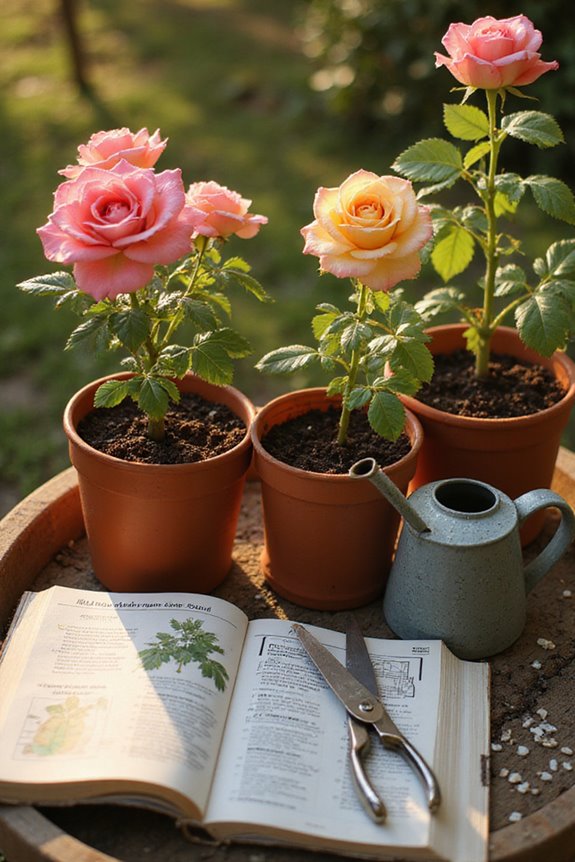
Choosing the right container for our roses can make all the difference, and it’s easier than we might think! First, let’s opt for materials like concrete or heavy fiberglass, which stabilize temperature and moisture levels. For pot shapes, we should lean towards sturdy, wide designs that enhance stability and discourage stress on roots. Remember, a diameter of at least 20 inches is best for most roses, while miniatures can thrive in containers as small as 6 inches! This allows ample room for roots to grow both deeper and wider. Don’t forget drainage—containers need holes to prevent “wet feet.” With the right container materials and pot shapes, we’re setting our roses up for flourishing success! Additionally, consider using premium plant support stakes to provide essential support as your roses grow, ensuring robust development throughout the season.
Maintenance Techniques to Reduce Salt Accumulation
As we immerse ourselves in maintaining our beautiful container roses, it’s exciting to think about how simple techniques can keep salt accumulation at bay! First, performing a salt flush every 4 to 6 months guarantees we leach out harmful salts. We should water until the excess drains freely, using warm water for better results. Let’s also improve drainage by using pots with large holes and a gravel base—this will help avoid water stagnation! Additionally, opting for filtered or rainwater reduces salt input. And remember, when fertilizing, less is more; use diluted solutions during active growth. With these maintenance strategies, our roses will thrive beautifully, free from salt stress! Let’s keep those blooms vibrant and healthy!
Recommended Products

MULTIPLE USES: Fairy gardens, flower arrangements, succulent containers, unique decorative accent in vases, dishes, candle holders, planters, aquariums, terrariums and air plants inside; also ideal for ponds, water features, fountains, pots and pathways outside and potted plants

[ Galvanized Steel Planter] 32" W x 32" L x 32" H. Heavy Duty Galvanized Steel Planter. Easy to Install. Package: 4 sides and a bottom surface with 2 drainage holes, Installation Manual x 1, M5 Allen wrench x 1, screw x 22, gloves x 1.

💧 COMMERCIAL-GRADE HYDRATION: Elevate your gardening with Soil Vigor, a professional-quality potassium polyacrylate. This super absorbent polymer acts as an automatic waterer for your plants, ensuring they receive consistent moisture without daily effort.
Cultural Practices for Healthy Container Roses
Keeping our container roses healthy and vibrant is all about implementing smart cultural practices that cater to their unique needs! We should choose large, frost-resistant containers to guarantee our roses have plenty of root space and winter insulation. Using high-quality potting mix is key—let’s opt for well-draining soil with regular soil amendments to maintain nutrient balance. Positioning our roses in direct sunlight for at least six hours is essential, and we can enhance air circulation by placing containers wisely. Let’s not forget about pest management; regularly check for signs of trouble and keep the area tidy to fend off unwanted visitors! With these practices, our beautiful roses will flourish, bringing joy and color to our gardens!
Recommended Products

Convenient Oil Collection: Effortlessly collect motor oil, transmission fluid, and coolant with this waste oil container, designed for lift-mounted vehicles. The 70L (18.5-gallon) capacity allows servicing of 1220 vehicles before needing to empty, and the built-in fluid evacuation system ensures quick and hassle-free disposal

The Ultimate Front Door Accent:This HAWOKORA gorilla statue features a charming "Welcome" sign, making it the perfect greeter for your front porch, entryway, or garden gate. It’s a creative way to showcase your hospitality while adding a unique, "wild" personality to your home that traditional garden pots simply can't match.

Packaging Update: You may receive previous or updated packaging during our transition. Same formula, same performance. Complete Plant Care Solution - This all-in-one plant care spray is intended for routine use as part of a regular plant maintenance program. Designed to be used alongside Humboldt’s Secret nutrients for flowers vegetables and houseplants at every stage of growth.
Frequently Asked Questions
Can I Use Rainwater for Watering Container Roses?
Absolutely, we can use rainwater for container roses! The rainwater benefits—like preventing salt buildup and providing gentle nutrients—make it our secret weapon in container rose care, ensuring our blooms thrive beautifully.
What Are the Best Types of Organic Fertilizers to Use?
For the best organic fertilizers, we recommend using compost tea and slow-release fertilizers. These enhance nutrient availability while promoting healthy soil biology, ensuring our roses thrive without risking salt buildup in their containers.
How Often Should I Refresh My Potting Soil?
We realize that soil composition is key; renewing potting soil annually guarantees nutrient-rich, airy conditions. But if we’re repotting, let’s keep an eye on roots—every 2-3 years can be beneficial too.
Do I Need to Worry About Salt in Distilled Water?
We don’t need to worry about salt accumulation in distilled water, as its purity eliminates dissolved salts. However, we must still manage salts from fertilizers and soil to guarantee our container roses thrive well.
What Symptoms Indicate My Roses Are Affected by Salt Accumulation?
If our roses show brown leaf edges, stunted growth, or yellowing between veins, we’re probably witnessing salt toxicity. In our rose care, we need to address these symptoms promptly for healthy blooms and vigor.