As an Amazon Associate, we earn from qualifying purchases. Some links on this site are affiliate links at no extra cost to you. Our recommendations are based on thorough research and editorial judgment.

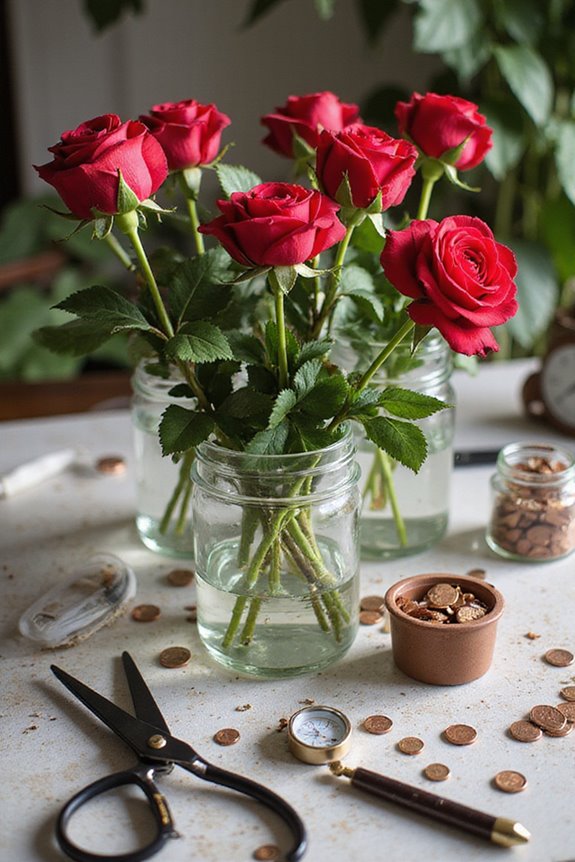
How To Condition Roses For Arrangements?

To condition roses for stunning arrangements, let’s start strong! First, we select sturdy stems, cutting them at a sharp 45-degree angle underwater. Next, we remove leaves and thorns, giving them a clean cut for bacteria management. Now, fill a bucket with warm distilled water for ideal hydration. After soaking for 6-8 hours in a cool, shaded spot, our roses are primed for display! Stay with us as we explore more tips for lasting beauty!
Key Takeaways
- Cut sturdy rose stems at a 45-degree angle underwater to enhance water uptake and prevent air bubbles.
- Remove lower foliage and thorns to minimize bacteria and improve hydration.
- Soak roses in warm water mixed with floral food for at least 6-8 hours, ideally overnight.
- Keep roses in a cool, shaded area during conditioning to maintain freshness.
- Change water daily to prevent bacterial growth and ensure optimal hydration.
Preparing the Roses for Conditioning
You may be interested



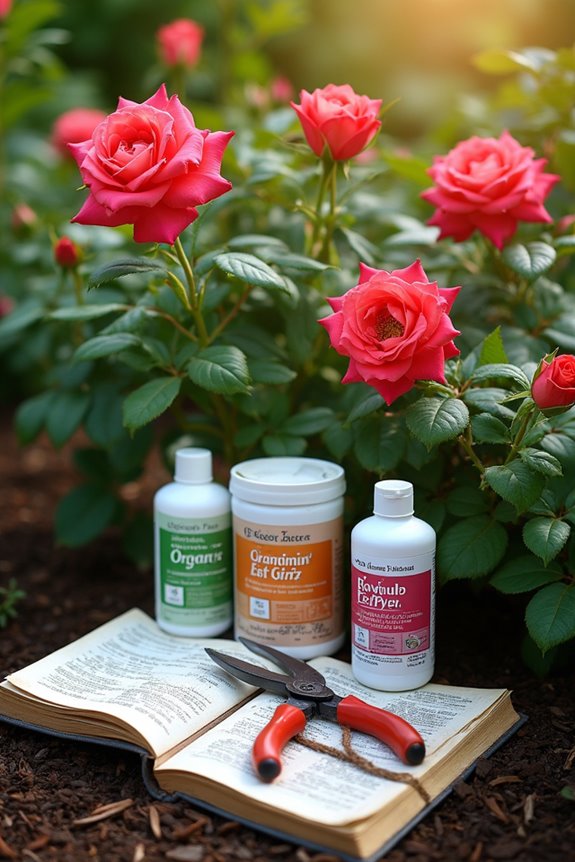
When we prepare our roses for conditioning, it’s like setting the stage for a delightful show! First, we must focus on our rose selection. Look for ideal stems with sturdy, healthy growth. Next, let’s cut those stems at a perfect 45-degree angle—this increases water uptake and prevents blockage. Removing foliage and thorns from the lower portions helps reduce bacteria, too. Now, here’s a pro tip: cut the stems underwater to avoid any air bubbles sneaking in! This guarantees maximum hydration. Adjust the length of the stems just before arranging, keeping everything fresh! So, let’s fill our buckets with warm water, setting the scene for blossoming beauty—our roses deserve this special treatment! Additionally, ensuring proper moisture retention in the soil mix can further enhance the quality of the blooms. Happy gardening!
Water Preparation and Preservation

Now that we’ve got our roses prepped and primed for action, it’s time to turn our attention to the magic potion that helps them flourish: water! We should start with distilled water—it’s free from harmful chemicals that could compromise our blooms. Let’s keep the water temperature lukewarm; this aids in ideal uptake. Remember, fresh water is crucial! Change it daily or every other day to guarantee proper microbial control and minimize bacterial growth. For an extra boost, consider infusing our water with a touch of rose water or a mild sugar solution to enhance hydration. This combination not only nourishes our roses but also helps extend their vase life. Additionally, being mindful of fertilizer application methods can significantly improve the health and longevity of your blooms. Let’s pamper those petals and watch them thrive!
Recommended Products

The Original Rosewater: A top-seller for more than 50 years,our Rosewater Splash is the perfect skin refresher. Use it throughout the day to hydrate and uplift your skin and mood.

Bulk Distilled Water Supply – Includes 12 gallons total (two cases of 6 x 1 gallon distilled water jugs). Ideal bulk distilled water for homes, offices, emergency storage, cleaning, and everyday distilled drinking water needs.

🌹 HYDRATE and REFRESH your skin with Organic Pure Oil's Rose Hydrosol Water. It is a water-based product made from botanical ingredients for a natural, refreshing facial and body mist that can be used any time of day!
Conditioning Duration and Environment

To get our roses in tip-top shape, we need to pay close attention to both the duration of conditioning and the environment where they thrive! First, let’s guarantee our roses soak in warm water for at least 6-8 hours, ideally overnight, to fully hydrate and extend their longevity. This is key for effective hydration techniques! We want to avoid direct sunlight and heat sources, opting instead for cool, shaded spots to maintain ideal conditions. If we’ll use our flowers soon, refrigerating them after a quick 2-8 hour soak is perfect. A little extra care during conditioning guarantees our beautiful blooms stay fresh, ready to dazzle in any arrangement! By ensuring proper hydration, we can also maximize bloom quality while also enhancing their resilience during the arrangement process. Embrace this process, and watch our roses shine!
Stem Treatment Techniques

Let’s jump right into the essential stem treatment techniques that will help our roses flourish! First, when we’re practicing stem cutting, let’s always cut the stems at a 45-degree angle—this increases water uptake! Next, we can enhance hydration methods by using a quick dip hydration solution like Floralife Quick Dip 100. After cutting, placing our roses in deep, tepid water mixed with floral food is vital for rehydration. Remember to keep them hydrated for at least 1.5 hours outside the cooler before shifting them in. And for those droopy stems, a quick dip in hot water can do wonders! With these techniques, our roses will not just survive; they’ll thrive—their beauty will shine in any arrangement! Additionally, ensuring proper soil nutrient levels through amendments can further enhance the overall health and longevity of your roses in arrangements.
Handling to Prevent Bacterial Contamination

After ensuring our rose stems are primed for success with effective treatment techniques, it’s crucial to protect them from unwanted bacterial invaders! To keep our roses thriving, we should use sanitized water and disinfect our containers—clean buckets beforehand to eliminate contaminants. Remember, changing the vase water daily to every third day prevents bacteria buildup!
While preparing the stems, we must remove lower leaves and cut them under clean, lukewarm water to dodge those air embolisms. Let’s use sterilized cutters and avoid touching the ends with our hands to stop bacterial sources before they start! Keeping our work surfaces and tools clean is imperative too! Additionally, conducting regular soil tests ensures the optimal nutrient balance that supports overall rose health. With these sanitation methods, our gorgeous roses will shine beautifully in any arrangement we create!
Recommended Products

Stainless steel, curved blade harvest shear designed for rapid, high volume fruit harvesting, thinning and floral applications

Ambidextrous grip

[JAPANESE HAND PRUNERS] These traditional Japanese garden pruning shears are perfect for trimming garden trees, fruit trees, floral arrangements, Ikebana, bonsai, and other gardening tasks.
Post-Conditioning Care for Arrangements
Once we’ve successfully conditioned our beautiful roses, maintaining their vibrancy and longevity is our next mission! To guarantee proper flower hydration, let’s change the vase water every 2 to 4 days, using clean, lukewarm water. Don’t forget to dissolve floral preservative to nourish our blooms and keep bacteria at bay. While caring for our roses, we should avoid ethylene exposure by keeping them far from ripening fruits. Remember, rearranging stems every few days with fresh cuts can greatly boost their water uptake! Place arrangements in cool, shaded spots—out of direct sunlight! By taking a few simple steps, we can enjoy a glorious bouquet lasting longer than we ever imagined—oh, the joy of blooming beauty gracing our homes!
Tips for Extending Vase Life
When we’re aiming to extend the vase life of our cherished roses, a few key practices can work wonders! First, let’s cut those stems at a 45-degree angle underwater; it’s essential for peak water uptake. Next, we should use room temperature water mixed with commercial floral food to nourish different rose varieties effectively. Remember to replace the vase water every 2-3 days to keep things fresh! It’s also important to remove any leaves submerged in water to curb bacterial growth. Additionally, let’s keep our roses in a cool spot, away from direct sunlight and ripening fruit, to maintain their vibrant floral aesthetics. Daily monitoring guarantees we catch any wilting blooms before they spoil the whole arrangement—happy gardening!
Frequently Asked Questions
Can I Use Tap Water for Conditioning Roses?
Absolutely, we can use tap water for conditioning roses, but let’s guarantee its quality. Proper preservation requires monitoring for chlorine or fluoride, which can be detrimental. Always prioritize water quality for our beautiful blooms!
How Often Should I Change the Conditioning Water?
We should change the conditioning water every 1 to 2 days, ensuring it’s cool. Doing this frequently during conditioning maximizes our roses’ duration and keeps them healthy and vibrant in the vase.
Should I Remove Thorns From Roses Prior to Conditioning?
Yes, we should remove thorns before conditioning. Curiously, roses with thorns last longer, yet thorn removal benefits us by making arrangements easier and safer. It’s essential for smoother handling during our arrangement preparations!
Can I Condition Roses in a Warm Room?
Yes, we can condition roses in a warm room. This method’s effectiveness hinges on temperature effects; warm water aids hydration, but we must monitor blooms closely to prevent them from opening too quickly.
Is It Necessary to Use Commercial Flower Food?
It’s not absolutely necessary to use commercial flower food, but it is understood its effectiveness in extending vase life considerably. Alternative flower nutrients exist, yet they often lack the balance and convenience commercial options provide.